
THE ARCHITECTURE OF FORGIVENESS: AMENEH BAHRAMI’S TRIUMPH OVER DARKNESS ⚖️🕊️✨
1. The Moment the World Vanished
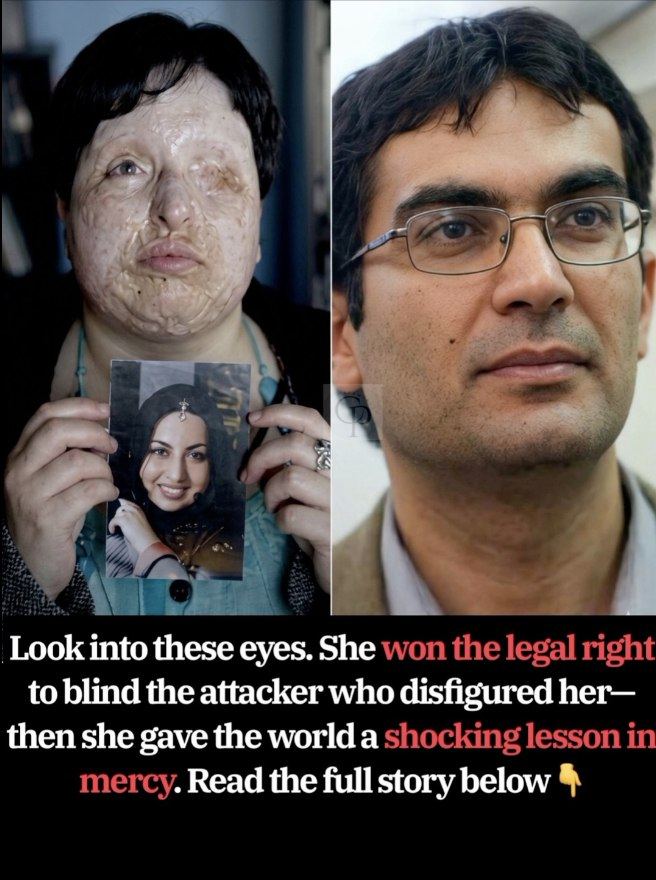
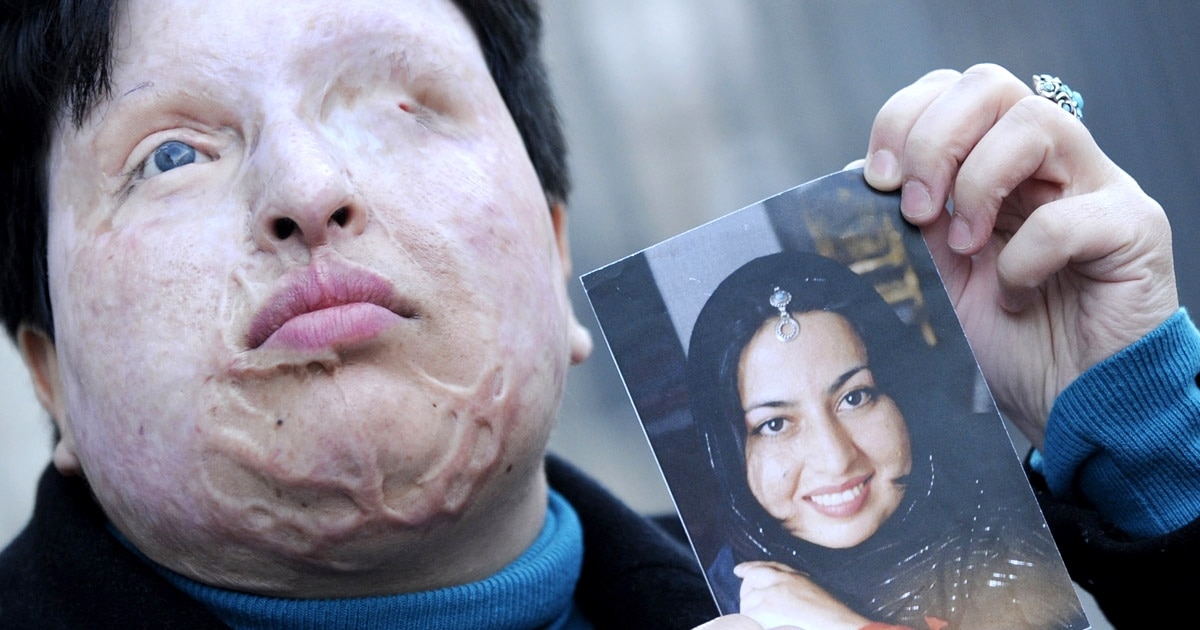
In 2004, Ameneh Bahrami was a 26-year-old electronics engineer working in Tehran. Her life was defined by her vision—both her literal sight and her professional ambitions. When she rejected a marriage proposal from Majid Movahedi, he responded with a horrific act of “honor” violence, throwing sulfuric acid into her face. The chemical reaction was instantaneous, melting away her features and destroying the optic nerves in both eyes. In a matter of seconds, she was plunged into a permanent, physical darkness.
2. The Long Road of Survival
Ameneh didn’t just lose her sight; she lost her identity. She traveled to Spain for specialized medical care, undergoing 19 agonizing surgeries to reconstruct her face and attempt to save what little vision remained. The physical pain was matched only by the emotional toll of knowing that her attacker remained free for years. Her fight for justice was not just for herself, but to set a precedent that acid attacks—a rising trend in the region—would carry the heaviest of consequences.
3. The Power of Qisas
Under the Iranian legal principle of Qisas (Retribution), the punishment must fit the crime. After years of legal battling, the court granted Ameneh the right to literally “blind” her attacker with drops of acid. This was a rare and controversial ruling that drew global attention. To Ameneh, this wasn’t about bloodlust; it was about ensuring that Majid understood the permanent, sensory prison he had forced her into. She wanted the law to acknowledge that her life was worth as much as his.
4. The Hospital Room: July 2011
The scene in the Tehran hospital was tense. Majid Movahedi was prepped for the punishment, weeping and begging for mercy. Ameneh stood over him, the instrument of retribution in her hand. For seven years, she had lived for this moment of “equality.” But as she stood there, she felt the weight of the darkness she lived in every day. She realized that by blinding him, she wasn’t bringing light back to her own world; she was simply doubling the amount of darkness in the world.
5. The Act of Radical Mercy
At the very last second, Ameneh spoke the words that shocked the onlookers: “I forgive him.” She requested that the physical punishment be waived. In doing so, she reclaimed her narrative. She moved from being a “victim” seeking a trade of pain to a “sovereign” granting mercy. She famously stated that she did not want him to suffer the same eternal night she endured, proving that her empathy was stronger than her anger.
6. The Aftermath: Peace Over Vengeance
Ameneh’s story is a profound lesson in the psychology of healing. While the law could give her “justice” through revenge, it could not give her “peace.” By forgiving Majid, she stepped out of the cycle of violence. She refused to become a mirror image of her attacker. Though she remains blind today, her spirit sees further than most; she chose to be a beacon of compassion in a world that often demands blood for blood. 🕊️🛡️🌟
