3I/ATLAS and the “Worst-Case Scenario” Claims: What the Images Actually Show
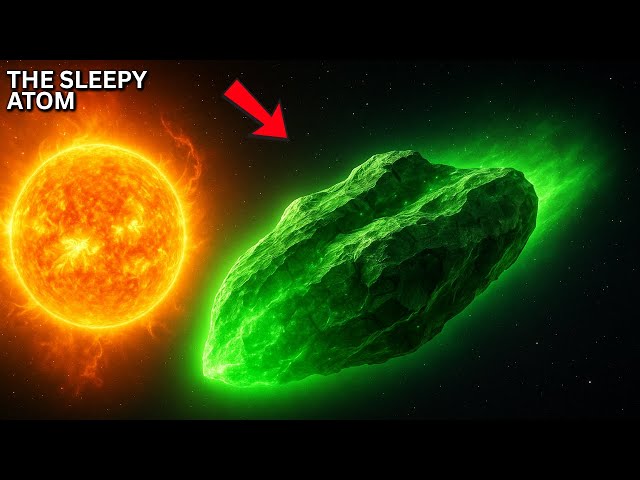
It began, as these stories often do, with a single faint point of light.
A small, distant object recorded in astronomical survey data—barely more than a pixel against the background of space. That object has since been designated 3I/ATLAS, an interstellar visitor detected by the Asteroid Terrestrial-impact Last Alert System (ATLAS), and identified as only the third confirmed object of its kind passing through our Solar System.
From a scientific standpoint, 3I/ATLAS is part of a rare category of interstellar bodies that originate outside our Solar System. These objects are invaluable to researchers because they carry physical material formed around other stars, offering clues about how planetary systems develop elsewhere in the galaxy.
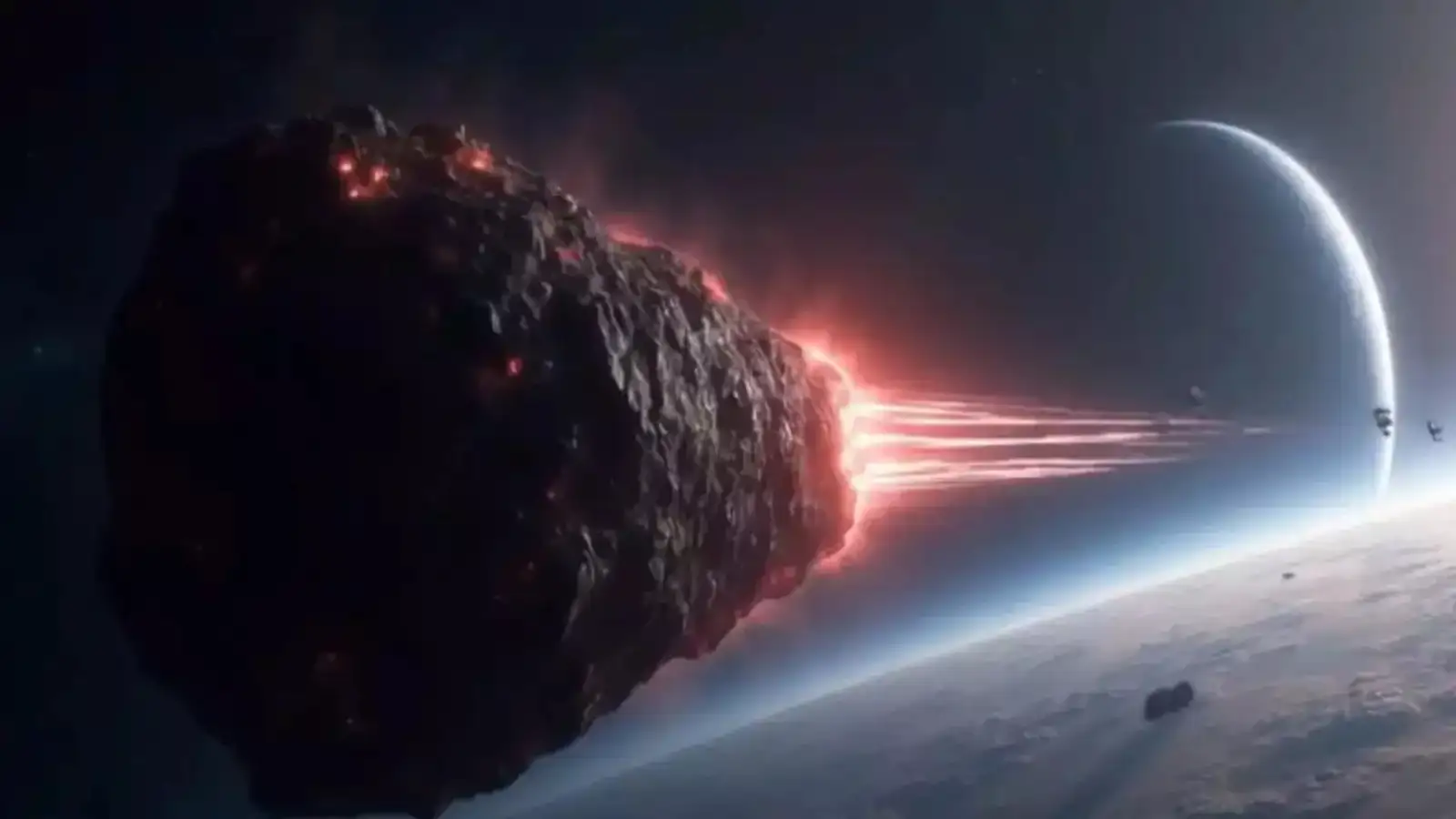
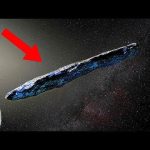
However, as with previous interstellar discoveries like ʻOumuamua, public interpretation of new images has diverged sharply from scientific analysis.
Recent images of 3I/ATLAS—low-resolution, long-exposure observations typical of distant object tracking—have circulated widely online, accompanied by claims that they “fuel worst-case scenarios” or suggest non-natural behavior. These interpretations often focus on perceived elongation, brightness variations, or slight changes in apparent structure across different frames.
Astronomers, however, emphasize a much simpler explanation: these effects are expected when observing extremely distant, faint objects near the limits of telescope resolution. Motion blur, sensor noise, exposure timing, and background star contamination can all produce distortions that appear unusual when zoomed in or digitally enhanced.
At present, there is no scientific evidence indicating that 3I/ATLAS is anything other than a natural interstellar object, such as a comet or asteroid. Its observed motion is consistent with gravitational dynamics, and its photometric behavior does not require any artificial explanation.
The gap between raw astronomical data and highly processed online images often fuels speculation. When contrast is increased or frames are stacked without proper calibration, ordinary noise patterns can appear structured or geometric. This is a well-known effect in astrophotography, especially when dealing with objects at the edge of detection capability.
This is why the scientific community approaches early observational data cautiously. Before drawing conclusions, researchers require repeated measurements, spectral analysis, and confirmed trajectory modeling—all of which are standard practice before classifying or interpreting an object’s nature.
Interstellar objects like 3I/ATLAS remain scientifically significant precisely because they are natural. They help scientists compare materials formed in different star systems and refine models of planetary formation across the galaxy.
While online discussions often frame such objects in dramatic or speculative terms, the underlying reality is far more grounded: telescopes are doing what they have always done—capturing faint, distant signals from a vast universe that is still being mapped in real time.
And in that sense, 3I/ATLAS is not a mystery signaling “worst-case scenarios,” but another reminder of how much remains to be understood about the quiet, ordinary mechanics of deep space.