James Webb Space Telescope and the 3I/ATLAS “Life Signatures” Claim
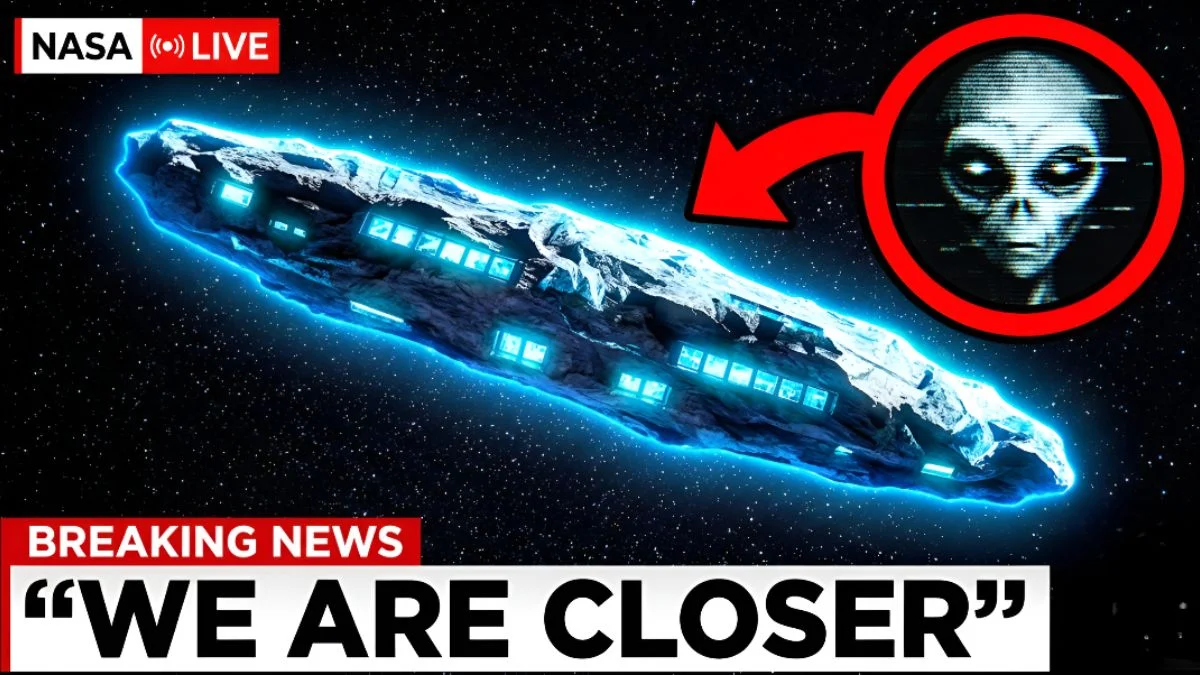
A viral wave of online reports has claimed that the James Webb Space Telescope (JWST) detected “signs of life” or “life-related chemistry” on the interstellar object 3I/ATLAS, sparking widespread speculation that the object may be carrying biological material. These claims often describe complex organic molecules, unusual spectral signatures, and dramatic interpretations suggesting possible extraterrestrial origins. However, no official scientific announcement confirms the presence of life or living organisms on this object.
3I/ATLAS is the third confirmed interstellar object detected passing through our Solar System, identified by the ATLAS survey system. Like previous interstellar visitors such as ʻOumuamua and 2I/Borisov, it is considered a natural object—most likely comet-like in composition—originating from another star system. As it travels through the inner Solar System, it is being studied using telescopes capable of analyzing its reflected and emitted light across different wavelengths.
In scientific terms, what JWST and other observatories can detect are spectral signatures, which reveal the chemical composition of an object’s surface or surrounding coma. In some comets and icy bodies, these signatures can include simple organic compounds, such as carbon-based molecules that form under natural conditions in space. These substances are not unusual and have been found in many comets within our own Solar System.
The leap from “organic molecules” to “signs of life” is where interpretation often becomes exaggerated in public discourse. In astronomy and astrochemistry, the presence of carbon-based compounds is not considered evidence of biological activity. Instead, it indicates that the building blocks for more complex chemistry exist, which is a common and expected outcome in interstellar and cometary environments.
There is currently no verified evidence that 3I/ATLAS contains biological organisms, engineered structures, or any form of active life. Its observed behavior remains consistent with a natural interstellar object undergoing heating, outgassing, and chemical reactions as it approaches the Sun.
The excitement surrounding such findings reflects a genuine scientific interest in astrobiology. If complex organic chemistry is widespread in interstellar objects, it supports the idea that the ingredients for life may be common throughout the galaxy. This does not mean life itself is present, but rather that the chemical precursors for life could travel between star systems.
As with previous interstellar discoveries, public speculation tends to outpace scientific conclusions. While headlines often amplify uncertainty into dramatic narratives, researchers rely on repeated observations, spectral analysis, and peer-reviewed validation before drawing any conclusions about an object’s nature.
In reality, 3I/ATLAS remains an important but natural interstellar visitor. It offers scientists a rare opportunity to study material formed around another star, helping refine our understanding of how chemical complexity arises in space. No confirmed data supports claims of biological activity, and no space agency has reported evidence of life associated with it.
Ultimately, the significance of 3I/ATLAS lies not in dramatic interpretations, but in what it can teach us about the chemistry of the universe. Even without life, it reminds us that the raw ingredients for life may not be unique to Earth—but scattered across the cosmos, waiting to be understood.