Move Over 3I/ATLAS — The True “Planet Killer” Is Still Flying Under the Radar
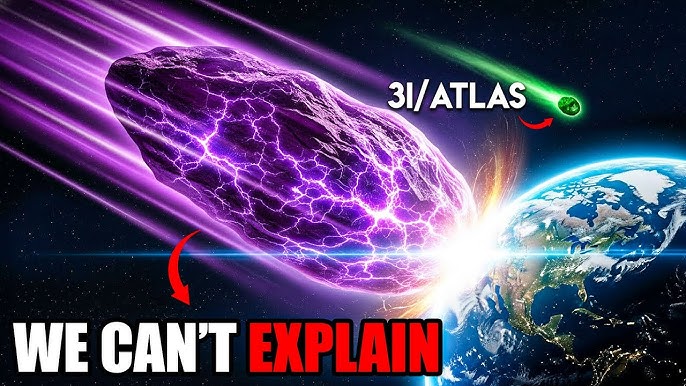
Forget 3I/ATLAS — the real danger isn’t the one making headlines.
In 2025, as the world turns its gaze toward the dazzling passage of 3I/ATLAS, another presence moves through the darkness almost completely unnoticed. It doesn’t trend on social media. It doesn’t dominate headlines. Yet, it carries a weight of destruction far beyond anything currently capturing public attention. Quiet, ancient, and immense, this cosmic traveler has been here before—and it will return again.
Behind the noise of discovery lies a far more unsettling reality.
While 3I/ATLAS fascinates scientists as a rare interstellar visitor, it is ultimately just that—a visitor passing through. But lurking deeper within our own solar system is something far more familiar and far more dangerous. This object does not simply pass by once. It follows a path that brings it back, again and again, crossing dangerously close to Earth’s orbit like a ticking cosmic clock.
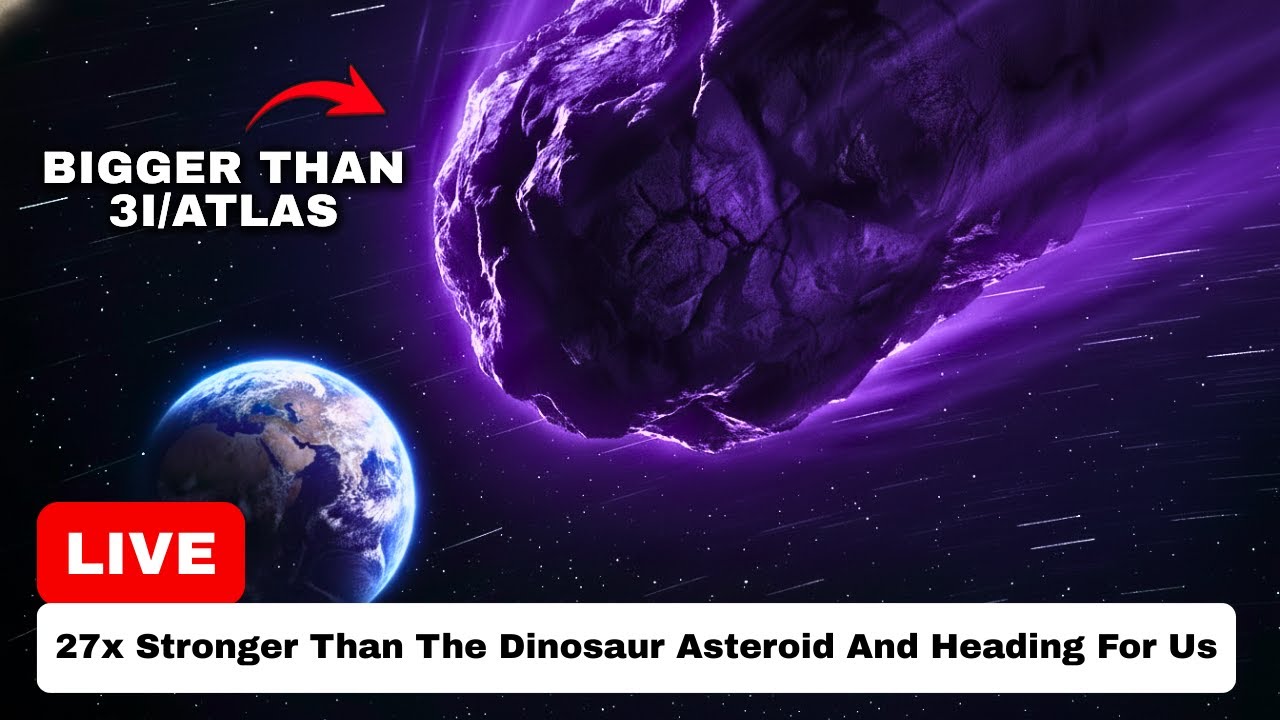
Its name is Swift-Tuttle—and it is anything but ordinary.
With a staggering diameter of about 26 kilometers, Swift-Tuttle is not just another comet drifting through space. It is a colossal force, dwarfing most objects we routinely monitor. To imagine its scale is to think beyond mountains, beyond cities—this is a mass so vast that, if it were to collide with Earth, the consequences would be beyond catastrophic. It would not just devastate regions—it could alter the course of life itself.
But size is only part of the threat. Speed turns danger into catastrophe.
Swift-Tuttle tears through space at roughly 60 kilometers per second. At that velocity, even a much smaller object could cause massive destruction. Combined with its enormous size, the energy it carries becomes almost unimaginable. Scientists estimate that an impact from Swift-Tuttle could release dozens of times more energy than the asteroid linked to the extinction of the dinosaurs. It is not just a collision—it would be a global reset.
What makes it even more unsettling is how predictable—and unavoidable—it is.
Unlike sudden cosmic surprises, Swift-Tuttle follows a known orbit. It last passed near Earth in 1992 and is expected to return in 2126. That might seem distant, comfortably outside our lifetime—but in cosmic terms, it is just around the corner. And with each return, it crosses Earth’s orbital path, entering what scientists describe as a gravitational danger zone.
So why is no one talking about it?
The answer lies in human nature. Immediate threats capture attention; distant ones fade into the background. 3I/ATLAS is happening now—it’s visible, exciting, and new. Swift-Tuttle, on the other hand, is part of a longer story, one that unfolds over decades and centuries. But ignoring it does not make it less real. If anything, it makes it more dangerous.
There is also a deeper layer of uncertainty that makes this even more complex.
Comets like Swift-Tuttle are notoriously difficult to predict with absolute precision. Unlike solid asteroids, their composition can shift as they heat up near the Sun, releasing gas and debris that subtly alter their trajectory. Over long periods, these small changes can lead to significant deviations. In other words, even with all our technology, we cannot say with complete certainty where it will be centuries from now.
This raises a chilling question: are we truly prepared?
Humanity has made incredible advances in space observation and planetary defense. We track near-Earth objects, simulate impacts, and even test methods to redirect asteroids. But a massive, fast-moving comet like Swift-Tuttle presents a challenge on an entirely different scale. The margin for error shrinks, and the stakes rise dramatically.
In the end, Swift-Tuttle is more than just a comet—it is a warning.
A reminder that not all threats arrive with spectacle and urgency. Some move quietly, patiently, following paths written long before humanity ever looked to the stars. As we celebrate discoveries and chase new cosmic mysteries, we must not lose sight of the giants already known to us—the ones that do not need attention to remain dangerous.
Because the real “planet killer” isn’t the one everyone is watching.
It’s the one silently making its way back.