
Otis T. Carr and His Controversial Flying Saucer Project
Otis T. Carr and His Controversial Flying Saucer Project
A Visionary Inventor in the Early UFO Era
During the height of the UFO fascination in the 1950s, one inventor captured public attention with bold claims about anti-gravity technology and interplanetary travel. That inventor was Otis T. Carr, an American engineer and entrepreneur who said he had developed a revolutionary flying saucer capable of traveling through space.
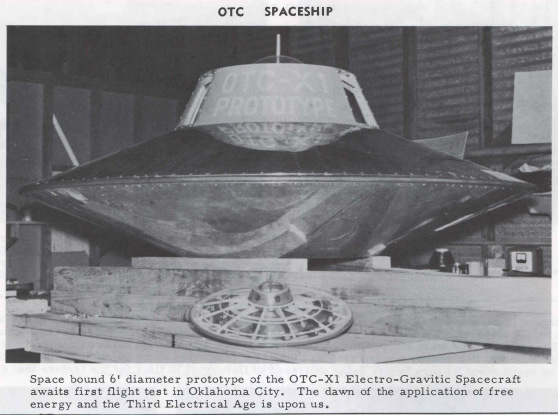
Carr became well known in UFO circles for promoting a spacecraft called the OTC-X1, which he claimed could use advanced electromagnetic principles to overcome gravity and travel to the Moon.
Otis T. Carr and the Flying Saucer Concept


In the mid-1950s, Carr founded OTC Enterprises, a company intended to develop advanced propulsion systems inspired by the ideas of the famous inventor Nikola Tesla. Carr claimed that Tesla’s concepts about energy and electromagnetism could be applied to build a new type of spacecraft.
His proposed vehicle, the OTC-X1 flying saucer, was designed as a circular craft powered by rotating electromagnets and capacitors. Carr believed that by spinning two metal plates in opposite directions, the craft could draw energy from space itself and reduce the effects of gravity.
Carr described this power source as “Utron energy,” a form of free energy supposedly present throughout the universe.
Promises of a Journey to the Moon
Carr’s ambitions were extremely bold. In the late 1950s he publicly announced that a prototype saucer would soon demonstrate flight.
His plans included:
-
A 6-foot prototype saucer to be tested publicly in 1959
-
A 45-foot spacecraft capable of carrying pilots
-
A future mission to the Moon with Carr and UFO contactee Wayne Sulo Aho as crew members
Carr even claimed the craft could travel to the Moon and return within a matter of hours, far faster than conventional rockets of that time.
The demonstration was scheduled at an amusement park called Frontier City, where Carr had agreed to build a large saucer-shaped structure for visitors to see.
The Demonstration That Never Happened
Thousands of curious spectators gathered in April 1959 expecting to witness the historic test flight. However, the demonstration never occurred. Carr did not appear at the launch site, later claiming health problems and technical issues prevented the event.
Visitors who inspected Carr’s workshop reportedly saw only small display models rather than a functional flying craft.
The promised follow-up flight later that year also failed to take place.
Legal Trouble and the End of the Project
In 1961, Carr’s activities came under legal scrutiny. He was convicted in Oklahoma for selling unregistered securities, related to investments he had collected for his spacecraft project.
The conviction effectively ended his public work on the flying saucer program. Carr disappeared from the spotlight for many years, and his ambitious spacecraft was never demonstrated.
UFO Legend or Failed Experiment?
Today, Otis T. Carr remains a controversial figure in UFO history. Supporters believe he may have been a misunderstood pioneer working on revolutionary energy technology. Critics argue that his project was little more than an elaborate publicity scheme.
Regardless of the truth, Carr’s story reflects the excitement and imagination of the early flying saucer era, when the possibility of extraterrestrial technology and anti-gravity propulsion captured the attention of the world.
His flying saucer, the OTC-X1, continues to appear in discussions about experimental propulsion systems and the long history of UFO-inspired engineering.
