
Guy Hottel and the Mystery of UFOs and Alien Bodies
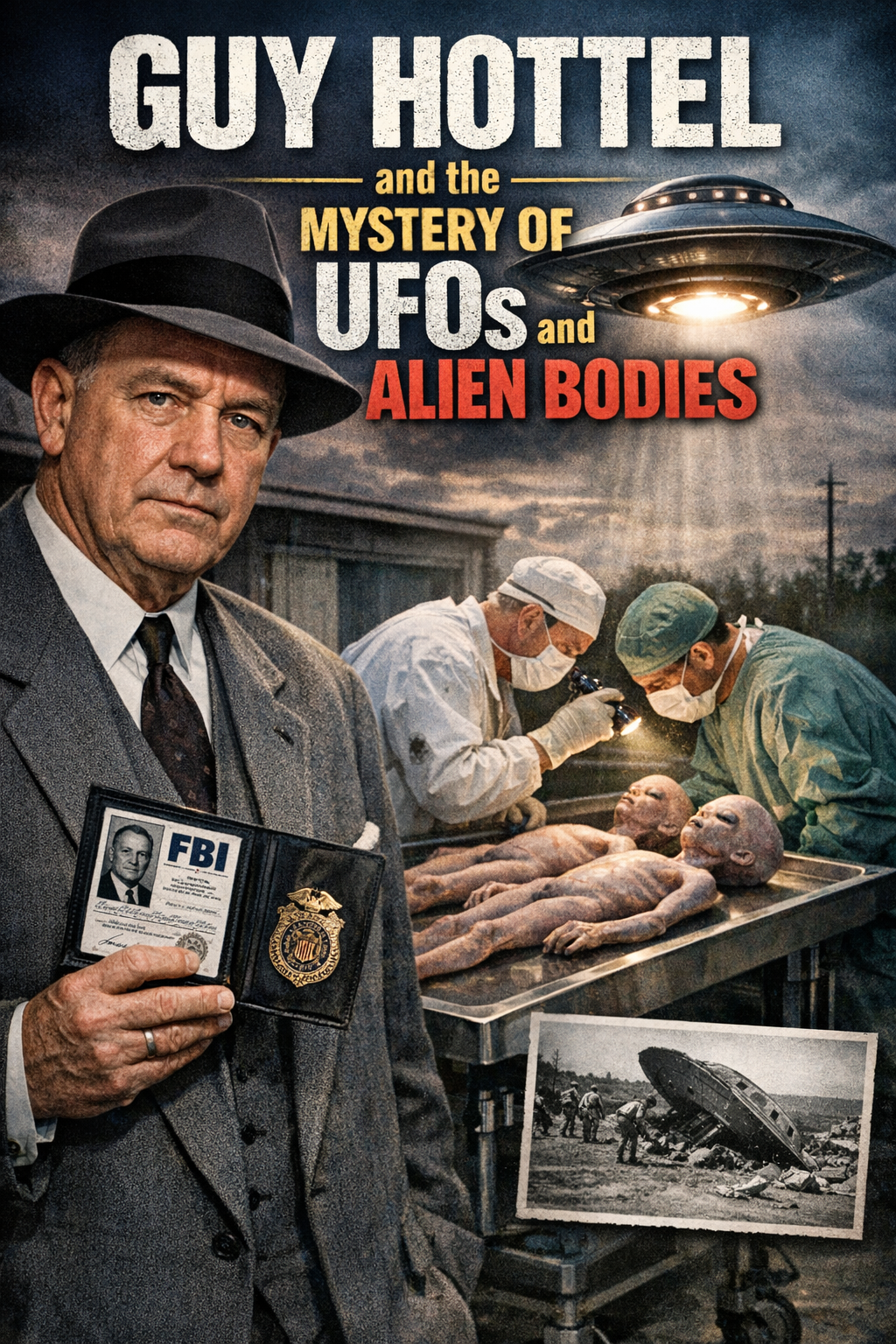
Guy Hottel and the Mystery of UFOs and Alien Bodies
Introduction
During the early years of the Cold War, reports of unidentified flying objects (UFOs) captured the imagination of the public and governments alike. One of the most intriguing documents related to these sightings is a memorandum written by Guy Hottel, a senior agent of the Federal Bureau of Investigation (FBI). The document, dated March 22, 1950, describes claims that flying saucers and small humanoid bodies had been recovered in the United States. Although the memo does not prove the existence of extraterrestrials, it remains one of the most famous UFO-related documents ever released.
The Famous 1950 FBI Memo

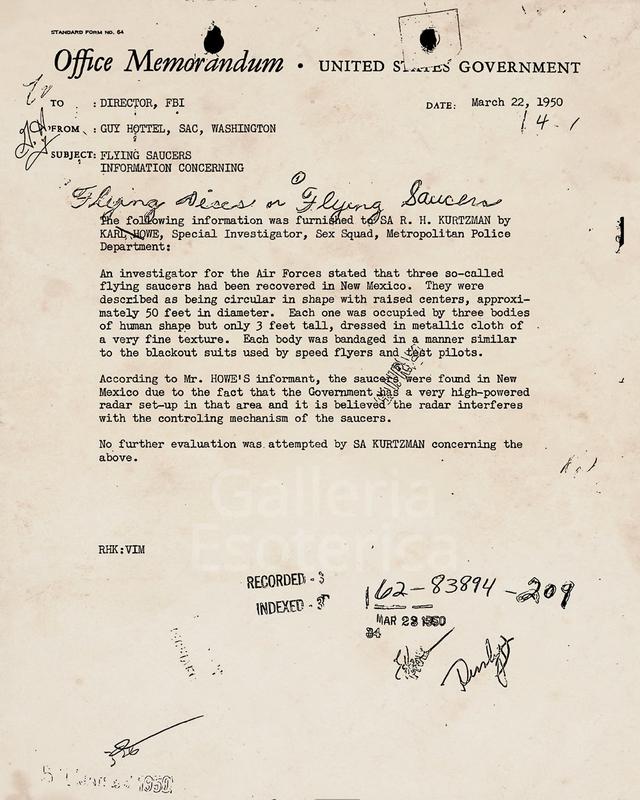

On March 22, 1950, Guy Hottel, who was then the Special Agent in Charge of the FBI’s Washington Field Office, sent a memo to FBI Director J. Edgar Hoover. The memo summarized information provided by an informant who claimed that the U.S. military had recovered several mysterious flying objects in New Mexico.
According to the report:
-
Three “flying saucers” had allegedly been recovered.
-
Each craft was described as circular with a raised center.
-
Each object was said to contain three small bodies, roughly three feet tall.
-
The bodies reportedly wore metallic cloth suits resembling those worn by test pilots.
The informant also suggested that high-powered government radar might have interfered with the craft’s control systems, causing them to crash.
Connection to UFO Legends
Because the memo described recovered craft and small humanoid bodies, many UFO enthusiasts later connected it to the famous Roswell Incident of 1947. However, the FBI has clarified that the Hottel memo was written three years after Roswell and that the two events are not necessarily related.
In reality, the memo simply recorded a second- or third-hand report passed to an FBI agent. The bureau never investigated the claim further, and there was no physical evidence attached to the document.
Why the Memo Became So Famous
When the FBI launched its online archive known as The Vault, the Hottel memo quickly became the most viewed document in the database.
Many news outlets and conspiracy theorists interpreted the memo as proof that the U.S. government had recovered alien spacecraft and bodies. However, historians and investigators point out that the document merely records a rumor circulating at the time.
Guy Hottel’s Career
Guy Hottel was a long-time FBI agent who joined the bureau in 1934. He served as the head of the FBI’s Washington Field Office for several years and later worked in the Identification Division before retiring in 1955.
Although his memo about flying saucers became famous decades later, Hottel himself was not known as a UFO investigator. Instead, he was a professional law-enforcement officer documenting information reported to his office.
Conclusion
The Guy Hottel memo remains one of the most intriguing documents in UFO history. It describes claims of crashed flying saucers and small alien-like bodies in New Mexico, fueling decades of speculation about extraterrestrial encounters. However, according to the FBI, the memo was simply an unverified report that was never investigated.
Despite the lack of proof, the document continues to fascinate researchers, UFO enthusiasts, and historians who wonder whether it represents a simple rumor—or a hidden chapter in humanity’s search for extraterrestrial life. 👽🛸
