
Donald Edward Keyhoe and the Fight to Reveal the Truth About UFOs
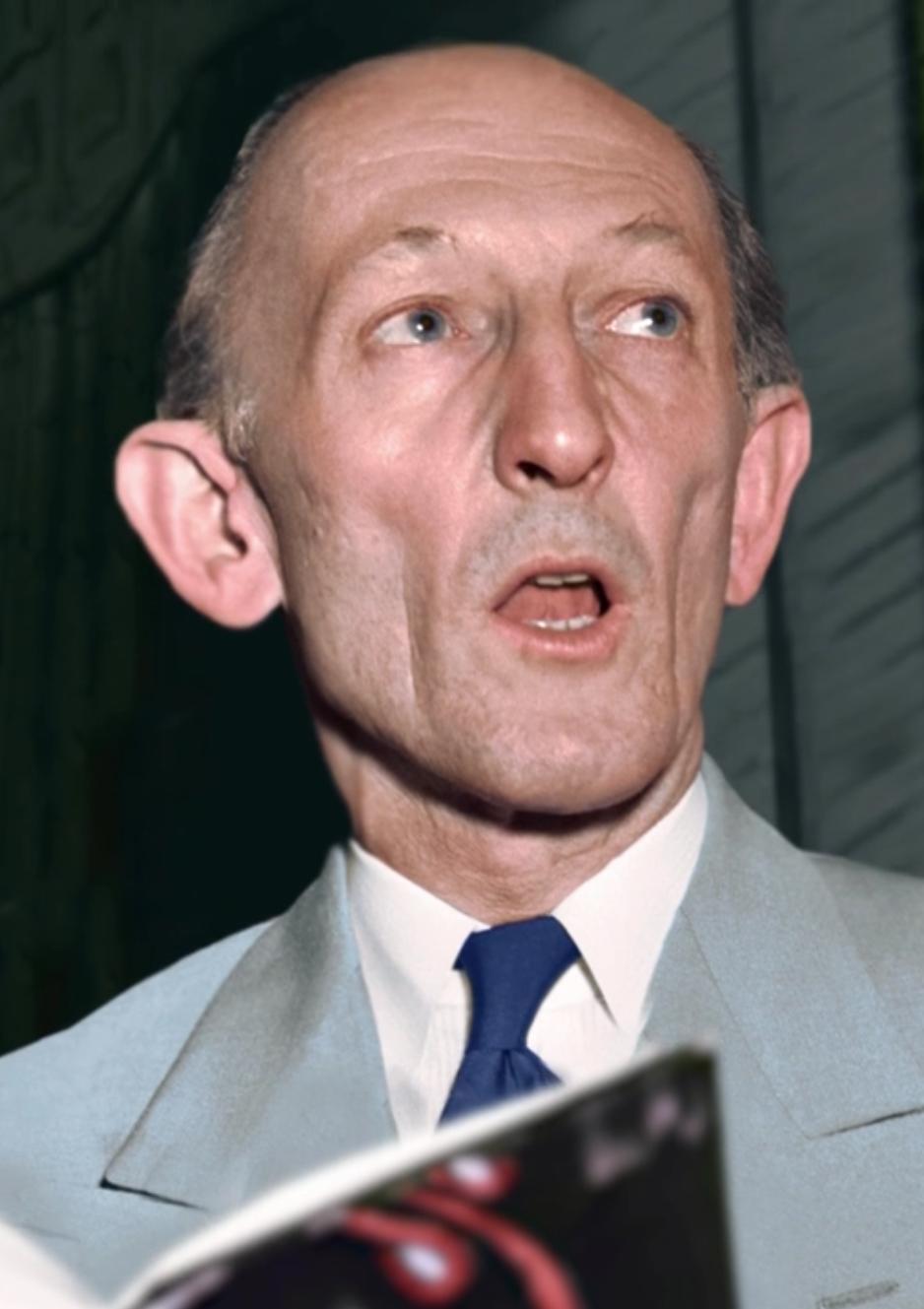
Donald Edward Keyhoe and the Fight to Reveal the Truth About UFOs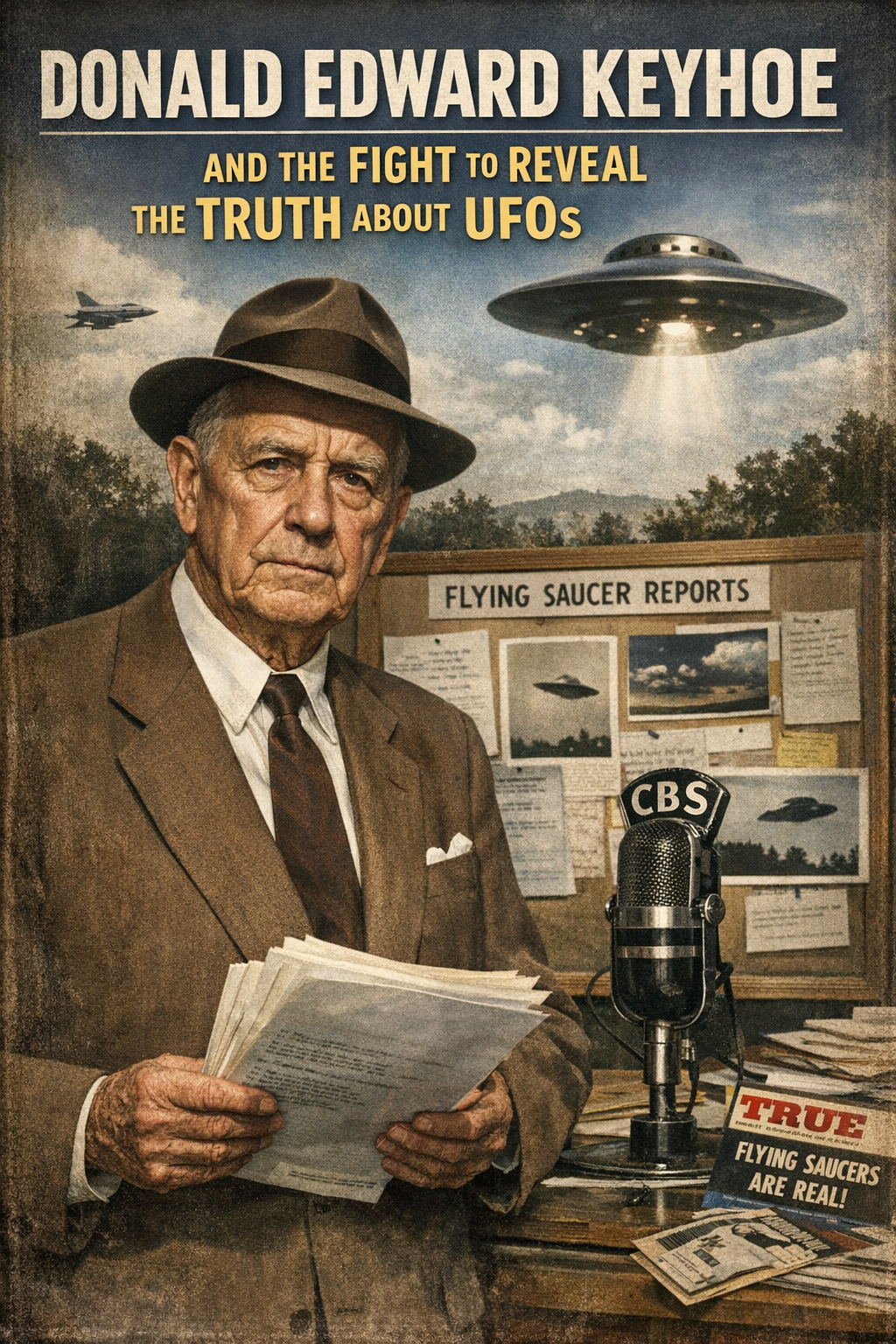
During the early years of the modern UFO era, few figures were as influential as Donald Edward Keyhoe. A former Marine Corps major, aviation writer, and one of the most outspoken UFO investigators of the 20th century, Keyhoe became famous for arguing that governments were hiding evidence about unidentified flying objects and possible extraterrestrial visitors.
Through bestselling books, magazine articles, and public lectures, Keyhoe helped transform UFOs from a fringe curiosity into a subject of national debate.
Donald Keyhoe’s Background
Donald Edward Keyhoe was born on June 20, 1897, in Iowa, United States. Before becoming known for his work on UFOs, he had an impressive career:
-
Major in the United States Marine Corps
-
Early aviation pioneer and test pilot
-
Journalist and aviation writer
-
Contributor to major magazines such as True Magazine
His aviation background gave him credibility when discussing unusual aircraft sightings and unexplained aerial phenomena.
The Article That Started the UFO Debate
In 1950, Keyhoe wrote a famous article for True Magazine titled “Flying Saucers Are Real.”
In the article, Keyhoe argued that many UFO sightings could not be explained as weather balloons, aircraft, or astronomical objects. He suggested that the most logical explanation might be spacecraft from another planet observing Earth.
The article became extremely popular and sparked worldwide discussion about UFOs and extraterrestrial life.
Best-Selling UFO Books
After the success of his magazine article, Keyhoe wrote several influential books that shaped the UFO movement. These include:
-
The Flying Saucers Are Real
-
Flying Saucers from Outer Space
-
The Flying Saucer Conspiracy
-
Aliens from Space
In these books, Keyhoe claimed that UFO sightings were being secretly investigated by the military and that governments were deliberately withholding information from the public.
His arguments helped popularize the idea of a government UFO cover-up, a theme that still appears frequently in modern discussions about unidentified aerial phenomena.
Leadership in UFO Research
Keyhoe also played an important role in organizing civilian UFO research. He became director of the National Investigations Committee on Aerial Phenomena (NICAP) in 1957.
NICAP aimed to:
-
Collect and analyze UFO sighting reports
-
Encourage scientific investigation
-
Pressure governments to release UFO information
Under Keyhoe’s leadership, NICAP became one of the largest and most respected UFO research organizations in the world during the 1950s and 1960s.
Conflict with the U.S. Government
Keyhoe frequently criticized official investigations such as Project Blue Book, arguing that they downplayed serious sightings and avoided acknowledging unexplained cases.
He often appeared on television and radio programs where he claimed that:
-
UFOs demonstrated advanced technology beyond human capabilities
-
Governments had evidence of extraterrestrial spacecraft
-
The public deserved to know the truth
These bold claims made him both famous and controversial.
Legacy in UFO History
Donald Keyhoe died in 1988, but his influence on UFO research remains significant. He was one of the first people to argue that UFO sightings should be taken seriously and investigated scientifically.
Today, modern discussions about UAP (Unidentified Aerial Phenomena), government transparency, and extraterrestrial technology still reflect many of the ideas Keyhoe promoted decades earlier.
Conclusion
Donald Edward Keyhoe played a central role in shaping public awareness of UFOs during the early Cold War era. Through journalism, books, and leadership in UFO organizations, he pushed for greater transparency and scientific investigation into mysterious objects seen in Earth’s skies.
Whether or not UFOs are truly extraterrestrial spacecraft, Keyhoe’s work helped ignite one of the most fascinating debates in modern history—the possibility that humanity may not be alone in the universe. 🛸👽
