
Declassified UFO Files: Inside the UK National Archives’ 2013 UFO Release
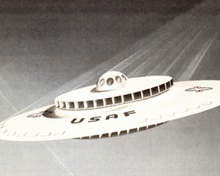
Declassified UFO Files: Inside the UK National Archives’ 2013 UFO Release
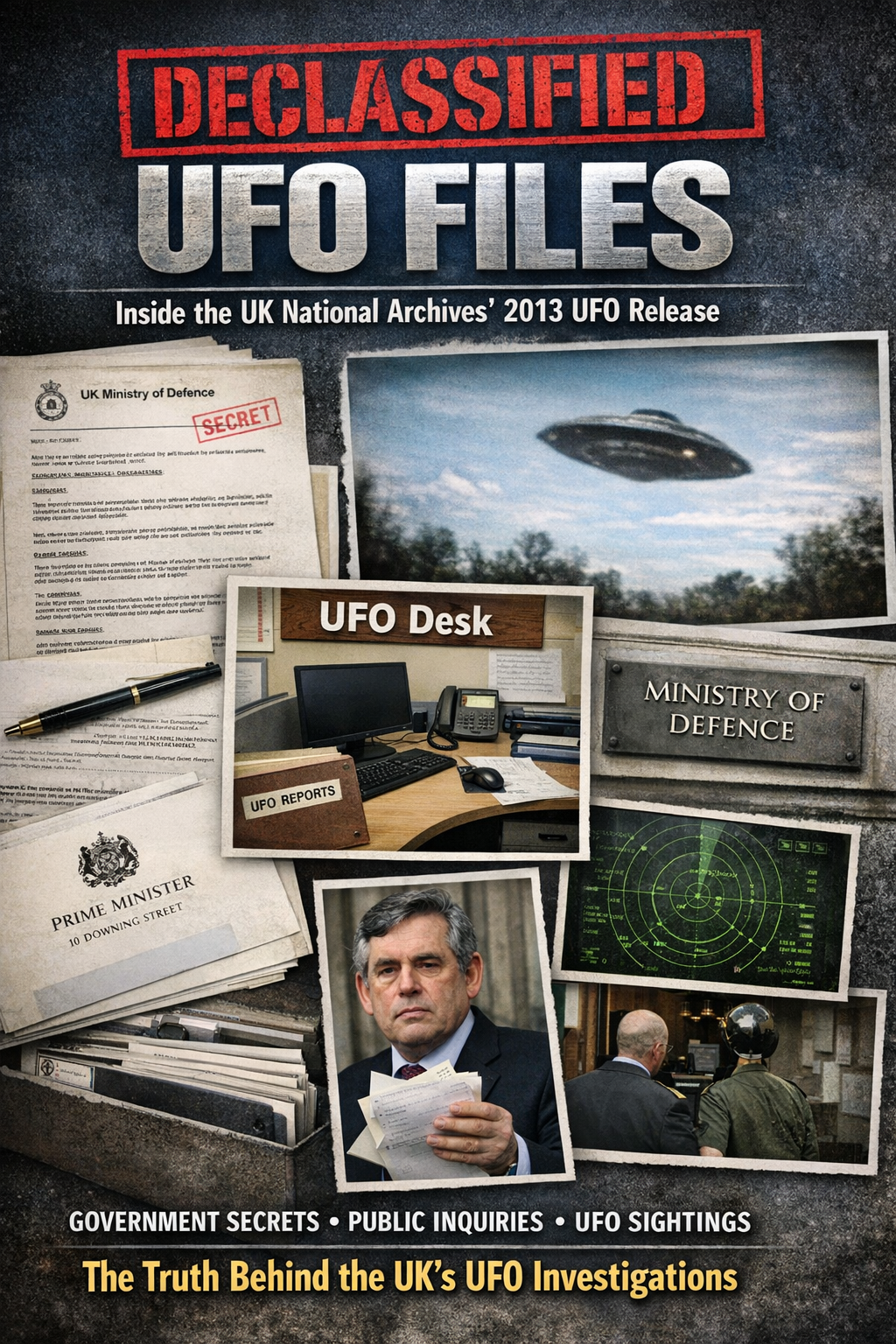
Introduction: When Governments Open the UFO Files
In June 2013, the United Kingdom’s National Archives released another batch of previously classified documents related to Unidentified Flying Objects (UFOs). The files, originating from the UK Ministry of Defence (MoD), provide a rare glimpse into how government officials handled public reports, political inquiries, and widespread curiosity surrounding extraterrestrial claims.
Rather than confirming alien encounters, the documents reveal something equally fascinating: how governments respond to belief, speculation, and public pressure.
Political Skepticism and Public Belief
One notable document records comments from government minister John Healey, who addressed claims made by a constituent asserting there was “popular and well-documented evidence” of extraterrestrial UFOs.
Healey explicitly disagreed with the claim, demonstrating the official government stance at the time — skepticism grounded in lack of scientific evidence.
This exchange highlights a recurring theme across the files:
public enthusiasm contrasted with institutional caution.
Letters to the Prime Minister: UFOs Reach the Highest Office
Several letters included in the archive were sent directly to Prime Minister Gordon Brown. These communications reveal how seriously some citizens and disclosure activists viewed UFO issues.
Among the requests:
-
Calls for comments on statements by a U.S. astronaut regarding Roswell and alleged UFO cover-ups
-
Questions asking whether the UK possessed an investigative unit comparable to the fictional agency depicted in The X-Files
These documents illustrate how popular culture influenced public expectations about government secrecy and extraterrestrial investigation.
The Reality of the UK’s “UFO Desk”
One of the most intriguing sections describes the Ministry of Defence’s UFO desk — the office responsible for handling UFO sightings reported by the public.
A note within the archive explains:
-
The responsibilities required for the position
-
Administrative procedures for handling reports
-
How individuals might apply for the role
Surprisingly, the job focused less on alien investigation and more on:
-
assessing potential air defence threats
-
responding to public inquiries
-
maintaining official records
The files even include an email from an individual attempting to apply for work in the so-called “UFO department.”
Government Responses to Extraterrestrial Claims
Additional correspondence shows emails sent to Defence Minister Des Browne discussing extraterrestrials. Official responses remained consistent:
-
No verified evidence of alien visitation
-
UFO reports posed no confirmed defence threat
-
Investigations prioritized national security rather than scientific exploration of aliens
These responses reinforce the MoD’s long-standing position that UFO investigations were conducted strictly from a defence perspective.
Between Myth and Administration
Perhaps the most revealing insight from the 2013 release is how ordinary the reality of UFO management appeared. Contrary to conspiracy theories, the documents portray:
-
civil servants answering emails,
-
politicians replying to concerned citizens,
-
and officials managing public expectations.
The mystery surrounding UFOs persisted largely outside government institutions rather than within them.
Conclusion: Transparency Without Aliens
The UK National Archives’ UFO June 2013 release does not confirm extraterrestrial visitation. Instead, it provides a historical record of how modern governments balance transparency, skepticism, and public fascination.
The files remind us that UFO phenomena exist not only in the sky but also in culture — shaped by media, belief, and humanity’s enduring curiosity about whether we are alone in the universe.
