
More than 2,000 years ago, a man measured the distance to the Moon.
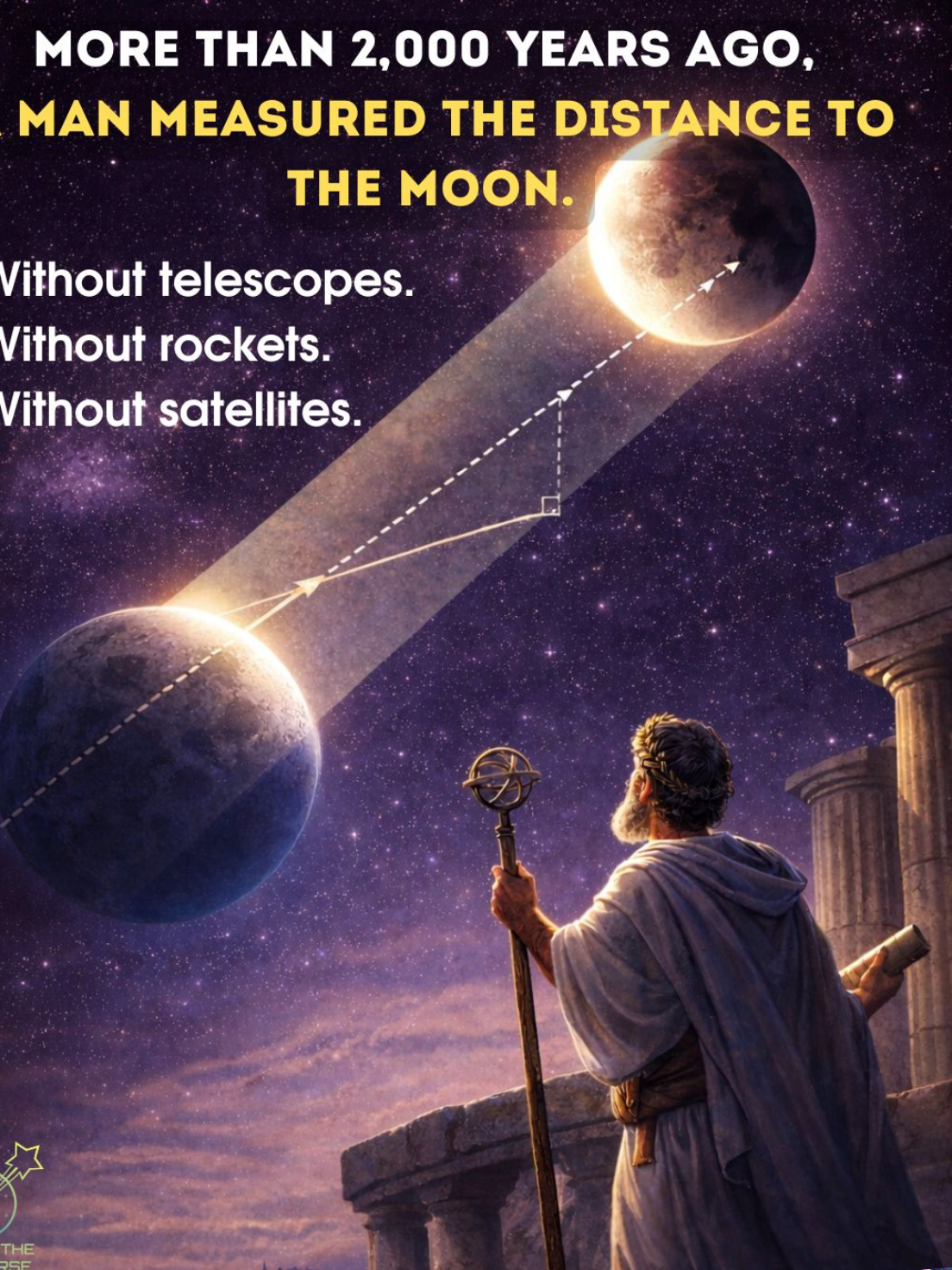
More than 2,000 years ago, a man measured the distance to the Moon.
Without telescopes.
Without rockets.
Without satellites.
Only using shadows and geometry.
The Greek astronomer Hipparchus realized that a lunar eclipse reveals something extraordinary.
During a lunar eclipse, Earth moves between the Sun and the Moon, casting a giant shadow into space.
That shadow slowly sweeps across the Moon.
Hipparchus carefully observed these eclipses and noticed something important:
Earth’s shadow is much larger than the Moon.
By measuring how long the Moon took to cross the shadow, and comparing the size of the Moon with the size of Earth’s shadow, he could estimate the geometry of the system.
From this simple observation, he calculated the distance to the Moon.
His result?
About 380,000 km.
The real average distance measured today is 384,400 km.
More than two millennia ago, a man looked at a shadow on the Moon…
…and measured the scale of space.
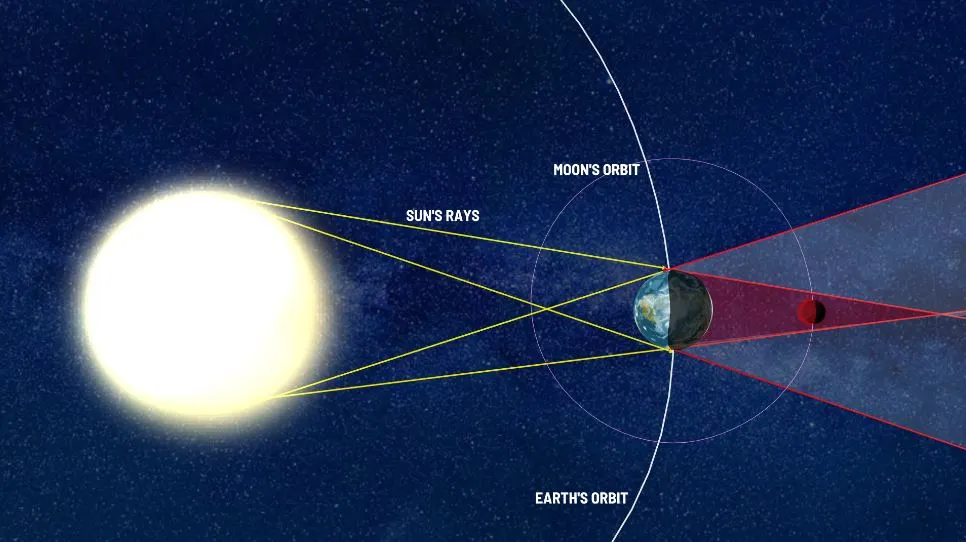
Sometimes the Universe reveals its secrets in the darkness of an eclipse.
If this inspired you, follow the page and join us on the journey through the stars.
#Astronomy #Moon #Space #Science #Cosmos #Universe #DidYouKnow #ScienceFacts #STEM #SpaceScience
