
Ural Mountains UFO Sightings
Ural Mountains UFO Sightings: Strange Lights Over Russia’s Natural Divide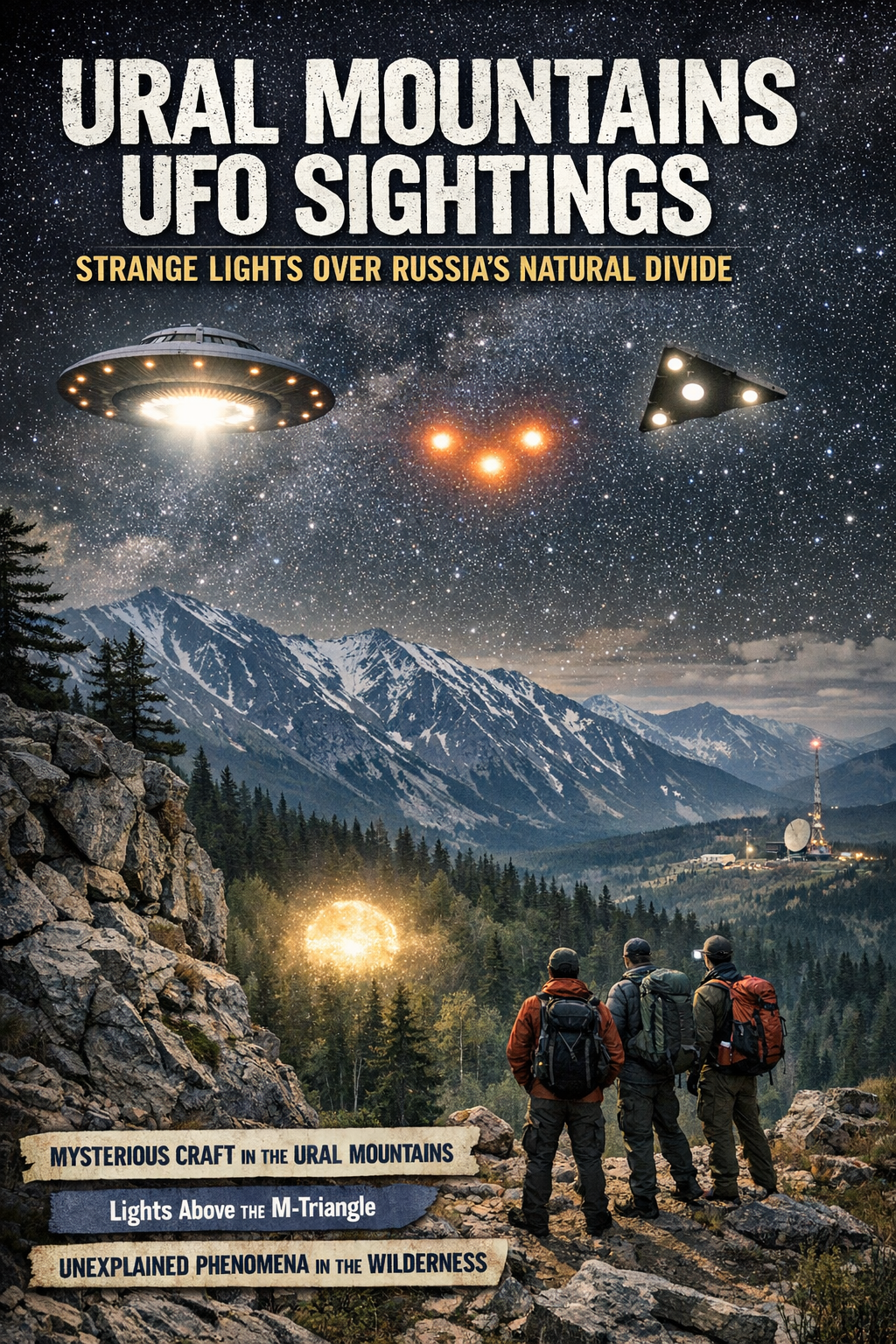
Introduction
The Ural Mountains, stretching for more than 2,500 kilometers across western Russia, form the traditional boundary between Europe and Asia. This vast and rugged mountain range is not only known for its mineral wealth and remote wilderness, but also for numerous reports of unidentified flying objects (UFOs).
For decades, residents, hikers, miners, and even military personnel have reported seeing mysterious lights and strange aerial craft over the mountains. These reports—collectively known as the Ural Mountains UFO Sightings—have made the region one of Russia’s most intriguing UFO hotspots.
A Remote and Mysterious Region
Ural Mountains run through several Russian regions, including the areas around Yekaterinburg and Perm Krai.
Much of the area consists of dense forests, deep valleys, and sparsely populated settlements. Because of this isolation, unusual aerial phenomena can sometimes be seen clearly in the night sky, far from city lights.
The region also hosts military facilities, radar stations, and industrial centers, which has led some researchers to suspect that experimental aircraft or classified tests might explain some sightings.
Early Reports During the Soviet Era
Reports of unusual lights in the Ural region date back to the Soviet period. In the 1960s and 1970s, several hikers and geological survey teams reported seeing bright glowing objects hovering silently above mountain ridges.
One frequently mentioned area is near the village of Molebka, which later became famous as part of the so-called “M-Triangle” or Molebka Anomalous Zone.
Witnesses described:
-
Bright spheres floating silently above forests
-
Disc-shaped objects emitting colored lights
-
Sudden accelerations and sharp directional changes
These reports were rarely published in Soviet media at the time but circulated among local researchers and scientists.
The Molebka Anomalous Zone
In the late 1980s and early 1990s, the area around Molebka gained international attention among UFO researchers.
Visitors to the region claimed to observe:
-
Floating luminous spheres
-
Strange glowing structures above the forest
-
Objects appearing briefly before disappearing instantly
Some witnesses even reported unusual electromagnetic effects, such as malfunctioning compasses and drained batteries.
Because of these claims, the site became one of Russia’s most famous alleged paranormal locations.
Witness Accounts from Hikers and Travelers
The Ural Mountains attract many hikers and adventure tourists, and several have reported unusual aerial sightings.
Common descriptions include:
-
A silent triangular craft moving slowly across the night sky
-
Multiple lights flying in formation above mountain peaks
-
Bright orange spheres hovering above valleys before vanishing
In some cases, witnesses reported the objects accelerating at extremely high speeds, far beyond what conventional aircraft could achieve.
Possible Explanations
Scientists and skeptics have proposed several explanations for these sightings:
Atmospheric phenomena
The Ural region often experiences unusual atmospheric conditions, including ice crystals, plasma formations, and aurora-like effects.
Military testing
Because parts of the Ural region contain military infrastructure, some sightings could involve secret aircraft or missile tests.
Optical illusions and satellites
Bright satellites, rocket launches, and space debris re-entering the atmosphere can sometimes create spectacular light displays.
Despite these explanations, some sightings remain unexplained due to their duration, maneuverability, and multiple witnesses.
A Continuing UFO Hotspot
Even today, the Ural Mountains remain a popular destination for UFO enthusiasts and paranormal researchers. Expeditions to the Molebka zone continue to search for evidence of unusual aerial phenomena.
Whether caused by natural atmospheric effects, secret technology, or something still unknown, the Ural Mountains UFO Sightings remain one of the most enduring mysteries of the Russian wilderness.
