
The Nazca Lines
The Nazca Lines: One of the Greatest Archaeological Mysteries on Earth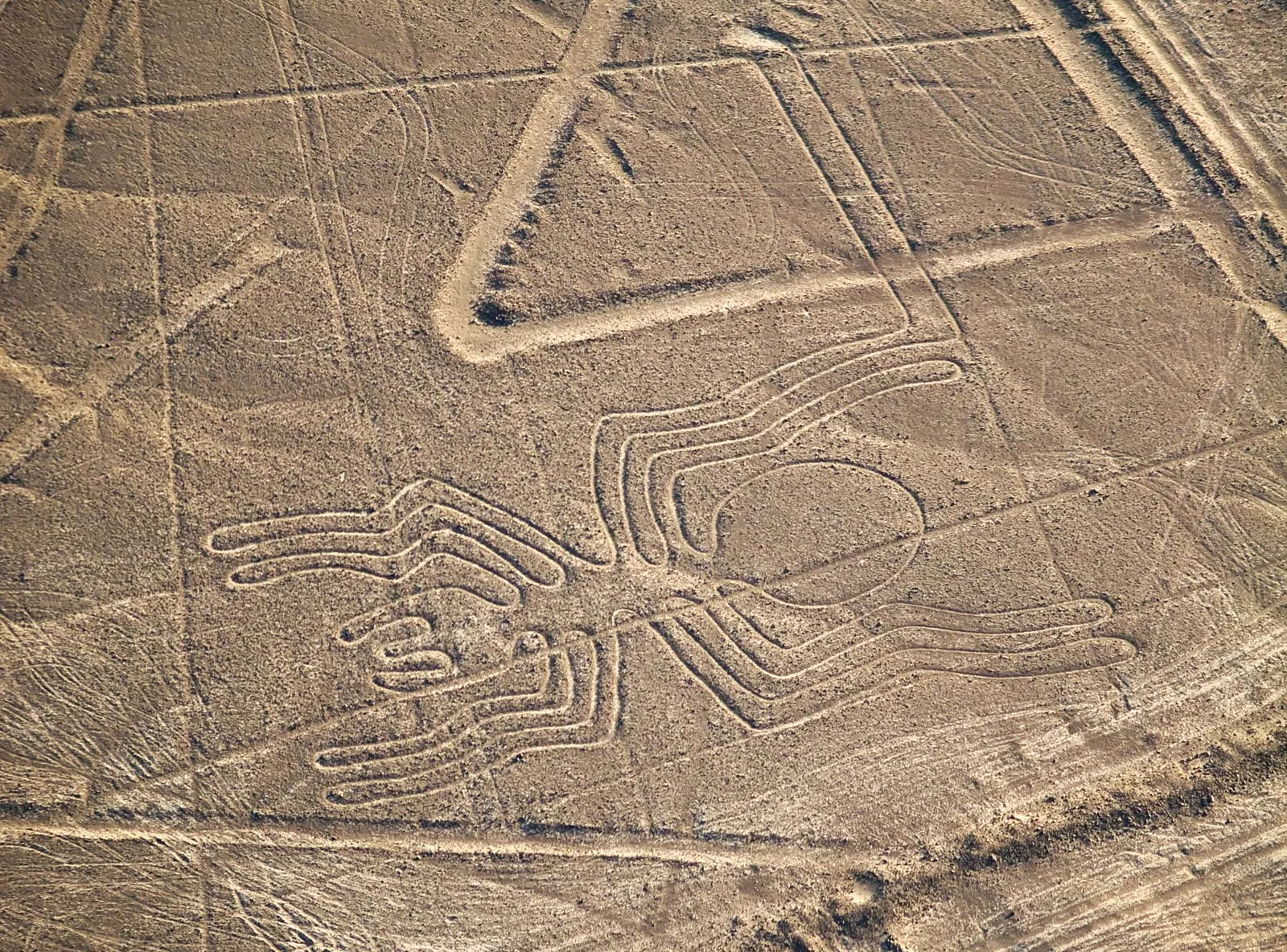
Introduction
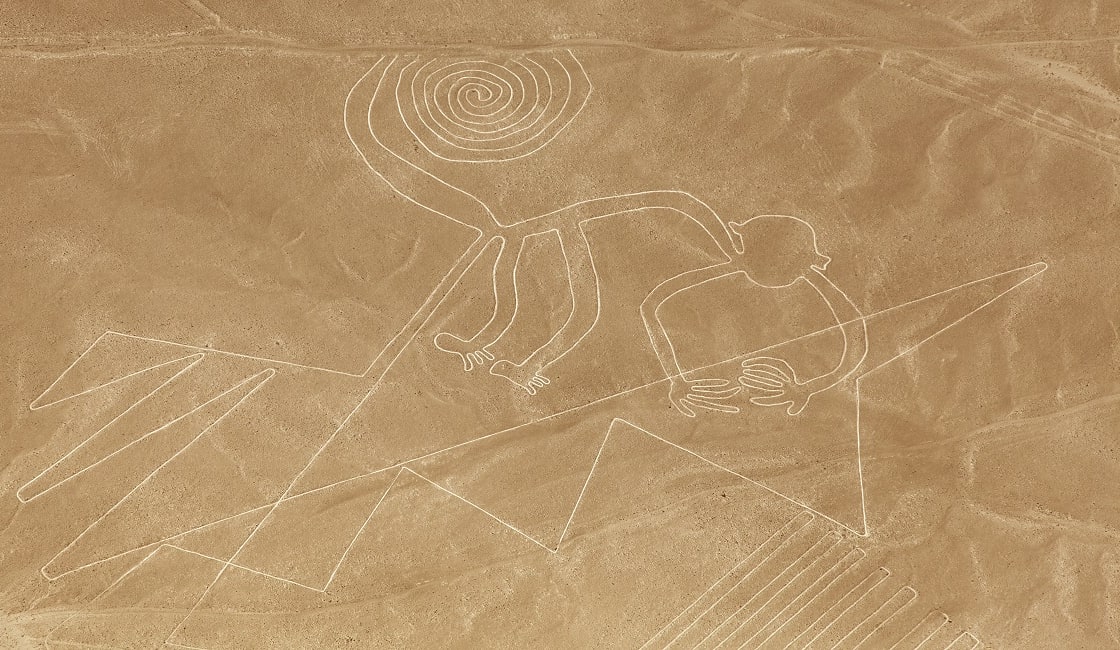
Hidden in the vast desert of southern Peru lies one of the most mysterious archaeological sites in the world—the Nazca Lines. These enormous geoglyphs, carved into the ground thousands of years ago, form giant images that can only be fully seen from the sky.
For decades, scientists, historians, and explorers have debated the purpose of these mysterious figures. Were they religious symbols, astronomical markers, or something even more unusual? The true meaning of the Nazca Lines continues to puzzle researchers today.
A Giant Gallery in the Desert
The Nazca Lines are located in the Nazca Desert of southern Peru. The site stretches across roughly 450 square kilometers of desert terrain.
These geoglyphs were created by removing the dark surface stones of the desert to reveal the lighter soil beneath. This simple technique produced enormous drawings that have survived for centuries because the region is extremely dry and has very little wind.
Some of the most famous figures include:
-
A hummingbird
-
A spider
-
A monkey
-
A condor
-
A dog
-
Various geometric shapes and straight lines stretching for kilometers
Many of the figures measure over 100 meters across, making them among the largest artworks ever created by ancient humans.
Who Created the Nazca Lines?
Most researchers believe the lines were created by the Nazca civilization, which flourished between 200 BC and 600 AD.
Archaeological evidence suggests that the Nazca people used simple tools such as wooden stakes and ropes to plan the designs. By marking points on the ground and connecting them carefully, they were able to create remarkably accurate large-scale images.
Despite the enormous size of the drawings, experiments by archaeologists have shown that small teams of people could create the designs without needing to see them from the air.
Why Were the Lines Created?
The biggest mystery surrounding the Nazca Lines is their purpose. Several theories have been proposed over the years.
1. Religious or Ritual Pathways
Many archaeologists believe the lines were used in religious ceremonies. Some lines appear to form pathways where people may have walked during rituals to honor their gods.
2. Astronomical Calendar
Another theory suggests that the lines align with celestial events, such as the positions of the sun or stars. Some researchers believe the geoglyphs may have functioned as a giant astronomical calendar used for agriculture.
3. Water Rituals
Because the Nazca region is extremely dry, some scholars think the lines were connected to water rituals meant to appeal to deities for rain.
The Ancient Alien Theory
The unusual scale of the drawings has inspired more controversial explanations.
In the 1960s, writer Erich von Däniken popularized the idea that the Nazca Lines may have been landing markers for extraterrestrial spacecraft. Because many designs are best seen from the air, he suggested they could have been created for beings capable of flight.
However, most scientists reject this theory. Archaeological evidence clearly shows that the lines were created using simple human methods and tools.
Discovery from the Sky
Although local people had known about the lines for centuries, their true scale was not fully understood until the 20th century.
In the 1920s and 1930s, pilots flying over the region began noticing enormous shapes in the desert. Later, German mathematician and archaeologist Maria Reiche dedicated decades of her life to studying and protecting the site.
Her work helped bring global attention to the Nazca Lines and contributed greatly to their preservation.
A UNESCO World Heritage Site
In 1994, the Nazca Lines were declared a UNESCO World Heritage Site due to their cultural and historical importance.
Today the site is carefully protected, but it still faces threats from:
-
Illegal mining
-
Vehicle damage
-
Urban expansion
-
Climate change
Preserving the Nazca Lines remains an important challenge for archaeologists and the Peruvian government.
Conclusion
More than 1,500 years after their creation, the Nazca Lines remain one of humanity’s greatest archaeological mysteries.
Their enormous scale, artistic complexity, and unknown purpose continue to fascinate scientists and travelers alike. Whether they were sacred pathways, astronomical markers, or symbols of ancient beliefs, the Nazca Lines stand as a remarkable testament to the ingenuity and creativity of the ancient Nazca civilization.
