
The Baghdad Battery: Ancient Technology or Historical Mystery?
The Baghdad Battery: Ancient Technology or Historical Mystery?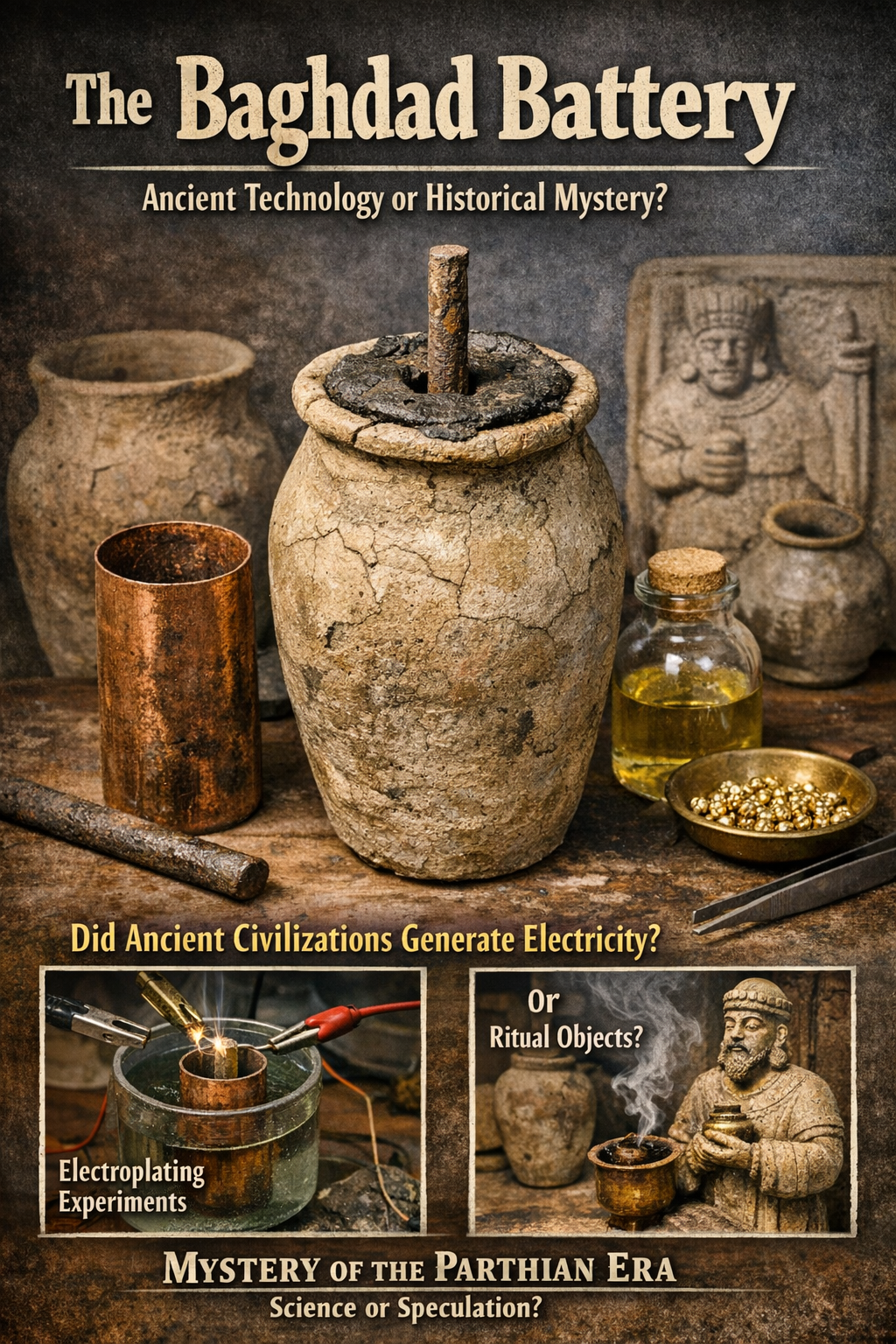
Introduction
In the 1930s, archaeologists discovered a strange clay jar near Baghdad that sparked one of the most intriguing debates in archaeology. The object appeared to contain components similar to a simple electrical device, leading some researchers to suggest that ancient civilizations may have understood electricity long before modern science.
This artifact is now known as the Baghdad Battery, and its true purpose remains one of the most fascinating mysteries of the ancient world.
Discovery Near Baghdad
The artifact was discovered in 1936 during excavations at Khujut Rabu, located near Baghdad.
The excavation was led by Austrian archaeologist Wilhelm König, who later became the director of the National Museum of Iraq.
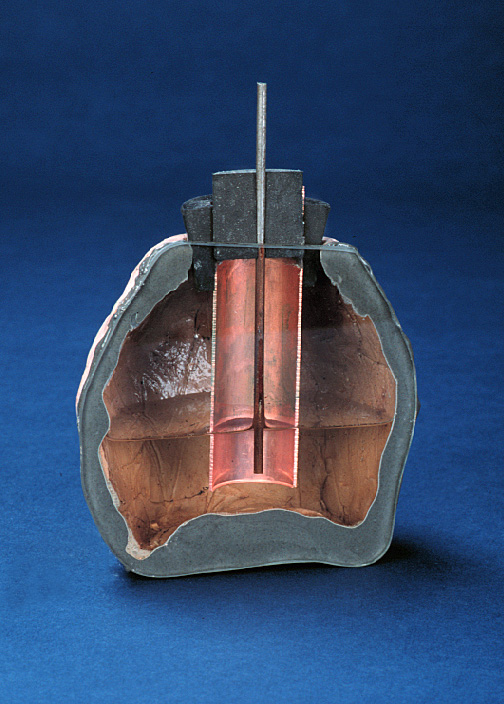
The object consisted of several parts:
-
A clay jar about 13 centimeters tall
-
A copper cylinder placed inside the jar
-
An iron rod inserted into the cylinder
-
A sealed top made with bitumen (natural asphalt)
When König studied the device, he noticed that its structure looked similar to a simple galvanic cell.
Could It Have Generated Electricity?
Some scientists suggested that if the jar were filled with an acidic liquid—such as vinegar or lemon juice—the copper and iron components could create a small electrical current.
Experiments conducted in modern laboratories have shown that replicas of the device can produce about 0.5 to 1 volt of electricity.
Because of this, some researchers proposed that the artifact might have been used as an ancient battery.
Possible uses might have included:
-
Electroplating metals (coating objects with a thin layer of gold or silver)
-
Medical or ritual purposes
-
Generating small electric shocks during ceremonies
However, no clear evidence confirms that the device was actually used this way.
The Electroplating Theory
One of the most popular explanations suggests that the Baghdad Battery was used for electroplating jewelry or metal objects.
Electroplating requires electricity to deposit a thin layer of metal onto another surface. Some archaeologists believe ancient craftsmen may have discovered this process accidentally while experimenting with chemical reactions.
However, critics argue that no electroplating equipment or written records from the same time period have been found.
Alternative Explanations
Many modern archaeologists remain skeptical that the object functioned as a battery.
Other proposed explanations include:
-
A storage container for scrolls or sacred texts
-
A ritual object used in religious ceremonies
-
A simple container with no electrical purpose
Because the artifact was found without clear documentation of its surrounding context, its original use remains uncertain.
The Historical Context
The artifact is believed to date back to the Parthian Empire, which ruled parts of the Middle East between 247 BC and 224 AD.
The Parthians were known for their advanced craftsmanship and trade networks, but there is no clear historical record of electrical technology from that era.
This lack of documentation makes the Baghdad Battery even more mysterious.
A Debate That Continues Today
Since its discovery, the Baghdad Battery has become a popular subject in documentaries, scientific discussions, and alternative history theories.
Some researchers view it as evidence that ancient people experimented with electricity, while others believe the “battery” interpretation may simply be a modern misunderstanding of an ancient artifact.
Conclusion
The Baghdad Battery remains one of the most intriguing puzzles in archaeology. Its unusual design continues to inspire debate about the technological knowledge of ancient civilizations.
Whether it was truly an early electrical device or simply an everyday object whose purpose has been misunderstood, the artifact reminds us that many secrets of the ancient world are still waiting to be uncovered.
