
Chupacabra: The Blood-Sucking Mystery of the Americas
Chupacabra: The Blood-Sucking Mystery of the Americas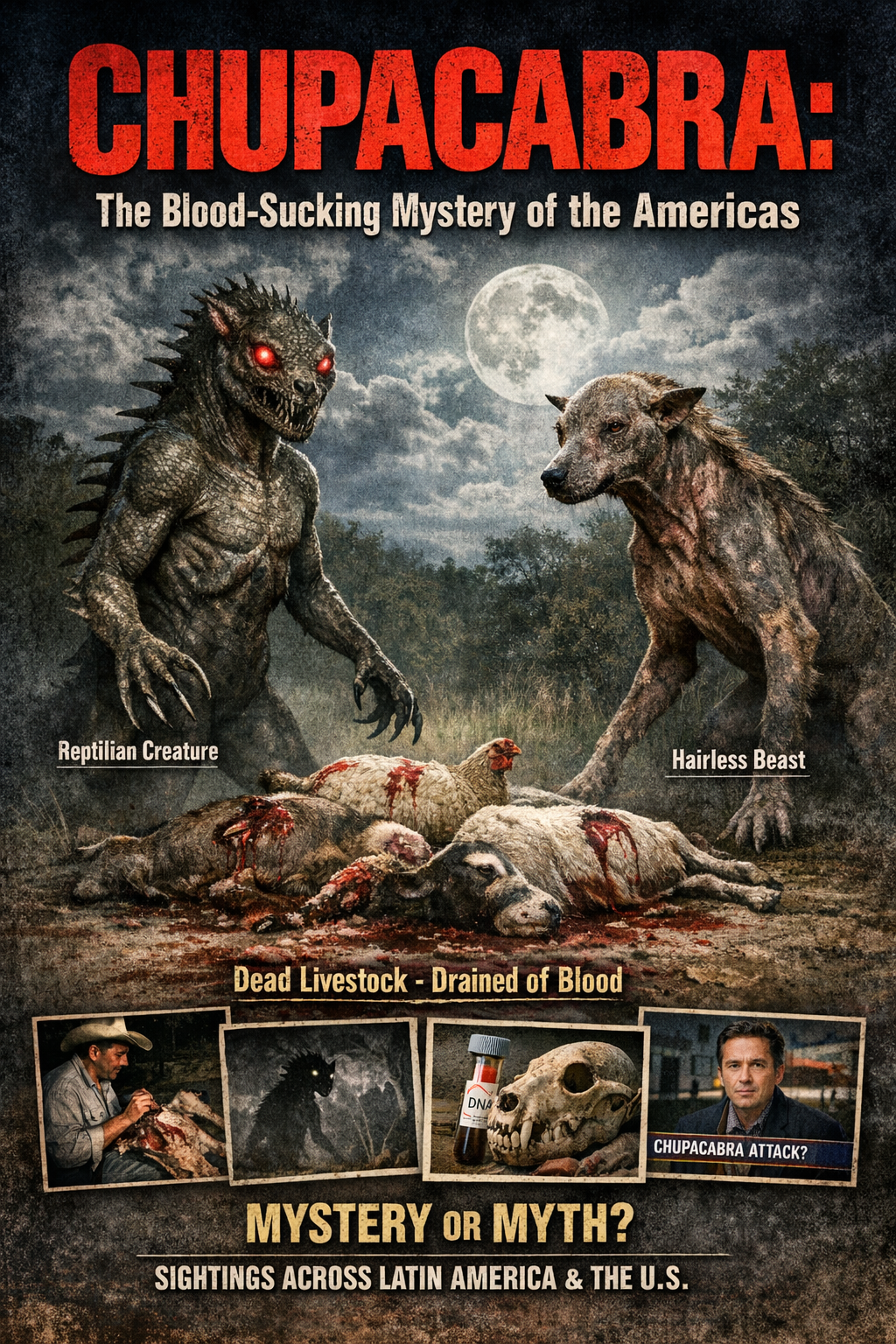
Introduction
Among the strangest creatures in modern folklore is the Chupacabra, a mysterious animal said to attack livestock and drain their blood. The creature’s name comes from Spanish—“chupa” meaning to suck, and “cabra” meaning goat—literally translating to “goat-sucker.”
First reported in the 1990s, the Chupacabra quickly became one of the most famous cryptids in the Americas. Farmers across several countries claimed their animals were being killed in bizarre ways, fueling a mystery that continues today.
The First Reports
The modern legend of the Chupacabra began in 1995 in Puerto Rico.
Residents reported that goats, chickens, and other farm animals were found dead with strange puncture wounds on their bodies. Witnesses claimed the animals appeared to have been completely drained of blood, which led to widespread panic among local farmers.
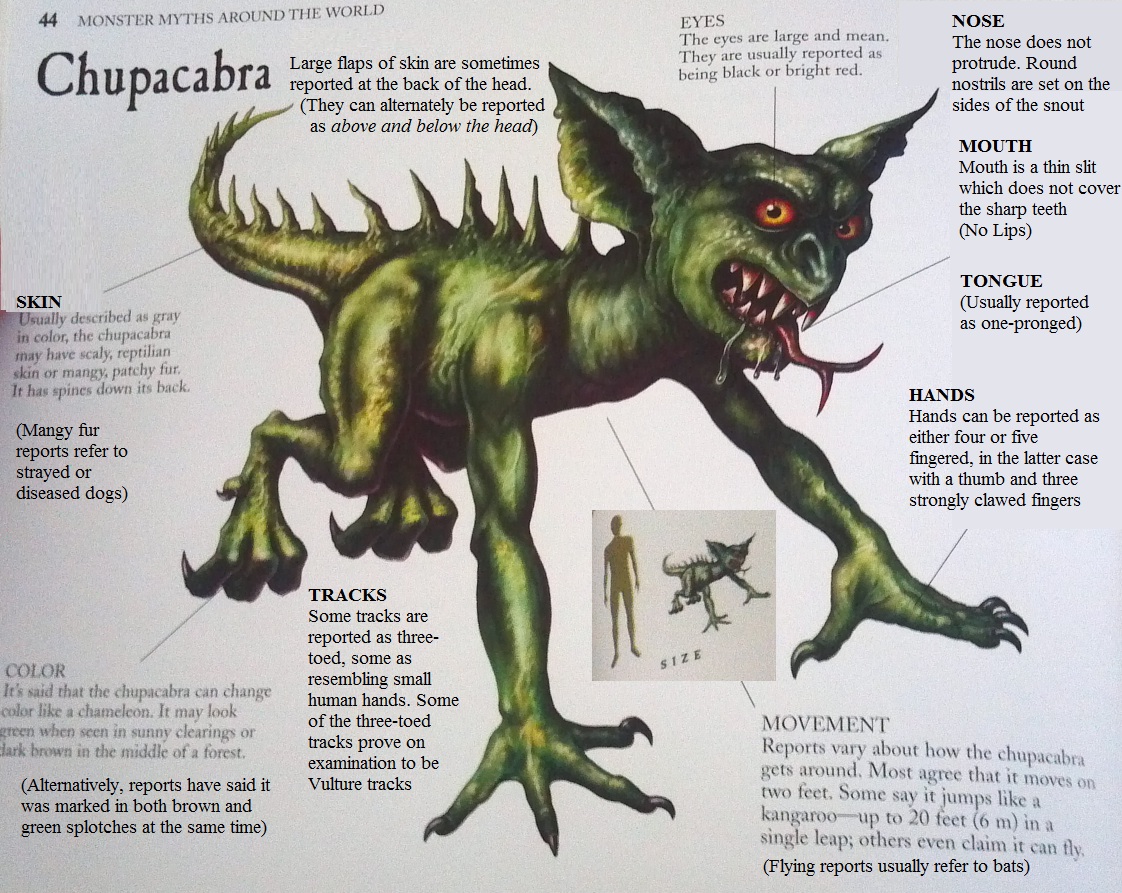
One woman in particular, Madelyne Tolentino, described seeing a strange creature with:
-
Spikes running down its back
-
Large glowing eyes
-
A reptilian-like body
Her account became one of the most famous descriptions of the creature.
Spreading Across the Americas
After the first reports in Puerto Rico, similar sightings began appearing across the Americas.
Reports came from places such as:
-
Mexico
-
Texas
-
Chile
-
Brazil
Farmers claimed their animals were being attacked overnight, often leaving behind bodies with little or no blood.
As the stories spread, the Chupacabra became a major topic in media and folklore.
Two Different Descriptions
Over time, two different versions of the Chupacabra began to appear in witness reports.
1. The Puerto Rican Version
The original descriptions from Puerto Rico portrayed the creature as:
-
Reptilian or alien-like
-
Standing upright
-
With spines along its back
2. The North American Version
Later sightings in the United States described something very different:
-
A hairless, dog-like animal
-
Thin body and long snout
-
Often suffering from severe skin disease
These animals were sometimes captured or photographed, but DNA testing usually identified them as coyotes or dogs with mange.
Scientific Explanations
Scientists and wildlife experts have offered several explanations for the mystery.
1. Diseased Animals
Many alleged Chupacabra carcasses were later identified as coyotes, dogs, or raccoons suffering from mange, a disease that causes severe hair loss and unusual appearance.
2. Misinterpretation of Animal Attacks
Predators such as coyotes often bite the neck of livestock, which may create puncture wounds that appear mysterious.
3. Media Influence
Some researchers believe the legend spread rapidly because of sensational media coverage and public fascination with unexplained creatures.
A Modern Legend
Even though scientific explanations exist, the legend of the Chupacabra continues to thrive.
The creature has appeared in:
-
Television shows and documentaries
-
Horror films and novels
-
Video games and urban legends
For many people, the Chupacabra represents one of the most intriguing modern myths in the world.
Conclusion
More than thirty years after the first reports, the mystery of the Chupacabra remains part of global folklore.
While scientists believe most sightings can be explained by known animals or natural causes, some witnesses insist that something truly unusual is still roaming the countryside.
Whether myth or undiscovered creature, the legend of the Chupacabra continues to capture the imagination of people across the Americas. 🐐👁️
