
James Webb Space Telescope Flags “3I/ATLAS” for Possible Biosignatures — Mysterious Object Now Drifting Closer
Sound the cosmic alarm bells.
Hide your houseplants.
Cancel your weekend plans.
Because according to the more excitable corners of the internet, the James Webb Space Telescope has just detected that a mysterious interstellar object called 3I/ATLAS is “carrying life” — and it’s getting closer to Earth.
Yes.
You read that correctly.
“Carrying life.”
“Getting closer.”
“Detected.”
If that sounds like the opening scene of a sci-fi thriller where someone in a lab coat whispers “It’s already too late”, congratulations — you’ve experienced modern headline engineering.
Before we assign alien pen pals or start arguing about first-contact etiquette, let’s unpack what’s actually going on.
First, Some Reality Grounding
3I/ATLAS is being discussed online as a newly identified interstellar object — an icy, rocky traveler that originated outside our solar system and is now passing through it.
This is not unprecedented.
In 2017, we had ʻOumuamua.
In 2019, we had 2I/Borisov.
Space occasionally throws us a visitor. It does not issue a press release when it does.
Enter the internet’s favorite deep-space celebrity: the James Webb Space Telescope.
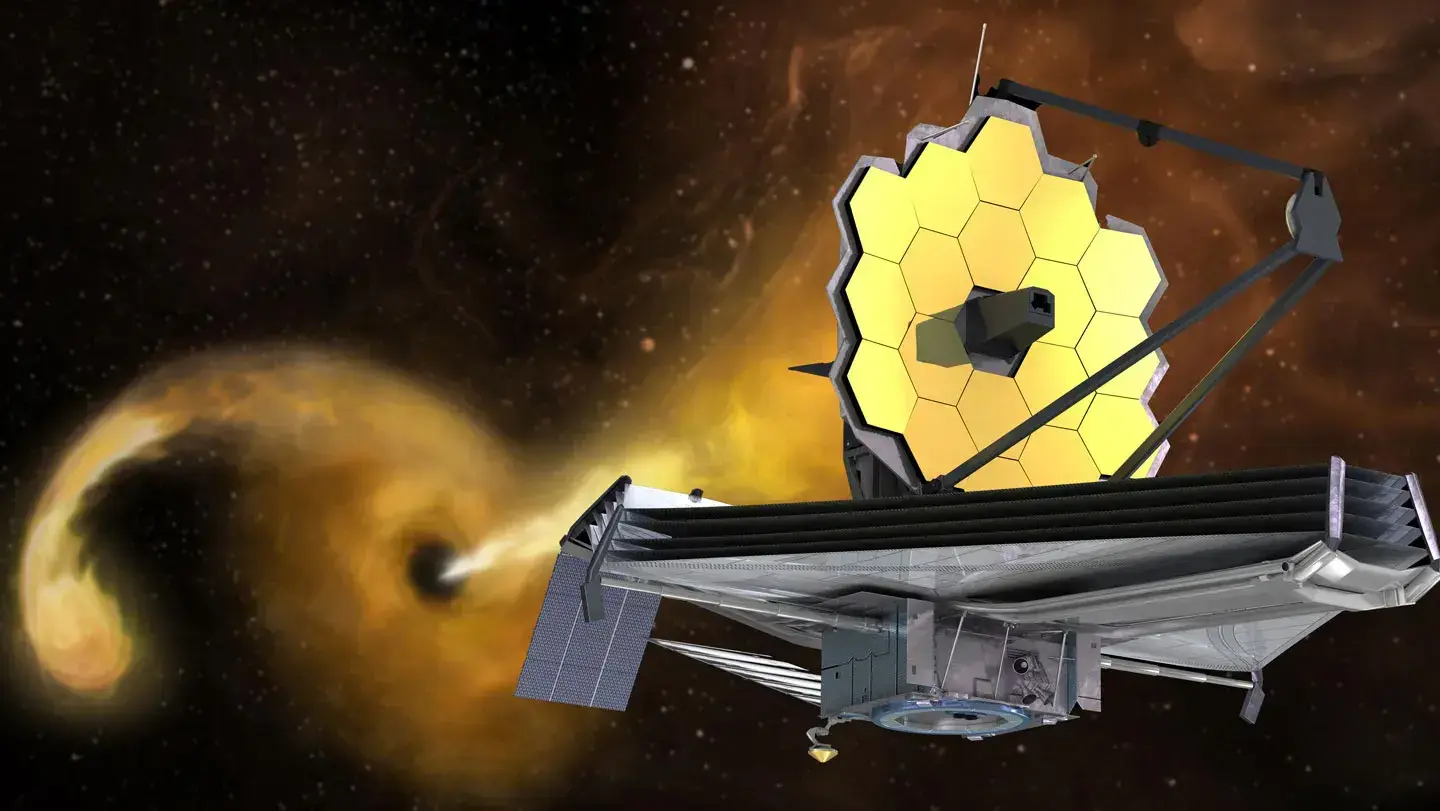
Webb is designed to detect faint infrared signatures from distant galaxies, exoplanets, and cosmic dust. Think of it as humanity’s most expensive and sophisticated pair of night-vision goggles.
And when Webb detects interesting chemistry, headlines tend to mutate faster than a lab-grown sci-fi monster.
The Detail That Keeps Getting “Lost” in Headlines
Here is the key distinction that clickbait routinely throws out an airlock:
Organic molecules ≠ living organisms
Organic molecules are carbon-based compounds.
They are common in space.
We’ve detected them in:
Comets
Meteorites
Interstellar clouds
They are the building blocks of life, not life itself.
But “carbon-based molecules detected in icy space object” doesn’t trend nearly as well as:
“ALIEN LIFE INCOMING.”
What Scientists Are Actually Studying
When astronomers observe objects like 3I/ATLAS, they analyze spectral signatures — chemical fingerprints produced when light is absorbed or emitted by molecules.
If Webb detects complex organic compounds, that’s scientifically exciting. It tells us that:
Complex chemistry happens outside our solar system
The ingredients for life may be widespread
It does not mean a microscopic alien is waving from inside a comet.
As one hypothetical but refreshingly reasonable astrophysicist might put it:
“When we detect organic molecules, it means chemistry is happening — not biology. Space is basically a very large, very cold chemistry lab.”
Nuance whispers.
Headlines scream.
“But It’s Getting Closer!”
Yes. Technically true.
Interstellar objects:
Enter the solar system
Approach the Sun
Swing around
Leave
That’s orbital mechanics, not an invasion strategy.
“Getting closer” does not mean:
Targeting Earth
Deviating from predicted paths
Ignoring gravity in favor of malice
Objects like this are tracked obsessively by NASA and international observatories.
If something posed a real threat, you would not hear about it first from a thumbnail featuring red arrows and the word “EXPOSED.”
But let’s be honest —
“Interstellar Object Following Expected Trajectory” is not a great headline.
What “Carrying Life” Actually Means (and Doesn’t)
In astrobiology, scientists make very careful distinctions between:
Prebiotic chemistry (ingredients for life)
Biosignatures (possible indirect indicators of life)
Actual living organisms
These are not interchangeable.
If Webb detected strong biosignatures, that would trigger:
Years of verification
Peer-reviewed studies
International press conferences
Not a tweet posted five minutes ago.
As a general rule:
If alien life were truly confirmed, you would not need to ask whether it was real.
Why This Story Is Still Genuinely Fascinating
Here’s the part that doesn’t need exaggeration:
Interstellar objects are time capsules from other star systems.
Studying their chemistry helps scientists understand:
How planets form elsewhere
How common organic chemistry is in the galaxy
Whether life’s ingredients are universal
That is profound.
It just doesn’t require panic.
Even if complex organic molecules are confirmed, there is:
No contamination risk
No invasion risk
No “alien spores falling on Earth” scenario
Most objects pass far away.
And extreme heat during atmospheric entry sterilizes almost everything anyway.
Why These Headlines Keep Working
Humans want to know we’re not alone.
So when a headline hints at alien life, we collectively lean forward.
It’s cosmic gossip.
“Did you hear? The comet might have microbes.”
But history is full of cases where early excitement outpaced evidence. Science refines itself. Headlines rarely do.
So What Do We Actually Know?
3I/ATLAS appears to be an interstellar object
Astronomers are studying its composition and trajectory
Organic molecules, if detected, are chemically interesting
There is no verified confirmation of life
No official announcement.
No emergency briefings.
No global “we’re not alone” moment.
The Real Takeaway
Humanity has built instruments powerful enough to analyze the molecular makeup of objects born around other stars.
That alone is extraordinary.
The universe is fascinating enough without turning every carbon atom into an alien ambassador.
If something truly groundbreaking emerges from observations of 3I/ATLAS, you’ll hear it from scientific institutions first — not from a blinking red “1 MINUTE AGO” banner.
Until then:
Breathe.
Look up.
And remember — complex chemistry in space is common.
Alien invasion headlines are not.
The real mystery isn’t whether 3I/ATLAS carries life.
It’s why we’re so eager to believe it does.
