
THE FORGOTTEN STARSHIP: Humanity’s Missed Leap to the Stars
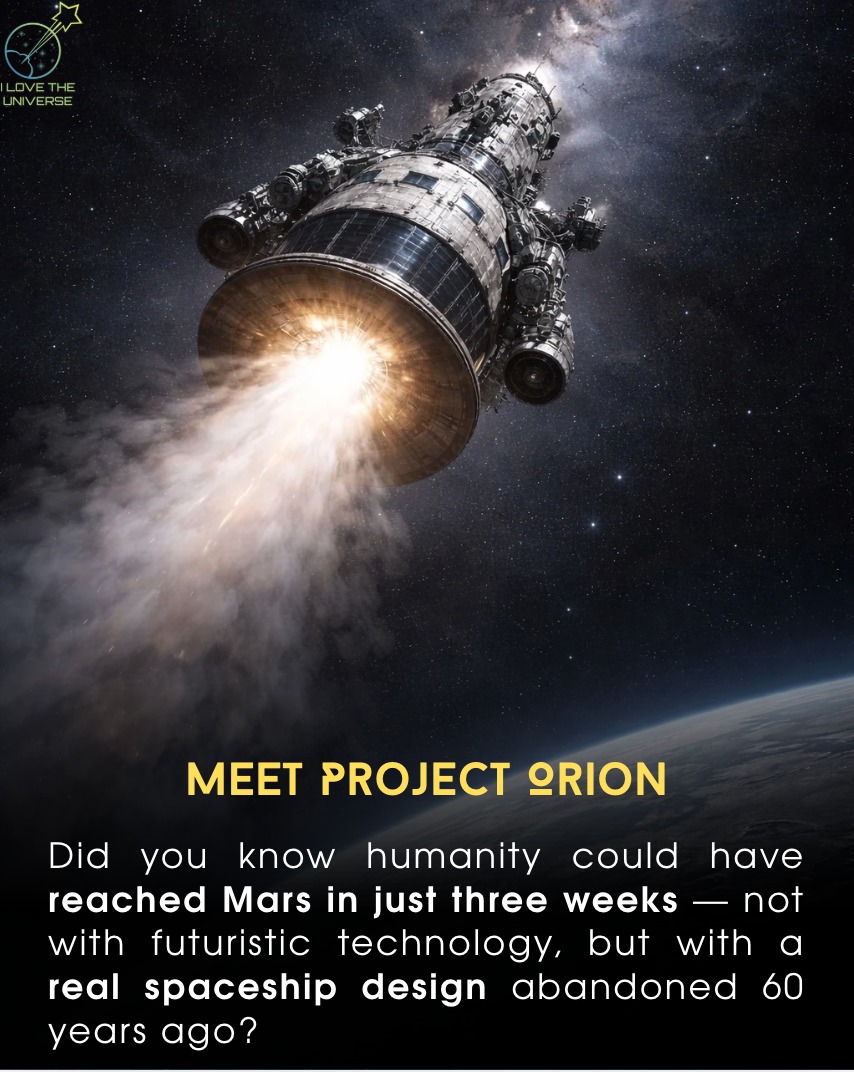
Sixty years ago, scientists designed a spaceship so powerful it could have changed humanity’s place in the universe.
It was called Project Orion.
Instead of burning fuel like today’s rockets, Orion was designed to ride a series of nuclear explosions. The idea was shockingly simple: the spacecraft would eject small nuclear charges behind it. Each one would detonate a short distance away, and the blast would slam into a massive steel plate at the back of the ship. Giant shock absorbers would smooth out the impact, turning a chain of explosions into steady acceleration.
One explosion. Every second.
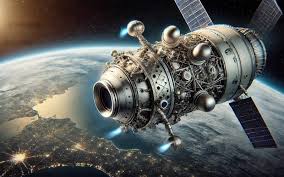
It sounds insane—but the physics worked.
Engineers in the late 1950s built test models powered by conventional explosives, and they actually flew. Calculations showed that a full-scale Orion spacecraft could be enormous—thousands of tons, carrying large crews and heavy cargo into space.
The numbers were staggering.
With that kind of power, Mars might not be a six-month journey like it is with chemical rockets today.
It could have been a trip of only a few weeks.
Jupiter could have been reached in months.
Some scientists even believed Orion could eventually send humans toward the nearest stars within a single lifetime.
But the project was never built.
In 1963, nuclear test ban treaties and growing fears about radioactive fallout shut the idea down. The most powerful spacecraft concept ever seriously studied was quietly abandoned and locked away in archives.
And humanity continued into space using far weaker chemical rockets.
Which raises a fascinating question:
Did we cancel Project Orion because it was too dangerous…
— or because it would have changed our future in the Universe forever?
If this post sparked your curiosity, follow the page for more journeys through space and time
