
The Kensington Runestone: A Viking Mystery in America
📰 The Kensington Runestone: A Viking Mystery in America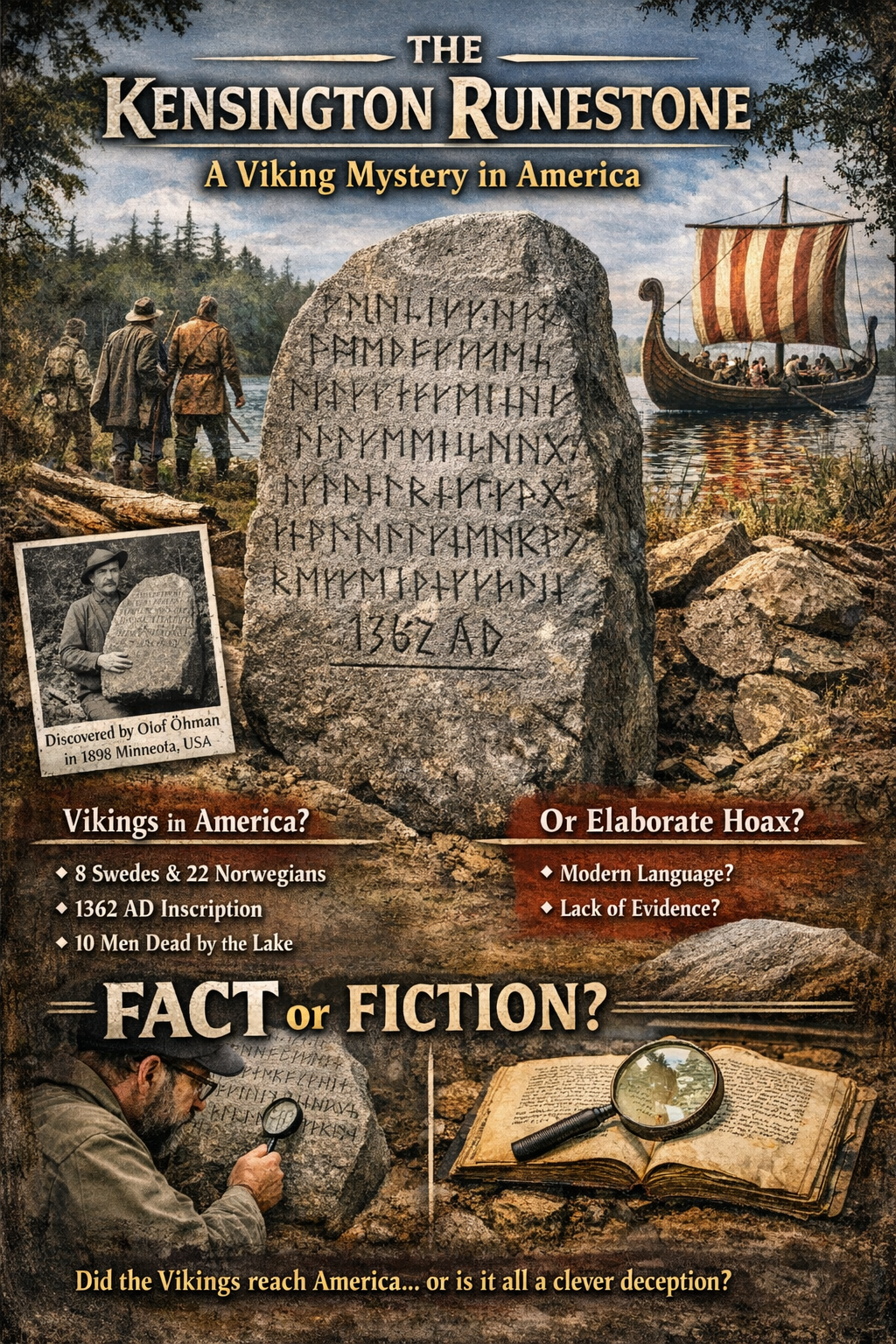
Introduction
In the late 19th century, a strange carved stone was discovered in rural America—one that seemed to rewrite history. Known as the Kensington Runestone, this artifact has sparked intense debate among historians, archaeologists, and linguists for over a century.
Does it prove that Vikings reached deep into North America long before Columbus—or is it an elaborate hoax?
The Discovery
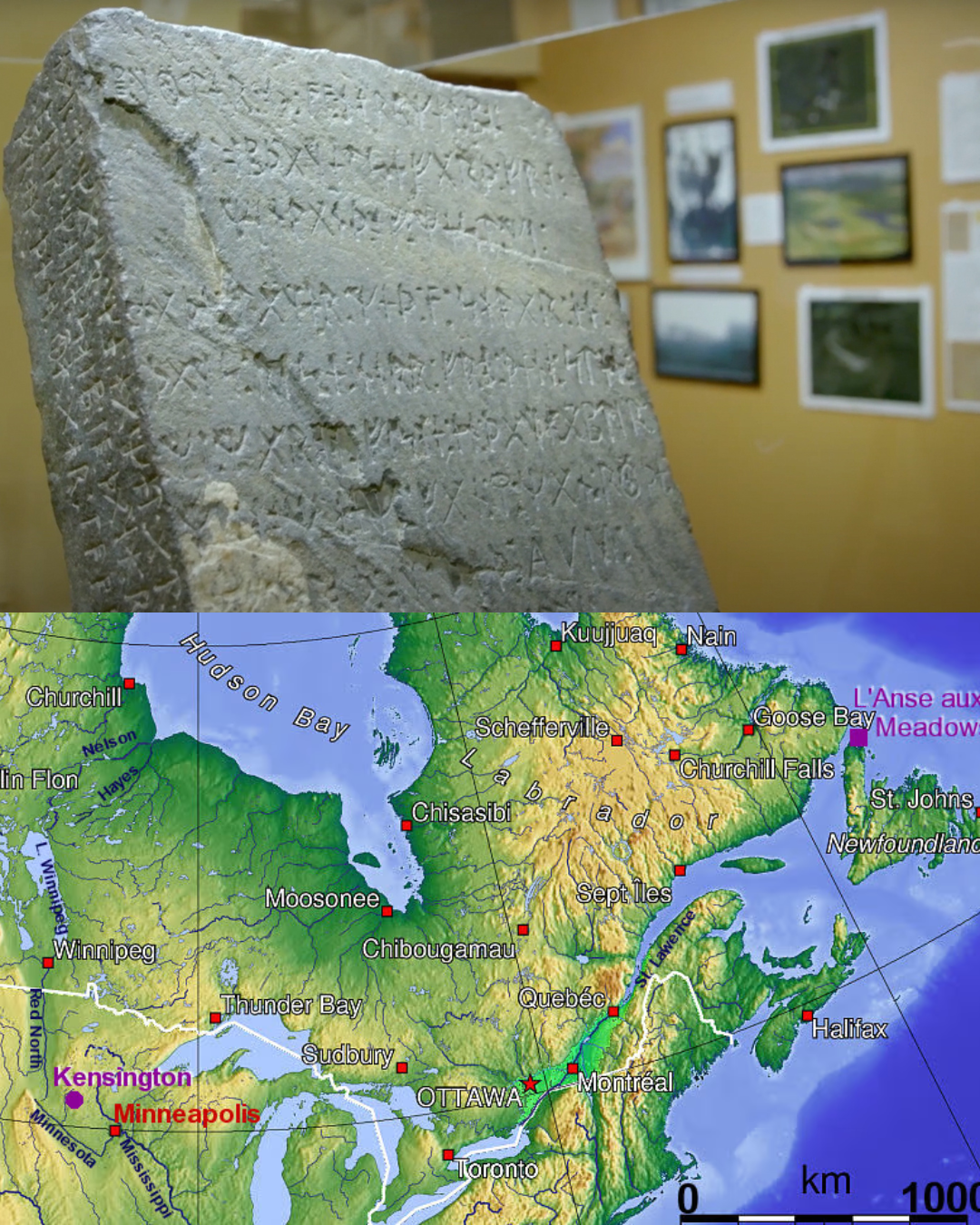
The stone was reportedly discovered in 1898 by Swedish immigrant Olof Öhman near Kensington, Minnesota in the United States.
Öhman claimed he found the slab tangled in tree roots while clearing land. The stone was covered in runic inscriptions—an ancient Scandinavian writing system used by the Vikings.
What Does the Stone Say?
The inscription on the runestone appears to describe a group of Scandinavian explorers traveling inland from the western coast. It tells a dramatic story:
-
A group of 8 Swedes and 22 Norwegians on an expedition
-
A camp set up near a lake
-
The discovery that 10 men were found dead
-
A warning of danger from unknown attackers
The text is dated 1362, suggesting a Viking presence in central North America more than a century before Christopher Columbus reached the continent.
Why Is It So Controversial?
The Kensington Runestone has divided experts into two main camps:
⚖️ 1. Evidence of Viking Exploration
Supporters argue that the stone is genuine proof that Norse explorers traveled far beyond known settlements like L’Anse aux Meadows, which is widely accepted as a real Viking site in Canada.
They point to the detailed narrative and historical plausibility of Norse expeditions.
❌ 2. A Clever Hoax
Many scholars believe the runestone is a fake, created in the 19th century. Their arguments include:
-
The language contains modern Scandinavian influences
-
Some runes do not match authentic medieval usage
-
Lack of supporting archaeological evidence
Skeptics suggest that Öhman or someone in his community may have carved the stone as a prank or to gain attention.
Scientific Investigations
Over the years, the runestone has been studied using linguistic analysis, geological testing, and historical comparison. While some tests suggest the weathering could be old, others argue it is consistent with a more recent carving.
No definitive conclusion has been reached, leaving the mystery unresolved.
Conclusion
The Kensington Runestone remains one of the most debated artifacts in American history. Whether it is genuine evidence of early exploration or an ingenious hoax, it continues to challenge our understanding of the past.
Until new evidence emerges, the stone stands as a symbol of how history can still hold secrets waiting to be uncovered.
