
The Fermi Paradox: Where Is Everybody?
📰 The Fermi Paradox: Where Is Everybody?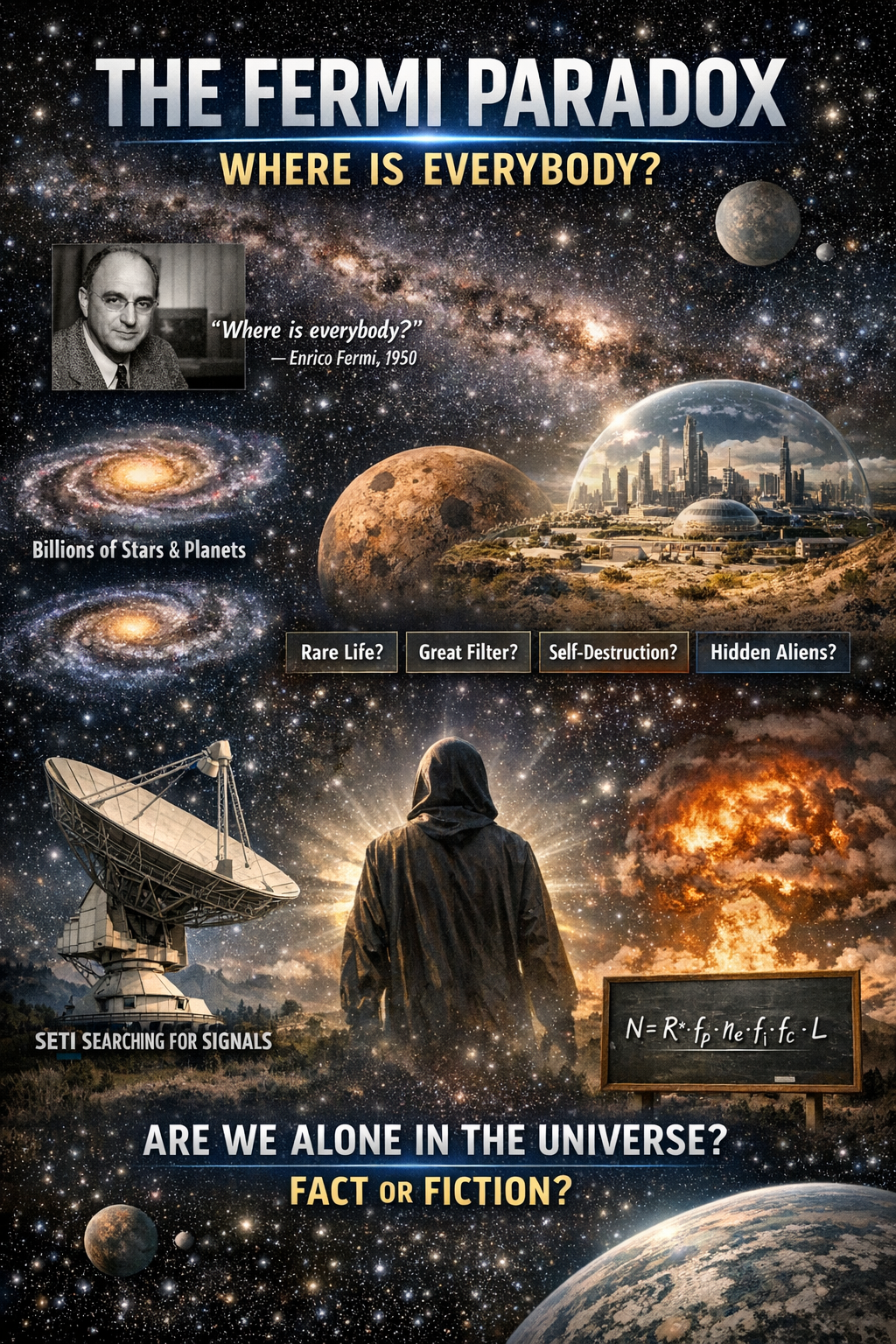
Introduction
In a universe filled with billions of galaxies, each containing billions of stars and potentially habitable planets, one question stands out:
If intelligent life is likely to exist, why haven’t we found any evidence of it?
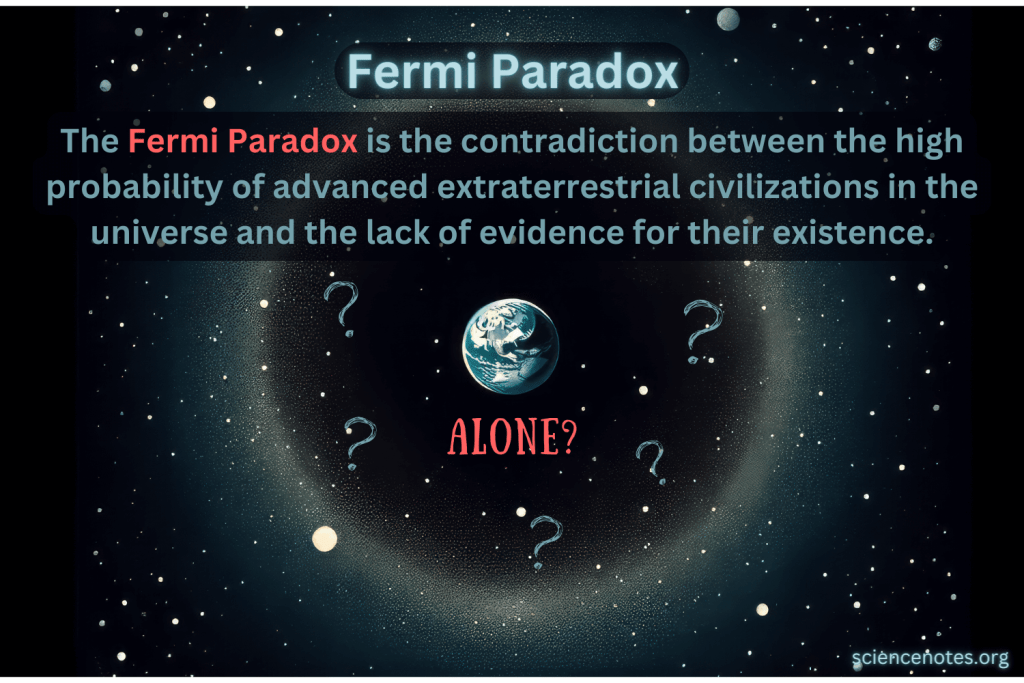
This puzzling question is known as the Fermi Paradox.
The Question That Started It All
The paradox is named after physicist Enrico Fermi, who famously asked during a casual conversation in 1950:
“Where is everybody?”
Fermi’s question highlights a contradiction: the universe is incredibly vast and ancient, so statistically, intelligent civilizations should exist—and some should be far more advanced than us.
The Scale of the Universe
Modern astronomy reveals an almost unimaginable scale:
-
Hundreds of billions of galaxies
-
Each galaxy containing billions of stars
-
Many stars with planets in the habitable zone
With such vast numbers, many scientists believe life should not be rare. Yet, despite decades of searching, we have found no confirmed signals or evidence of extraterrestrial civilizations.
Possible Explanations
Scientists and thinkers have proposed many possible solutions to the Fermi Paradox:
1. Rare Life Hypothesis
Life may be extremely rare, and Earth could be one of the few places where it has developed.
2. Great Filter Theory
There may be a stage in the development of life that is extremely difficult to pass—either behind us or still ahead.
3. Technological Self-Destruction
Civilizations may destroy themselves before becoming advanced enough to communicate across space.
4. They Are Already Here (But Hidden)
Some speculate that extraterrestrial civilizations may exist but are deliberately avoiding contact.
5. We Are Not Listening Correctly
Perhaps alien signals are being sent in ways we cannot detect or understand.
The Role of the Drake Equation
The Drake Equation was developed by astronomer Frank Drake to estimate how many intelligent civilizations might exist in our galaxy.
While the equation suggests that intelligent life could be common, many of its variables are still highly uncertain, making exact predictions difficult.
The Search for Signals
Scientists are actively searching for extraterrestrial intelligence through programs such as SETI, using radio telescopes to detect possible alien communications.
However, so far, no confirmed extraterrestrial signal has been detected.
Why the Fermi Paradox Matters
The paradox challenges our understanding of life, technology, and the universe itself.
If intelligent life is common, then we may not be alone—but if it is rare, then humanity may be far more special than we realize.
Either way, the answer to the Fermi Paradox could reshape our place in the cosmos.
Conclusion
The Fermi Paradox remains one of the most profound questions in science.
Are we truly alone, or have we simply not found the right way to look?
As technology advances and exploration continues, humanity moves closer to uncovering the truth. Until then, the silence of the universe remains one of its greatest mysteries.
