
The Solar Corona Heating Problem: Why the Sun’s Atmosphere Is Hotter Than Its Surface
📰 The Solar Corona Heating Problem: Why the Sun’s Atmosphere Is Hotter Than Its Surface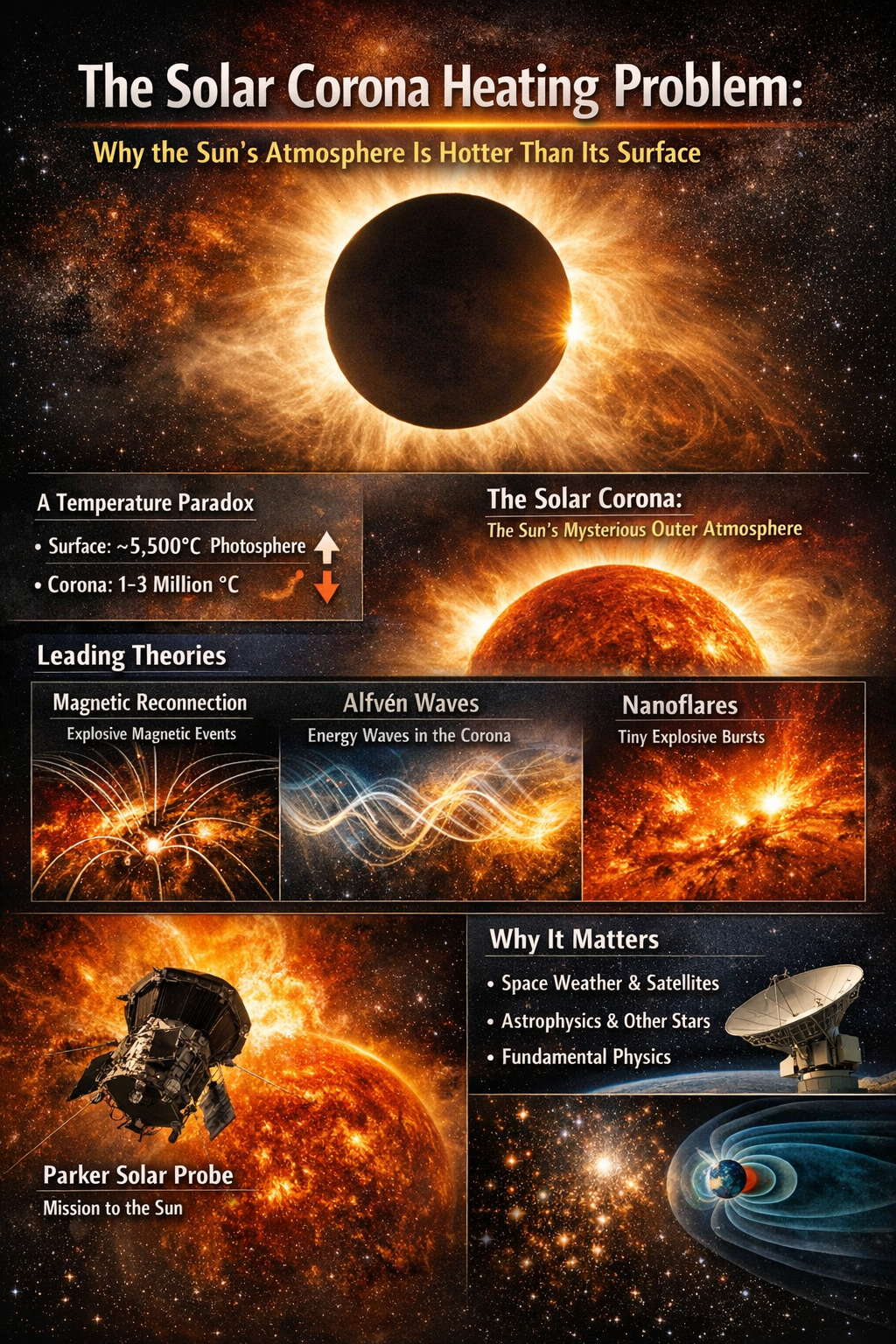
Introduction
The Sun, our closest star, has been studied for centuries—yet it still holds surprising mysteries. One of the most puzzling is the Solar Corona Heating Problem.
At first glance, it seems logical that temperatures should decrease as you move away from the Sun’s core. But in reality, the opposite happens in its outer atmosphere—defying basic expectations of physics.
A Temperature Paradox
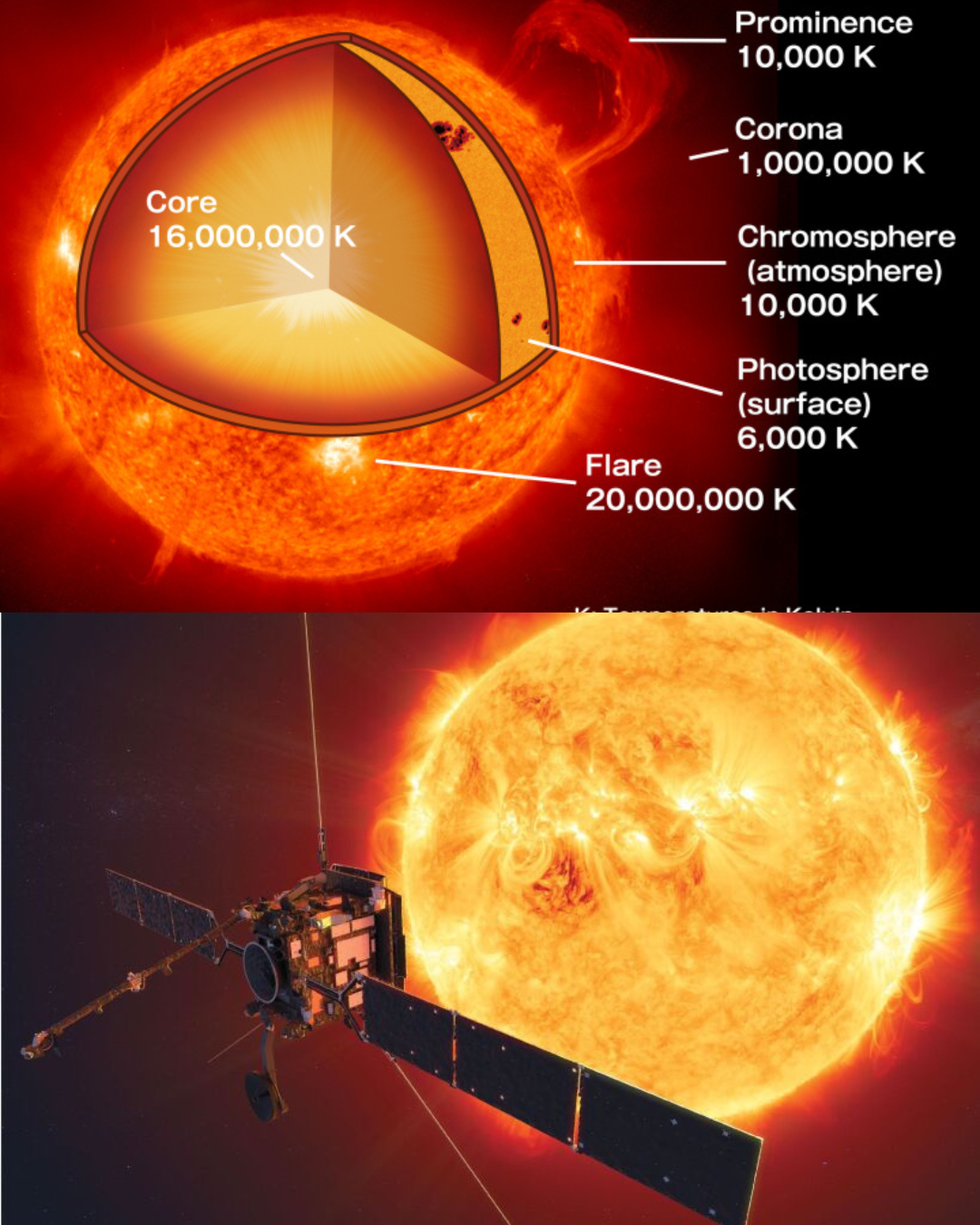
The visible surface of the Sun, known as the photosphere, has a temperature of about 5,500°C. However, the outer atmosphere—the corona—reaches temperatures of over 1 to 3 million degrees Celsius.
This creates a paradox:
-
The corona is farther from the Sun’s energy source
-
Yet it is hundreds of times hotter than the surface
Scientists have been trying to explain this contradiction for decades.
What Is the Solar Corona?
The Solar Corona is a faint, glowing halo of plasma that extends millions of kilometers into space.
It is usually invisible due to the brightness of the Sun, but it can be seen during a total solar eclipse as a glowing white crown surrounding the Sun.
Leading Theories
1. Magnetic Reconnection
One of the most widely accepted explanations involves the Sun’s complex magnetic field.
-
Magnetic field lines twist and tangle
-
They suddenly snap and reconnect
-
This releases massive amounts of energy, heating the corona
2. Wave Heating (Alfvén Waves)
Another theory suggests that waves traveling through the Sun’s magnetic field—called Alfvén Waves—carry energy from the surface into the corona.
These waves may transfer energy efficiently enough to heat the outer atmosphere.
3. Nanoflares
Small, frequent bursts of energy—called nanoflares—may occur constantly across the Sun’s surface.
Individually tiny, but collectively powerful, they could provide enough energy to heat the corona.
Observing the Mystery
Modern space missions have brought us closer to solving the problem.
NASA’s Parker Solar Probe travels closer to the Sun than any spacecraft before, directly sampling the corona and solar wind.
Other missions and telescopes continue to provide valuable data about the Sun’s magnetic activity and plasma behavior.
Why It Matters
Understanding the solar corona is not just a theoretical problem—it has real-world implications:
-
Space weather: Solar activity can affect satellites, GPS systems, and power grids
-
Astrophysics: Helps us understand other stars and plasma physics
-
Fundamental physics: Tests our knowledge of energy transfer and magnetic fields
Conclusion
The Solar Corona Heating Problem remains one of the most intriguing puzzles in solar physics.
Despite major advances, scientists are still working to understand exactly how the Sun’s outer atmosphere becomes so incredibly hot.
As new missions and technologies continue to explore our nearest star, we may soon uncover the answer to this cosmic mystery—revealing new insights about the universe itself.
