
The Curse of Tutankhamun: Myth, Death, and the Mystery of the Pharaoh’s Tomb
📰 The Curse of Tutankhamun: Myth, Death, and the Mystery of the Pharaoh’s Tomb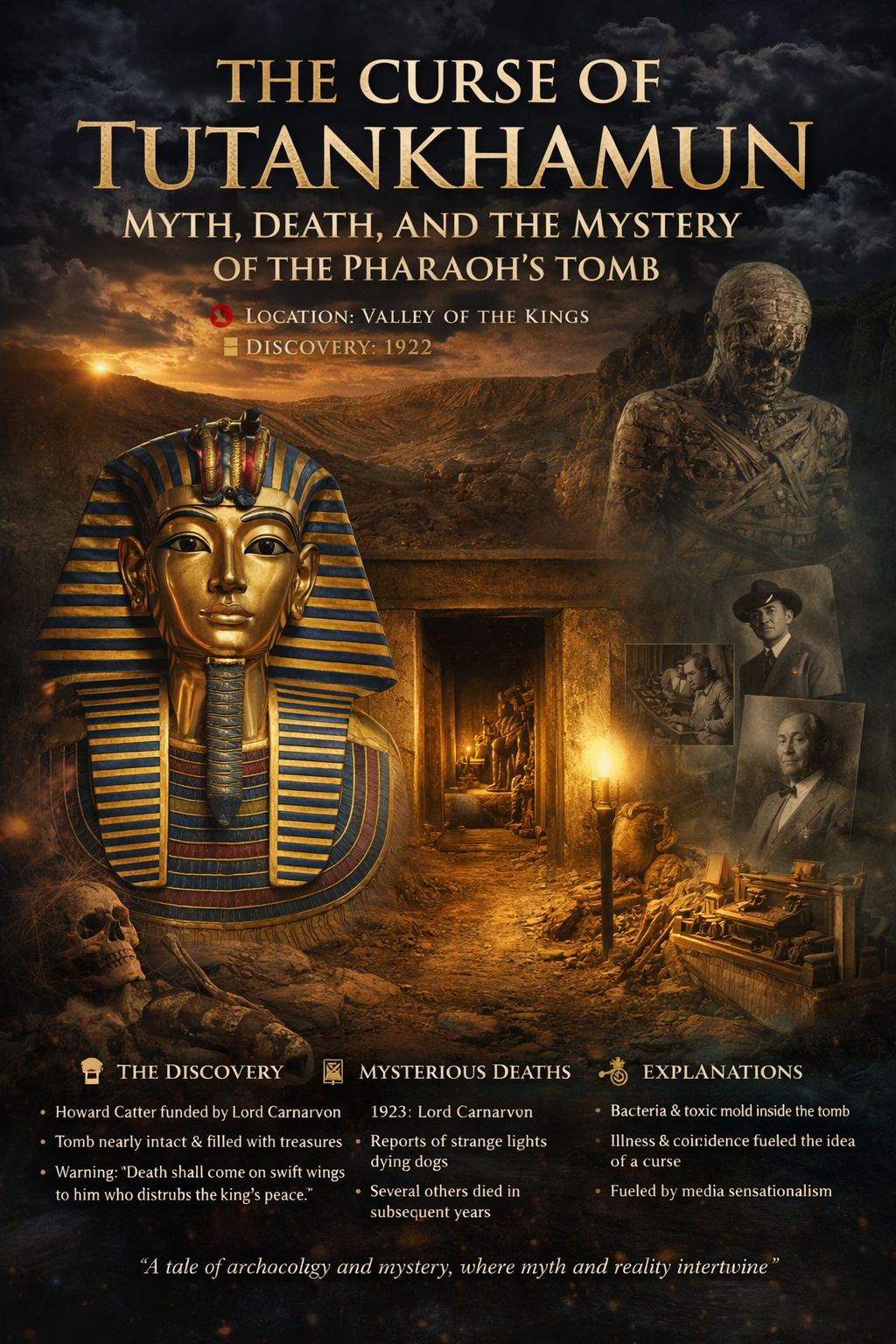
📍 Location: Valley of the Kings
🗓️ Discovery: 1922
Introduction
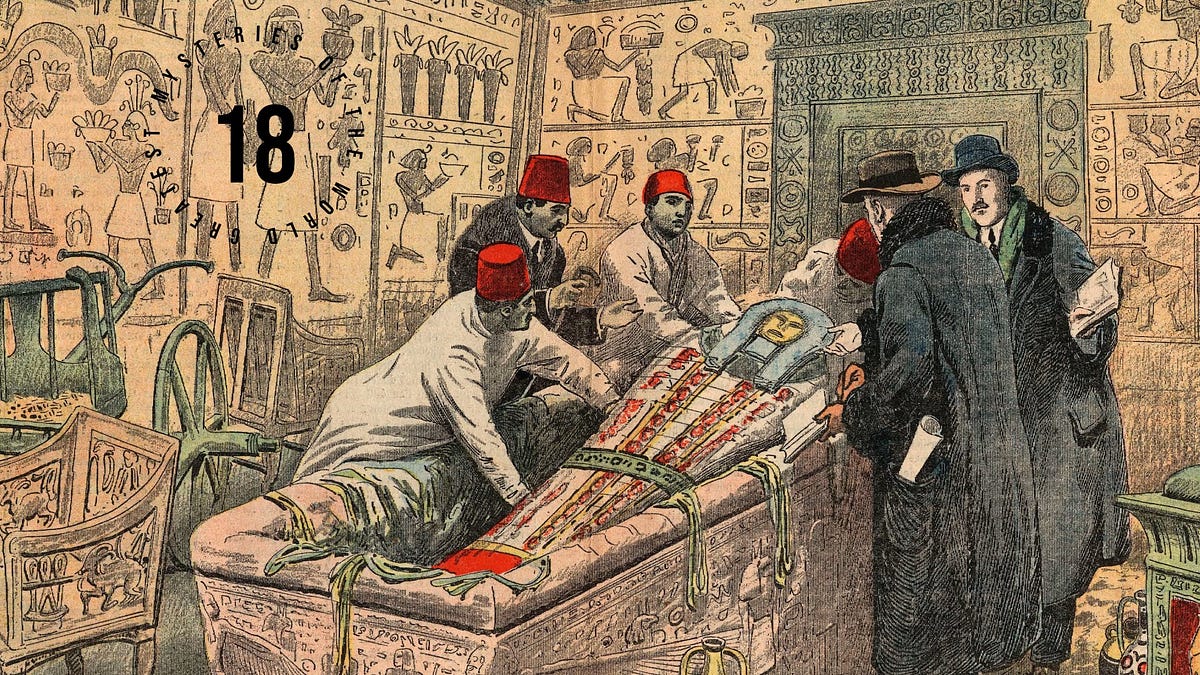
Few archaeological discoveries have captured global fascination like the tomb of Tutankhamun. Unearthed in 1922, the nearly intact burial site revealed extraordinary treasures—but it also gave rise to one of history’s most famous legends: the Curse of Tutankhamun.
Whispers of a deadly curse spread rapidly after several people connected to the discovery died under mysterious circumstances.
The Discovery of the Tomb
The tomb was discovered by British archaeologist Howard Carter, funded by Lord Carnarvon.
- 🗓️ Date: November 1922
- The tomb was remarkably well-preserved and filled with treasures
- Included the famous golden burial mask of Tutankhamun
At the entrance, a warning was rumored:
“Death shall come on swift wings to him who disturbs the peace of the king.”
Though its authenticity is debated, this phrase fueled the idea of a curse.
The First Mysterious Death
Shortly after the tomb’s opening:
- 🗓️ Date: April 1923
- Lord Carnarvon died from an infected mosquito bite
Strange details added to the mystery:
- His death occurred soon after entering the tomb
- Reports claimed that lights in Cairo went out at the moment of his death
- His dog in England allegedly died at the same time
This marked the beginning of the “curse” narrative.
Other Alleged Victims
Over the following years, several people connected to the tomb’s discovery reportedly died:
- Archaeologists, visitors, and officials
- Some deaths were sudden or unexpected
- Others occurred years later but were still linked to the curse
However, many key figures—including Howard Carter—lived long lives after the discovery.
Scientific Explanations
Experts have proposed rational explanations for the so-called curse:
- Bacteria and fungi inside the sealed tomb may have caused illness
- Toxic substances such as mold spores could have affected those exposed
- Coincidence and media exaggeration amplified the story
At the time, newspapers played a major role in sensationalizing the events.
Myth vs Reality
Despite the fear surrounding the curse:
- No consistent pattern of unnatural death has been proven
- Many individuals involved lived for decades
- The “curse” may have been created or exaggerated to protect the tomb from looters
Still, the legend continues to intrigue people worldwide.
Cultural Impact
The Curse of Tutankhamun has influenced:
- Films, books, and documentaries
- Popular fascination with ancient Egypt
- The image of “cursed tombs” in modern culture
It remains one of the most famous supernatural legends linked to archaeology.
Conclusion
The Curse of Tutankhamun sits at the intersection of history, myth, and media. While science offers logical explanations, the mystery surrounding the deaths and eerie coincidences continues to capture the imagination.
Whether a real curse or a powerful legend, the story reminds us that some discoveries—especially those buried for thousands of years—carry more than just treasure.
