
The Great Flood: Myth, Memory, or Ancient Catastrophe?
📰 The Great Flood: Myth, Memory, or Ancient Catastrophe?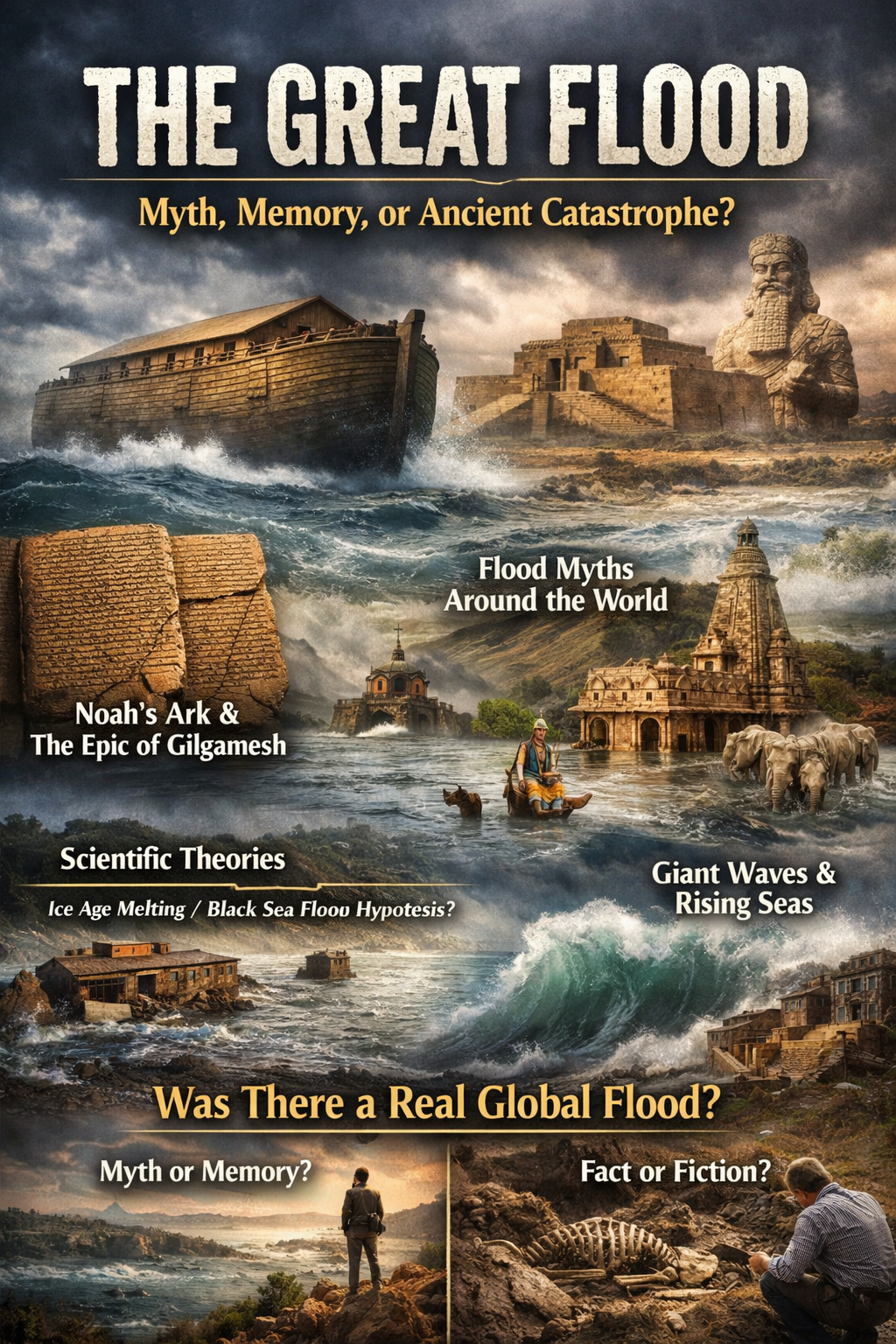
📍 Region: Global (Mesopotamia, Middle East, and beyond)
🗓️ Timeline: Ancient accounts dating back over 4,000 years
Introduction
Stories of a Great Flood—a massive deluge that wiped out civilizations—appear in cultures all around the world. From ancient Mesopotamian texts to biblical narratives, these accounts share striking similarities.
But was there ever a real global flood, or are these stories symbolic memories of ancient disasters?
The Biblical Account
One of the most well-known flood stories comes from the Bible.
- The story of Noah and his ark
- A flood sent to cleanse the Earth
- Survival of humans and animals aboard a massive vessel
This narrative has shaped religious and cultural traditions for centuries.
Earlier Mesopotamian Versions
Even older flood stories exist in Mesopotamia, including the Epic of Gilgamesh.
- Features a character named Utnapishtim
- Describes a divine warning and a great flood
- Shares many similarities with the story of Noah
These parallels suggest a shared origin or cultural exchange.
Flood Myths Around the World
Flood legends appear in many civilizations:
- Ancient India
- China
- The Americas
- Indigenous cultures worldwide
Common elements include:
- A divine warning
- A chosen survivor
- A catastrophic flood destroying humanity
The global nature of these stories is one of the biggest mysteries.
Possible Scientific Explanations
Researchers have proposed several theories:
1. Regional Catastrophic Floods
- Large-scale flooding in river valleys like the Tigris and Euphrates
- Sudden rises in sea level after the last Ice Age
2. Black Sea Flood Hypothesis
- A dramatic flooding event around 5600 BCE
- Mediterranean waters may have rushed into the Black Sea basin
- Could have inspired flood myths in nearby regions
3. Melting Ice Age Glaciers
- Rising sea levels flooded coastal settlements
- Ancient populations may have passed down these events as stories
Why the Mystery Remains
Despite scientific theories:
- No evidence supports a single global flood covering the entire Earth
- Stories vary in detail but share core elements
- Oral traditions may have transformed real events into myth
This blend of history and storytelling makes the Great Flood difficult to fully explain.
Cultural and Religious Impact
The Great Flood has influenced:
- Religion and moral teachings
- Literature and mythology
- Human understanding of natural disasters
It remains one of the most powerful symbolic stories in human history.
Conclusion
The Great Flood may not have been a single global event—but it likely reflects humanity’s memory of real and devastating natural disasters.
Whether myth, history, or a combination of both, the story continues to raise an enduring question:
Did ancient people witness a catastrophe so great that its memory spread across the world?
