
Nan Madol: The Mysterious Stone City Built on the Ocean
📰 Nan Madol: The Mysterious Stone City Built on the Ocean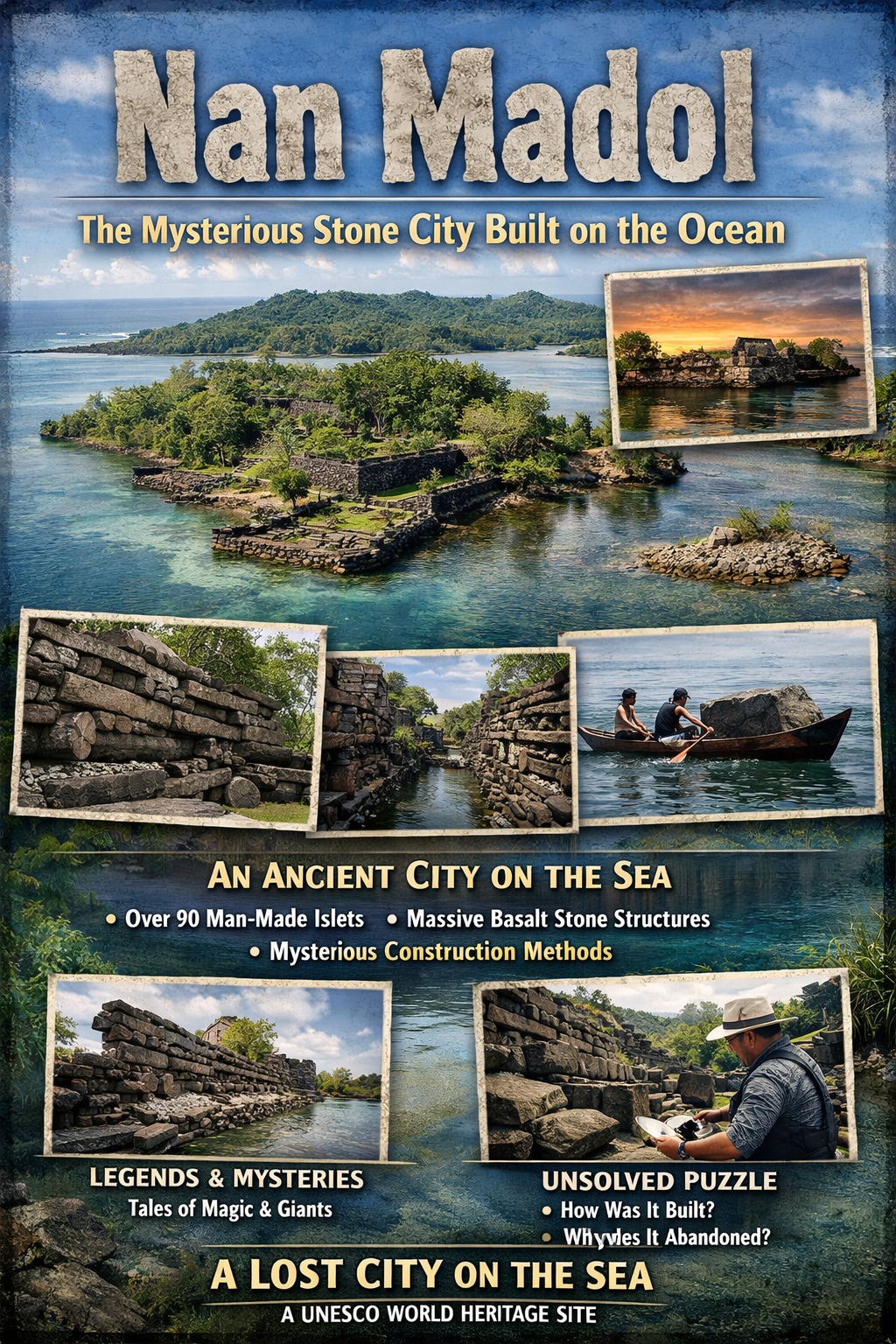
📍 Location: Nan Madol
🗓️ Construction: Around 12th–17th Century
Introduction
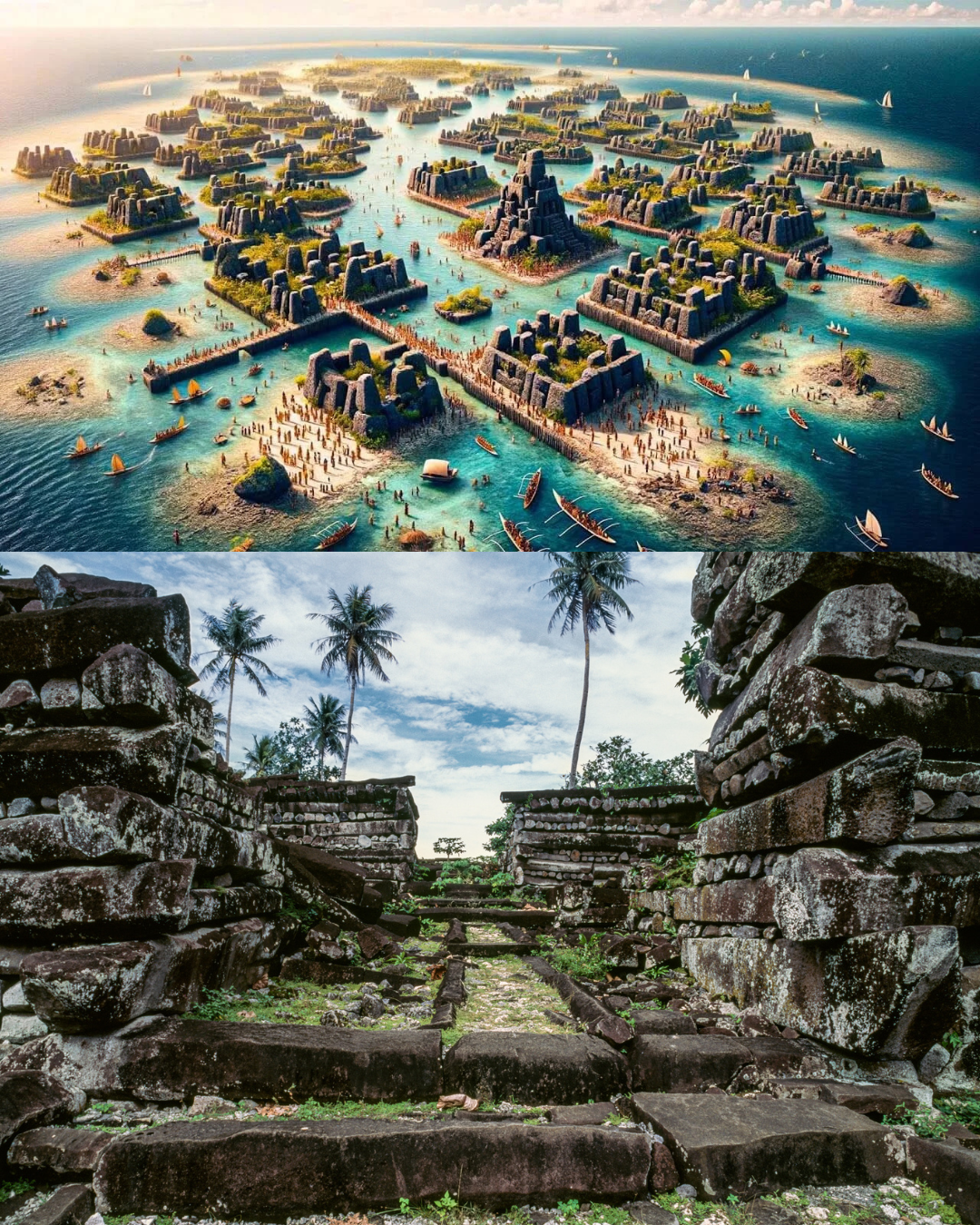
Rising from the shallow waters off the island of Pohnpei lies one of the world’s most enigmatic archaeological sites—Nan Madol, often called the “Venice of the Pacific.” Built on a network of artificial islets, this ancient city of stone continues to puzzle researchers with its scale, construction methods, and mysterious purpose.
How did ancient builders create such a complex city on the ocean?
A City on the Sea
Nan Madol is unlike any other ancient settlement:
- 🏝️ Composed of over 90 artificial islets
- Connected by a network of canals
- Built using massive basalt stone columns
- Located just offshore from Pohnpei
The city served as the ceremonial and political center of the Saudeleur Dynasty.
The Engineering Puzzle
The construction of Nan Madol raises many questions:
- Stones weighing up to 50 tons were transported without modern tools
- No clear evidence explains how these massive blocks were moved across water
- The stones were stacked in a log-cabin style, forming walls and platforms
Even today, moving such materials in this environment would be a major challenge.
Purpose of Nan Madol
Historians believe the city had several functions:
- A ceremonial and religious center
- A residence for elite rulers and priests
- A place for rituals, including burial practices
Certain islets appear to have been dedicated to specific activities, suggesting an organized urban design.
Legends and Local Stories
Local traditions add another layer of mystery:
- Stories of magical powers used to lift and place stones
- Legends of giant beings or supernatural forces
- Tales describing the city as a sacred or forbidden place
While these accounts are not scientifically proven, they reflect the deep cultural significance of Nan Madol.
Why Was It Abandoned?
Nan Madol was eventually deserted, but the reasons remain unclear:
- Possible resource shortages
- Political or social changes
- Environmental challenges
By the time European explorers arrived, the city was already in ruins.
Modern Research
Today, Nan Madol is recognized as a UNESCO World Heritage Site.
Researchers continue to study:
- Construction techniques
- The society that built it
- Its role in Pacific history
Despite progress, many questions remain unanswered.
Conclusion
The stone city of Nan Madol stands as one of the most mysterious achievements of the ancient world. Built on water with massive الصخور and no clear explanation of how they were transported, it challenges our understanding of early engineering.
Whether viewed as a masterpiece of human ingenuity or a mystery yet to be solved, Nan Madol continues to captivate those who seek to understand the past.
