
Homo floresiensis: The “Hobbit” Humans and Their Evolutionary Mystery
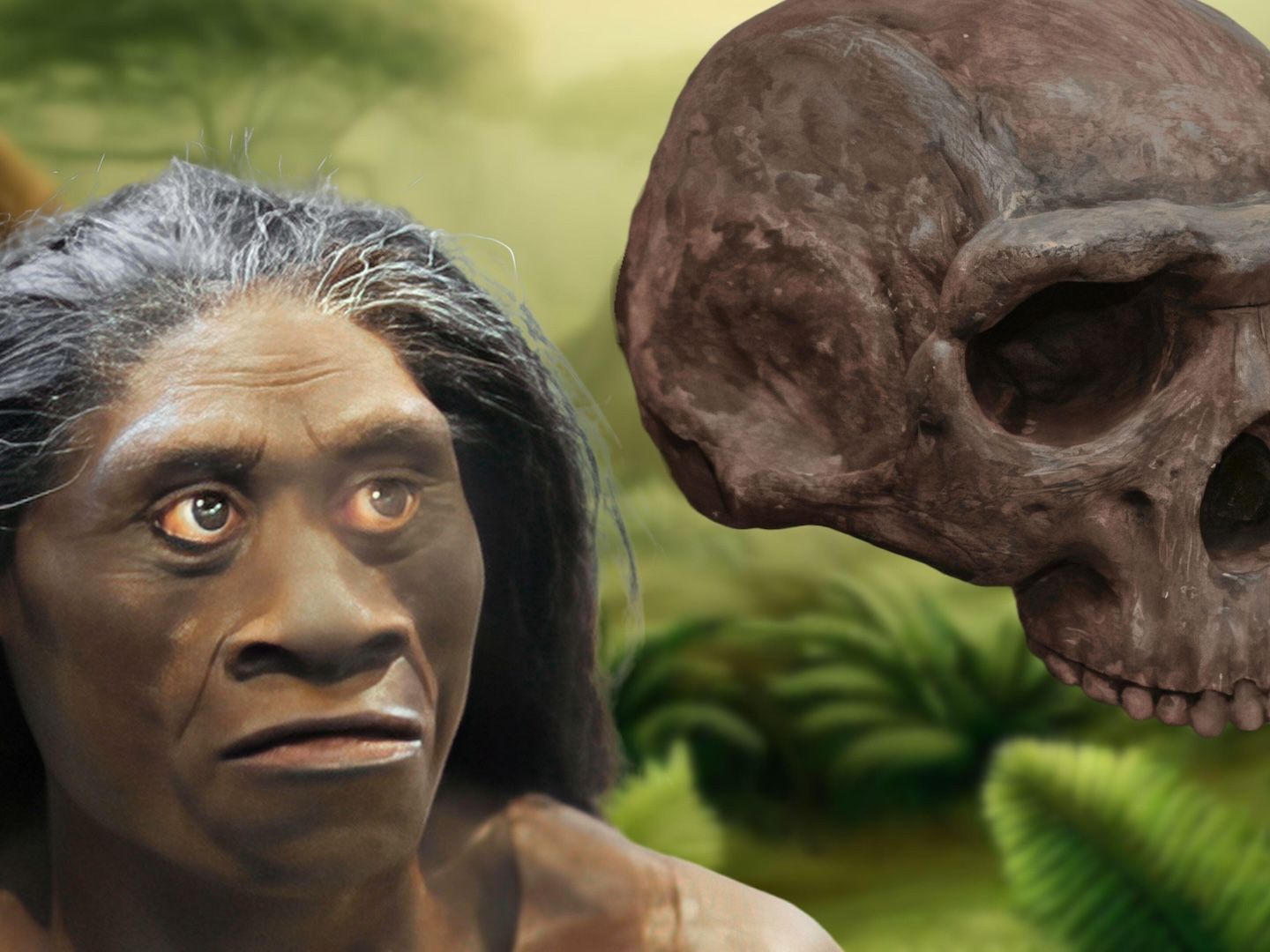
📰 Homo floresiensis: The “Hobbit” Humans and Their Evolutionary Mystery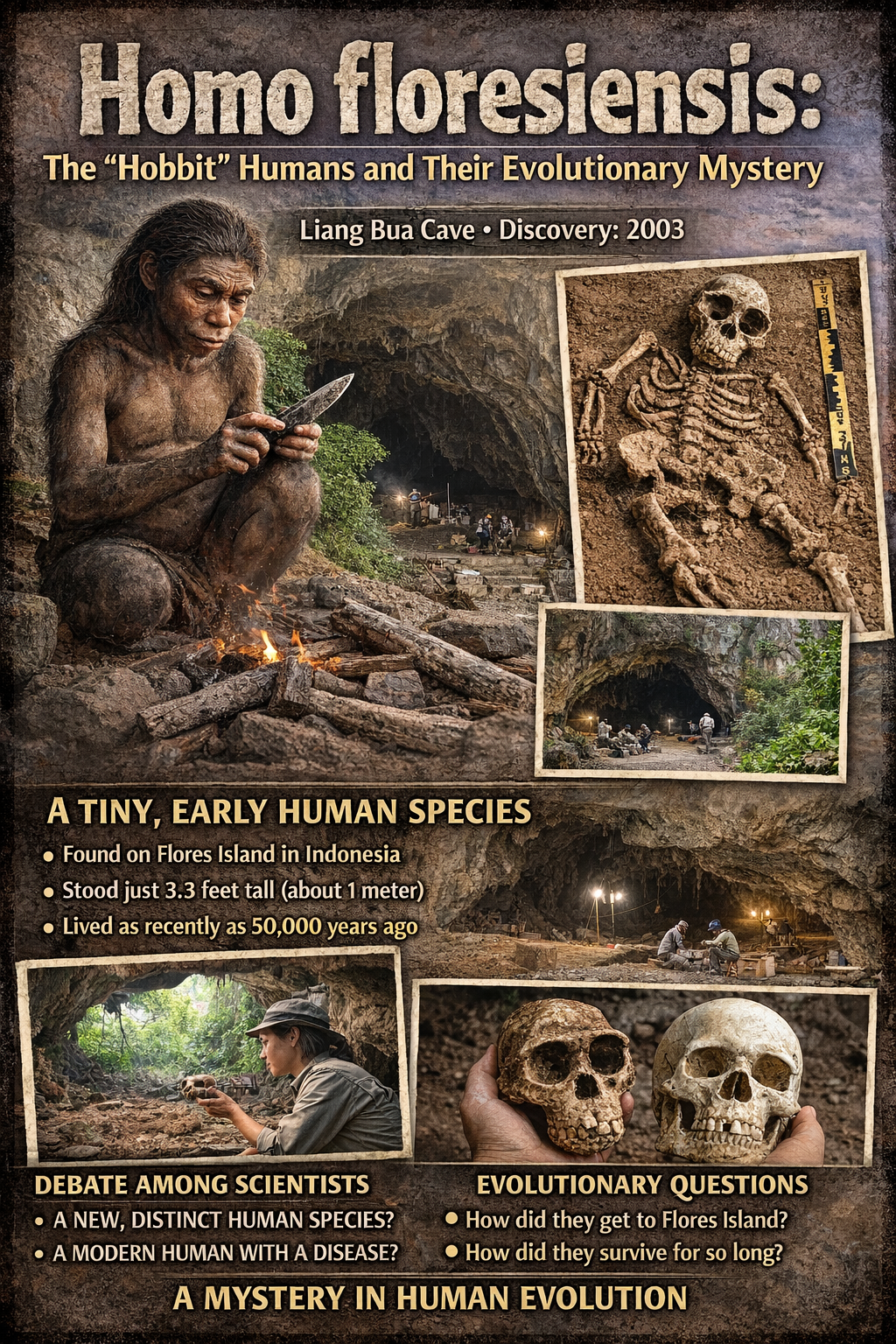
📍 Location: Liang Bua Cave
🗓️ Discovery: 2003
Introduction
In 2003, archaeologists uncovered one of the most surprising discoveries in human evolution—a tiny human-like species on a remote Indonesian island. Named Homo floresiensis, these individuals were nicknamed “Hobbits” due to their small size.
Their existence challenged long-held assumptions about human evolution and raised a profound question:
How could such a small and primitive-looking human survive so recently in history?
The Discovery
The remains were found in Liang Bua Cave on Flores Island:
- 🗓️ Year: 2003
- A nearly complete skeleton of an adult female
- Height: About 1 meter (3.3 feet)
- Brain size much smaller than modern humans
The discovery shocked the scientific community.
Unique Physical Features
Homo floresiensis had a mix of unusual traits:
- Small body similar to early human ancestors
- Brain size comparable to that of a chimpanzee
- Primitive skeletal features alongside more advanced ones
Despite their size, evidence suggests they were capable of:
- Tool use
- Hunting small animals
- Surviving in a challenging island environment
The Island Effect
One leading explanation for their small size is island dwarfism:
- Species isolated on islands often evolve to become smaller
- Limited food resources favor reduced body size
- Similar patterns are seen in other island animals
Flores Island itself was home to dwarf elephants and giant rodents.
A Surprising Timeline
What makes Homo floresiensis especially mysterious is how recently they lived:
- Estimated to have survived until 50,000 years ago
- This means they coexisted with modern humans (Homo sapiens)
This raises key questions:
- Did they interact with modern humans?
- Could competition have led to their extinction?
Debate Among Scientists
Not all researchers agree on what Homo floresiensis represents:
✔️ New Species Theory
- A distinct human species with its own evolutionary path
❓ Alternative Theory
- Some initially suggested they were modern humans with a medical condition (such as microcephaly)
However, most evidence now supports the idea of a separate species.
Unanswered Questions
Despite years of research, many mysteries remain:
- ❓ How did they reach Flores Island, which required crossing water?
- ❓ Why did they survive for so long in isolation?
- ❓ What caused their eventual extinction?
These questions continue to drive scientific investigation.
Cultural Echoes
Interestingly, local folklore on Flores speaks of small, human-like creatures called “Ebu Gogo.”
- Described as short, hairy, and human-like
- Said to have lived in caves
- Some speculate these stories may be linked to Homo floresiensis
Though unproven, the parallels are intriguing.
Conclusion
The discovery of Homo floresiensis reshaped our understanding of human evolution. Far from being a simple linear process, human history appears to be filled with diverse and unexpected branches.
Small in size but enormous in significance, these “Hobbits” remind us that the story of humanity is far more complex—and mysterious—than we once believed.
