
The Olmec Colossal Heads: Giant Stone Faces and Their Enduring Mystery
📰 The Olmec Colossal Heads: Giant Stone Faces and Their Enduring Mystery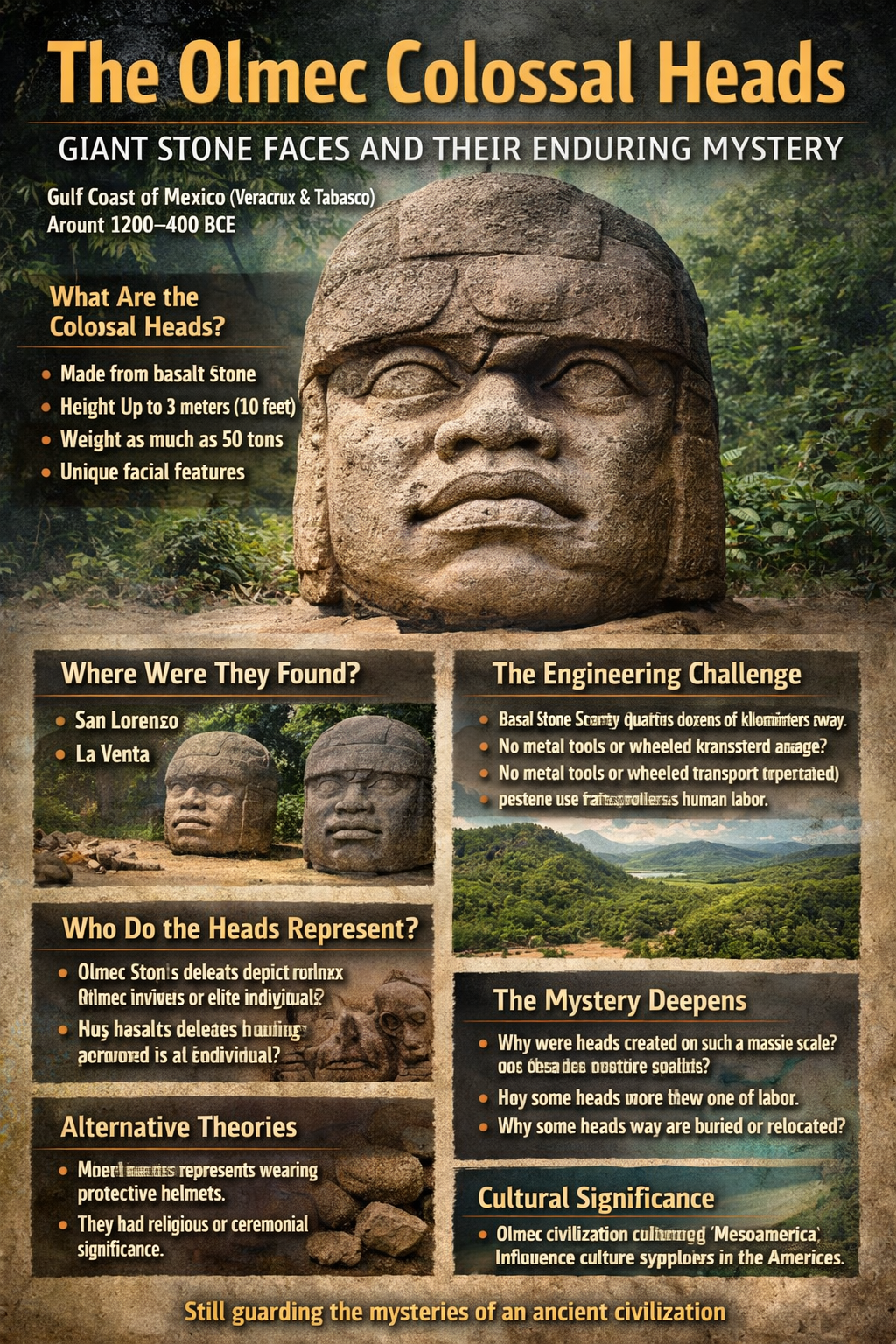
📍 Location: Gulf Coast of Mexico (states of Veracruz and Tabasco)
🗓️ Timeline: Around 1200–400 BCE
Introduction
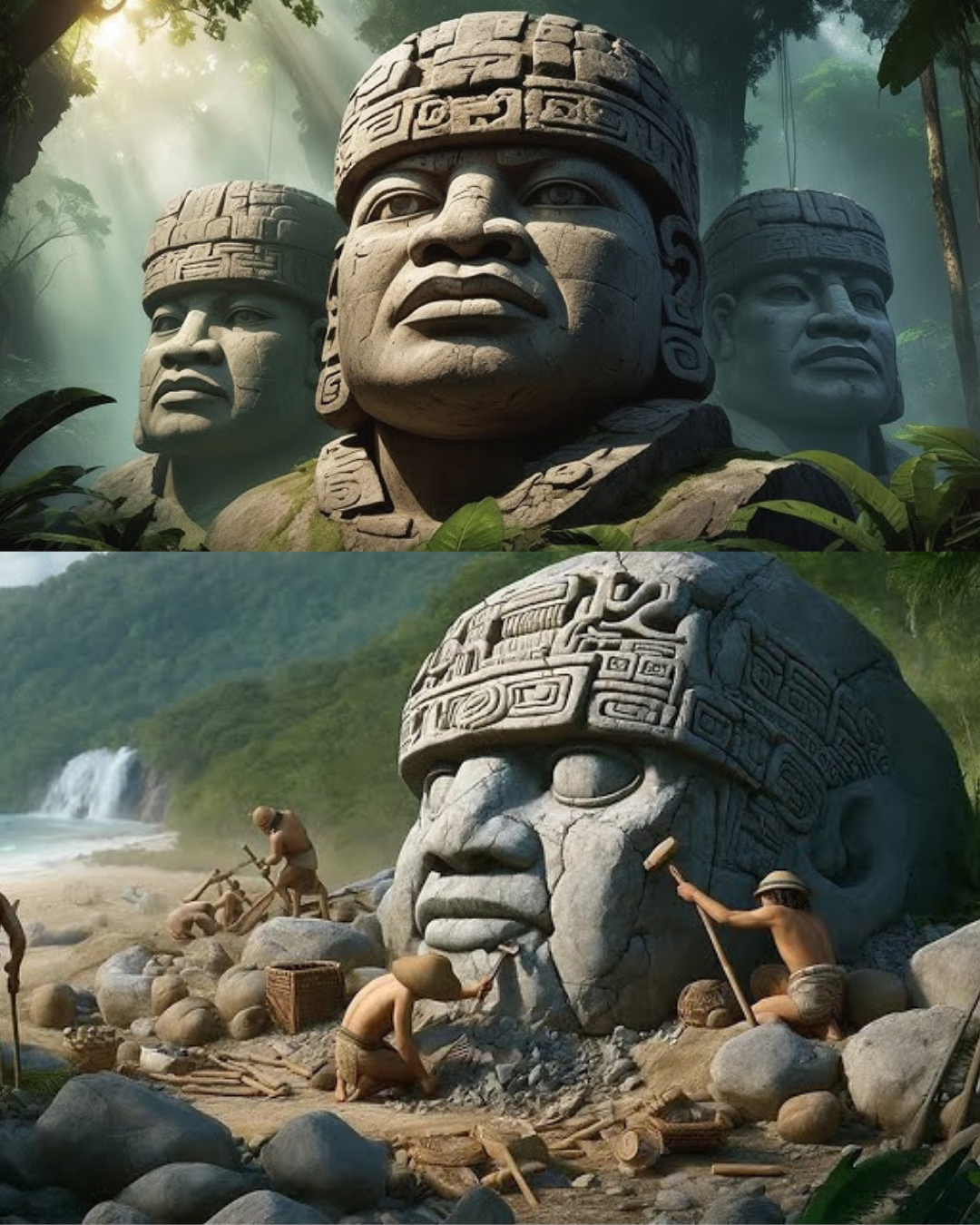
Scattered across the tropical lowlands of Mexico are some of the most striking monuments of the ancient world—the Olmec Colossal Heads. Carved from massive stone blocks, these enormous human faces have puzzled archaeologists for decades.
Who created them, and how did they move such enormous stones across difficult terrain?
What Are the Colossal Heads?
The colossal heads are giant stone sculptures attributed to the Olmec Civilization, one of the earliest known civilizations in the Americas.
Key features:
- 🪨 Made from basalt stone
- 📏 Height: Up to 3 meters (10 feet)
- ⚖️ Weight: As much as 50 tons
- 🗿 Each head has unique facial features
Many appear to wear helmets, possibly representing rulers or warriors.
Where Were They Found?
Most of the heads have been discovered at major Olmec sites, including:
- San Lorenzo
- La Venta
These locations were once important political and ceremonial centers.
The Engineering Challenge
One of the biggest mysteries is how the Olmec people created and transported these massive sculptures:
- The basalt stone likely came from quarries dozens of kilometers away
- No evidence of metal tools or wheeled transport
- Stones were possibly moved using rafts, rollers, and human labor
Even with modern tools, moving such stones would be difficult.
Who Do the Heads Represent?
Most scholars believe the heads depict:
- Olmec rulers or elite individuals
- Each face is distinct, suggesting real people rather than generic figures
However, no written records confirm their identity.
The Mystery Deepens
Several unanswered questions remain:
- ❓ Why were the heads created on such a massive scale?
- ❓ How did the Olmec organize the labor required for construction?
- ❓ Why were some heads later buried or relocated?
These mysteries continue to fuel debate among researchers.
Alternative Theories
Some alternative interpretations have been proposed:
- The heads represent warriors wearing protective helmets
- They had religious or ceremonial significance
- More speculative ideas suggest outside influence, though no evidence supports this
Most experts agree they are products of indigenous innovation.
Cultural Significance
The Olmec civilization is often called the “mother culture” of Mesoamerica, influencing later societies such as the Maya and Aztecs.
The colossal heads are:
- Symbols of power and authority
- Evidence of advanced artistic and engineering skills
- Among the earliest examples of large-scale sculpture in the Americas
Conclusion
The Olmec Colossal Heads remain one of the most fascinating mysteries of the ancient world. Their size, craftsmanship, and the effort required to create them demonstrate the remarkable capabilities of the Olmec Civilization.
Yet, despite decades of study, their full story remains unknown—leaving these giant stone faces to silently guard the secrets of a lost civilization.
