
Shock Leak on 3I/ATLAS Ignites Firestorm as Questions Swirl About What the Public Wasn’t Told!
In recent days, the interstellar object 3I/ATLAS has become the subject of intense online speculation following claims of a supposed “U.S. insider leak” alleging that authorities possess undisclosed information about the object.
While dramatic headlines and social media discussions have promoted the idea that this discovery “changes everything,” a careful review of the available scientific evidence presents a far more cautious and grounded picture.
What 3I/ATLAS Actually Is
3I/ATLAS is the third confirmed interstellar object ever observed passing through our solar system. The designation “3I” signifies its status as the third such object, following ʻOumuamua in 2017 and 2I/Borisov in 2019.
The “ATLAS” portion of the name refers to the Asteroid Terrestrial-impact Last Alert System, a global network of telescopes designed to detect asteroids and comets that may pose potential impact risks to Earth. The discovery of 3I/ATLAS occurred through routine sky surveys that continuously monitor the motion of objects against the background of distant stars.
Interstellar Objects in Context
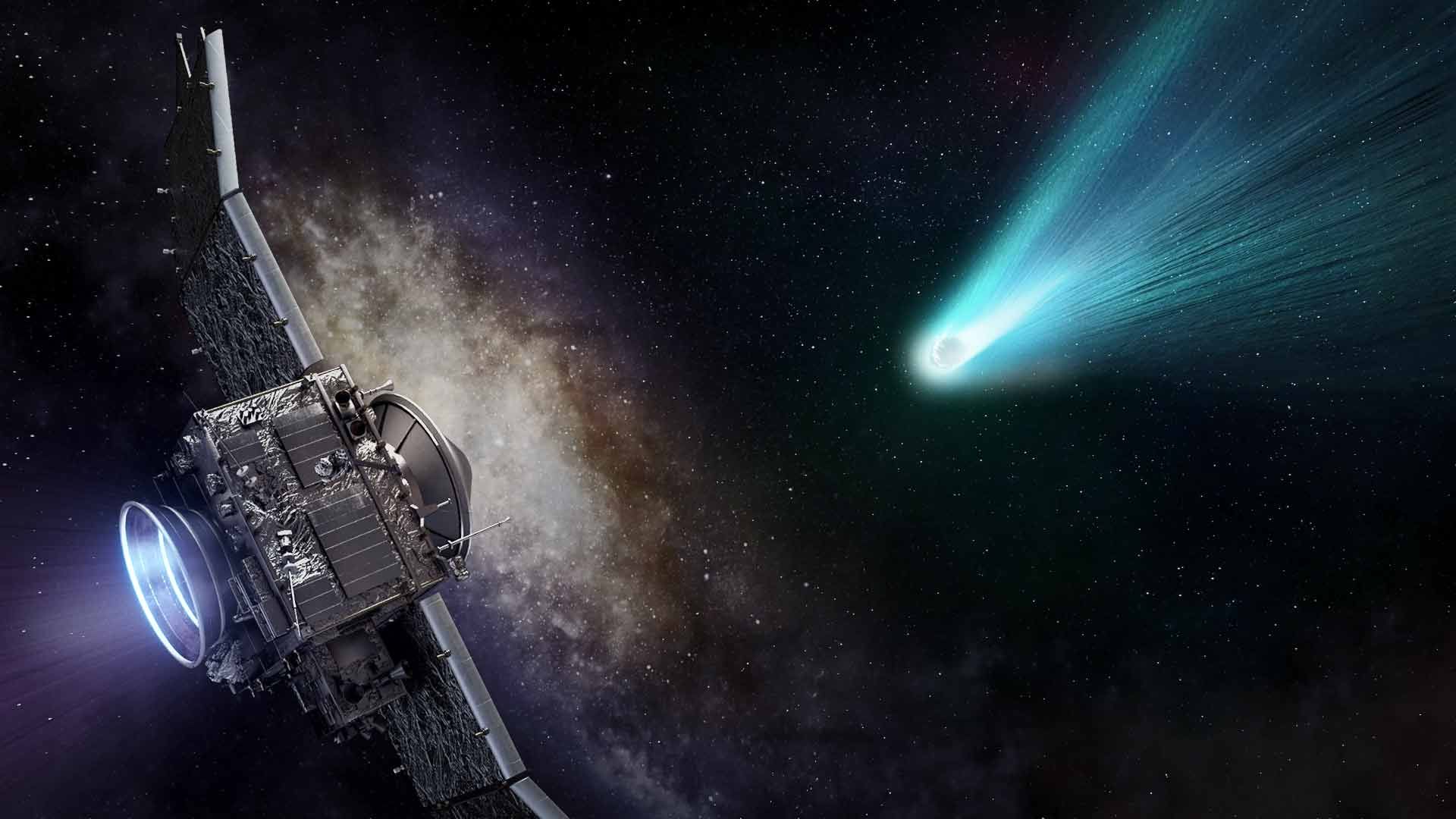
Interstellar objects originate outside our solar system and travel along hyperbolic trajectories, meaning they are not gravitationally bound to the Sun. Unlike comets and asteroids that follow closed, elliptical orbits, these visitors pass through the solar system only once before continuing their journey through the galaxy.
Detecting such objects is difficult because they are typically small, faint, and move rapidly relative to background stars. Their rarity contributes to the excitement surrounding each discovery.
ʻOumuamua attracted global attention due to its unusual elongated shape and its unexpected acceleration as it exited the solar system. While some speculative explanations were proposed, most scientific analyses supported natural causes such as outgassing or radiation pressure. In contrast, 2I/Borisov behaved like a conventional comet, reinforcing the view that interstellar objects are natural byproducts of planetary formation around other stars.
Observations of 3I/ATLAS
Astronomers have approached 3I/ATLAS using standard scientific methods: measuring brightness, calculating its trajectory, estimating size, and analyzing its spectrum to infer composition. Current data show that it follows a hyperbolic path consistent with an interstellar origin, and its observed properties do not require extraordinary explanations.
Claims of a classified monitoring program emerged from anonymous social media posts alleging that U.S. authorities were tracking the object under secret protocols. However, no verifiable documents, official statements, or credible investigative reporting have substantiated these claims. The narrative appears to have spread primarily through speculative online commentary rather than confirmed sources.
Why Increased Monitoring Is Normal
Tracking unusual celestial objects is routine. Governments and space agencies regularly monitor near-Earth asteroids and comets for planetary defense and scientific research. Interstellar objects are of particular interest because they provide rare, direct samples of material formed around other stars.
Heightened observation does not imply secrecy—it reflects scientific value. Astronomical data are collected and shared globally, with orbital information distributed through international organizations such as the Minor Planet Center. Professional and amateur astronomers alike can independently observe many such objects.
If 3I/ATLAS exhibited clear signs of artificial propulsion, structured emissions, or behavior inconsistent with known physics, it would be extremely difficult to conceal such evidence from the worldwide scientific community.
Why Speculation Spreads
The idea of an insider leak gained traction because interstellar objects naturally inspire curiosity. Their origin beyond our solar system, combined with their extreme rarity—only three confirmed so far—creates fertile ground for speculation. In the absence of complete data, imagination often fills the gaps.
At present, all available observations indicate that 3I/ATLAS behaves like a natural object. Variations in brightness can be explained by rotation, its trajectory follows predictable gravitational interactions, and any detected outgassing would align it with known cometary behavior similar to 2I/Borisov. No credible evidence suggests artificial origin, controlled maneuvering, or intentional signaling.
The rapid spread of leak narratives highlights the dynamics of modern information flow. Social media platforms enable unverified claims to circulate quickly, especially when framed with dramatic language. Phrases such as “this changes everything” capture attention—even when the underlying assertions remain vague or unsupported.
For now, 3I/ATLAS remains what current evidence suggests it is: a rare but natural visitor from another star system, scientifically valuable but not extraordinary in the sense implied by online speculation.
