
“Voyager 2 Stuns Scientists After Detecting a Mysterious Object at the Edge of the Solar System That ‘Defies Physics.’”
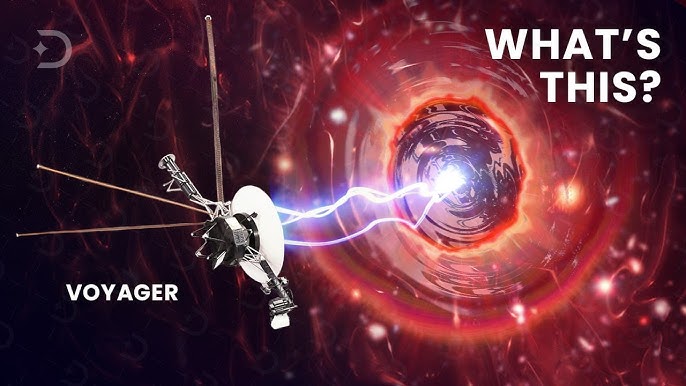
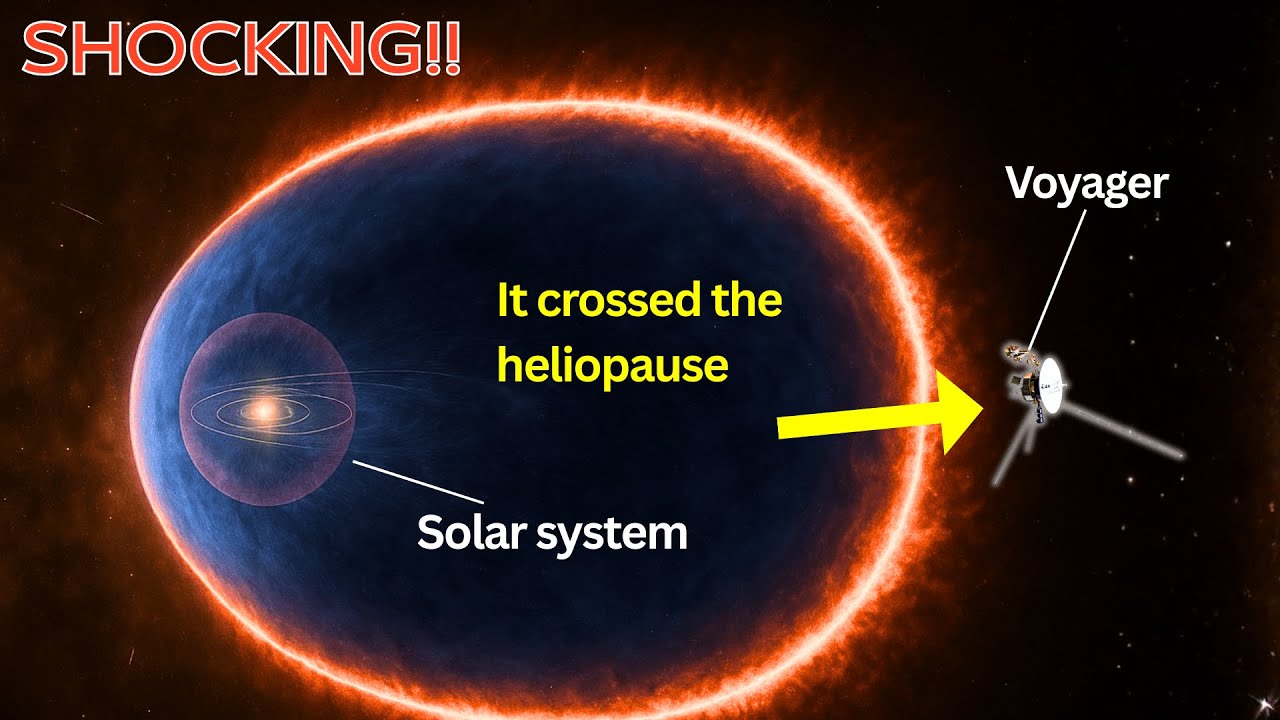
After nearly 50 years of quietly cruising through the cold suburbs of our solar system, Voyager 2—the galaxy’s most introverted spacecraft—has sent back data that has set parts of the internet ablaze. Launched in 1977, when disco ruled the airwaves and Star Wars was brand new, Voyager 2 has journeyed more than 12 billion miles, survived planetary flybys, and in 2018 became the second human-made object to enter interstellar space, crossing the heliopause where the Sun’s influence gives way to the wider galaxy.
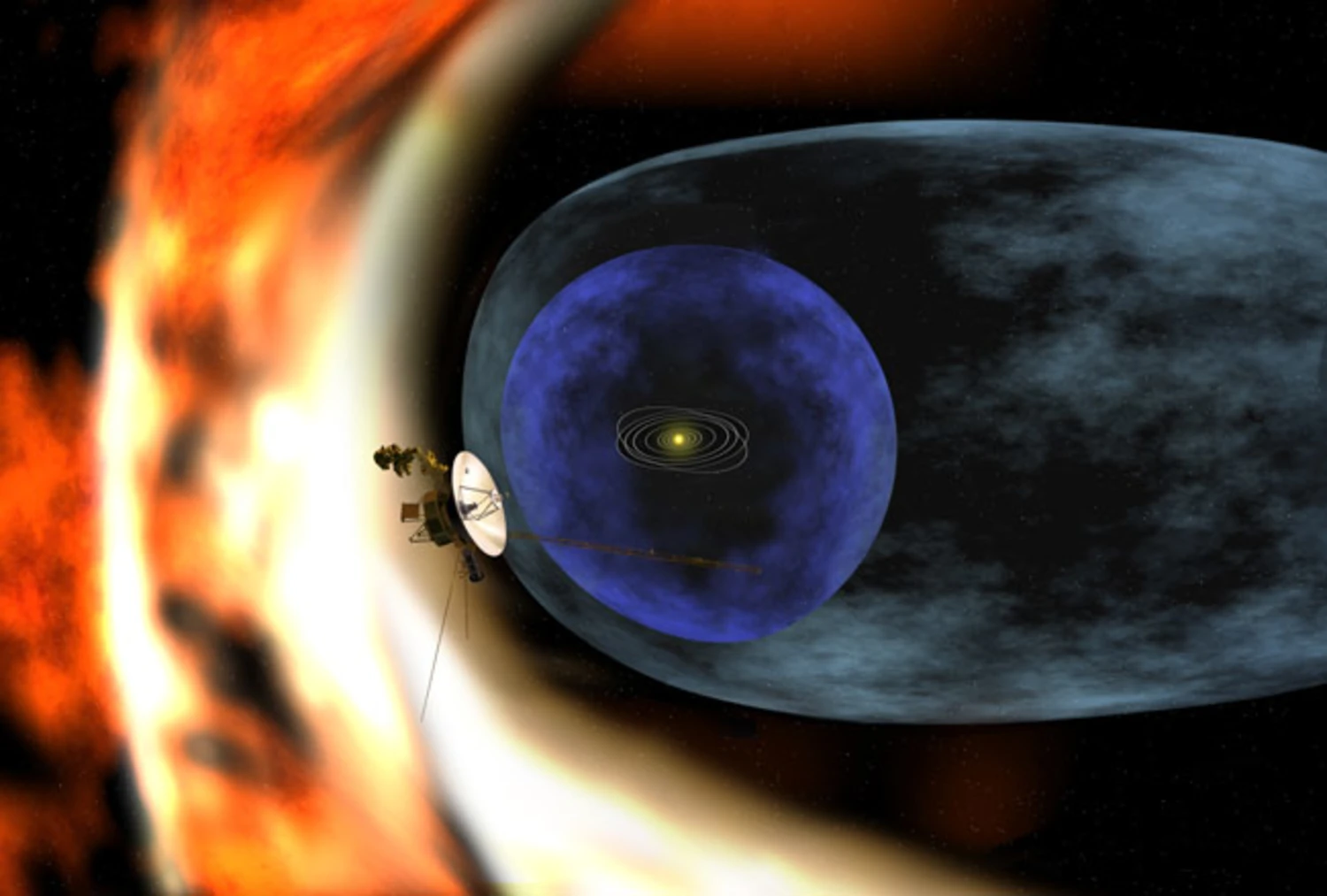
Recently, its instruments recorded something unusual at that boundary. Plasma waves and magnetic fields behaved in ways that didn’t perfectly match existing models. No aliens. No wormholes. Just subtle anomalies in particle density and magnetic orientation—evidence that the transition from solar wind to interstellar medium is far more dynamic and turbulent than textbook diagrams suggest.
The heliopause is essentially a cosmic shoreline: inside, the Sun’s particles dominate; outside, the sparse interstellar medium takes over. This boundary isn’t neat—it ripples, fluctuates, and responds to solar activity. Voyager 2’s measurements show that these plasma waves and magnetic structures are neither entirely chaotic nor perfectly ordered, hinting at a complexity that challenges simplified scientific assumptions.
While dramatic headlines claim the probe “defies physics,” the reality is more measured: Voyager 2 has revealed that our models of interstellar space need refining. Science thrives on such surprises. These subtle anomalies aren’t a rewriting of the laws of nature—they are a reminder that exploring the edge of the solar system exposes phenomena we’ve only theorized, offering humanity a first-hand glimpse of the turbulent frontier that lies beyond our star’s protective bubble.
