
Fiery Spiral Over the Caribbean: Space Junk or Super-Science?
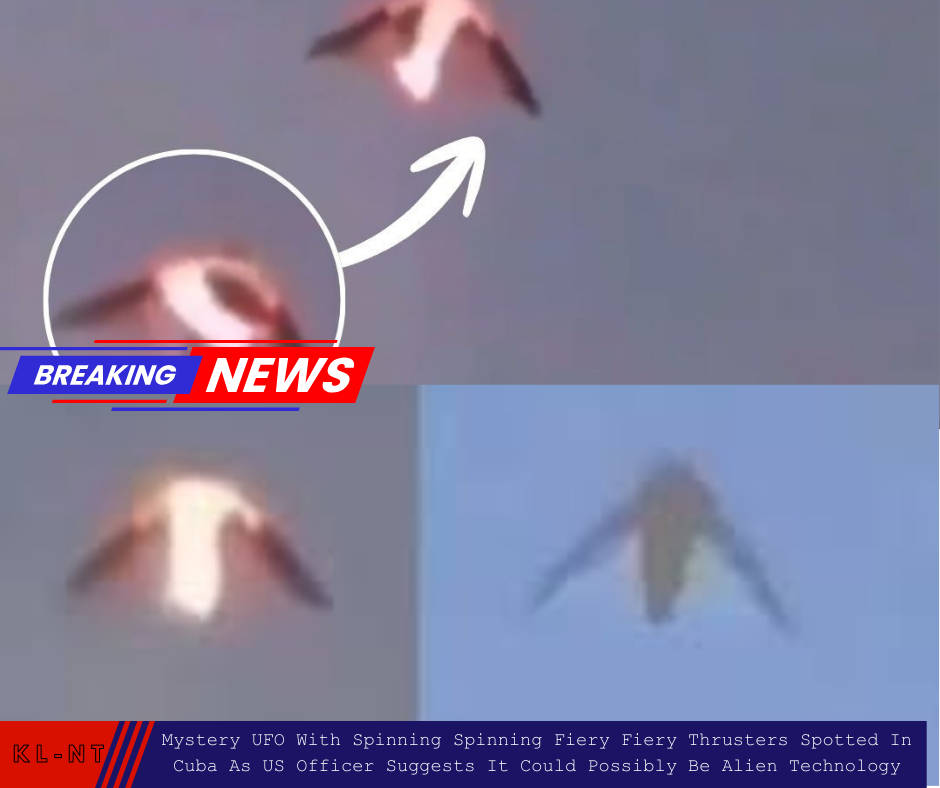
A series of striking videos recently captured a bright, rotating object emitting a luminous trail over the Caribbean. Witnesses from the Bahamas to Puerto Rico described a “spinning fireball” that appeared to move with a mesmerizing, rhythmic pulse. While the sight was eerie, astronomers and space agencies suggest we are seeing the “afterglow” of humanity’s expansion into orbit.
The Anatomy of a Re-entry
When space debris or a spent rocket stage enters Earth’s atmosphere, it doesn’t just fall—it undergoes a violent, high-energy transformation.
-
The “Spinning” Effect: As a defunct satellite or rocket body hits the upper atmosphere, the uneven drag on its various surfaces—solar panels, antennae, or fuel tanks—causes it to tumble. This rotation creates the “spinning” visual recorded by many observers.
-
Incandescent Glow: Traveling at speeds exceeding 17,000 mph, the friction with the air heats the object to thousands of degrees. This creates a plasma trail that glows with vivid colors—often green from copper or orange from steel—depending on the object’s composition.
-
Fragmentation: Unlike a single meteor, space debris tends to break into multiple pieces that travel in a slow, parallel formation, creating a “train” of fire across the sky.

SpaceX and the “Starship” Factor
The Caribbean is a primary “debris response area” for many launches out of South Texas and Florida. In March 2025 and again in early 2026, SpaceX’s Starship test flights have resulted in high-altitude “rapid unscheduled disassemblies” (explosions). Debris from these events often streaks across the Caribbean as it burns up in the atmosphere, providing a spectacular, if accidental, light show for residents below.

The “Jellyfish” and the Rocket Exhaust
Another common explanation for “spinning” lights in this region is the “Space Jellyfish” effect. This occurs when a rocket launches during twilight. While the ground is in darkness, the rocket at high altitude is still illuminated by the sun. As the second stage spins to de-orbit or release its payload, it vents excess gas, creating a glowing, swirling spiral that can be seen for hundreds of miles.
The Verdict
While it is tempting to view these fiery displays as evidence of the unknown, they are most often the footprints of our current space age. As more satellites and test rockets take to the skies in 2026, these “Caribbean fireballs” are becoming a new, albeit spectacular, normal.
❗ Note: If you capture such an event, experts recommend noting the duration. Natural meteors usually last only a few seconds, while space debris can take over a minute to cross the horizon.
