
James Webb Space Telescope Flags “3I/ATLAS” for Possible Biosignatures as a Mysterious Object Drifts Closer
Sound the cosmic alarm bells, hide your houseplants, and cancel your weekend plans — because according to the breathless corners of the internet, the James Webb Space Telescope has allegedly detected that the mysterious interstellar object 3I/ATLAS is “carrying life” and is heading toward Earth. Yes, you read that correctly: “carrying life,” “getting closer,” “detected.” If this sounds like the opening scene of a sci-fi blockbuster, you’ve just experienced modern headline engineering.
Let’s pause for a reality check. 3I/ATLAS is an interstellar object, an icy, rocky traveler that occasionally passes through our solar system from beyond our cosmic neighborhood. Humanity has seen this before — 1I/‘Oumuamua and 2I/Borisov were previous visitors. Space occasionally throws us such wanderers.
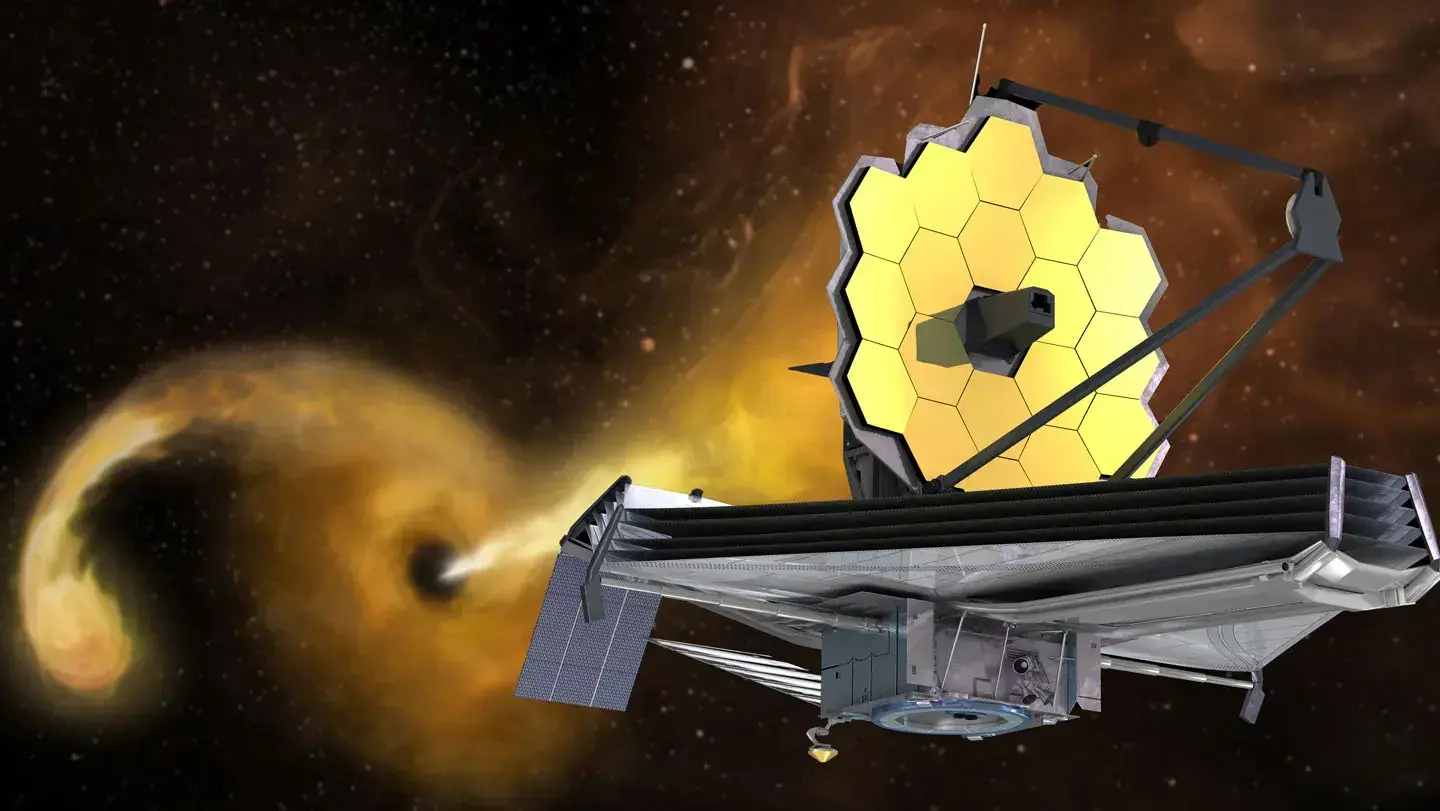
Enter the James Webb Space Telescope, humanity’s most sophisticated “night-vision goggles” for the cosmos. Webb is designed to detect faint infrared signatures from distant galaxies, exoplanets, and cosmic dust. When it observes unusual chemical signals in an object’s coma, like complex organic molecules, headlines can mutate faster than a lab-grown sci-fi monster.
Here’s the crucial distinction often lost in clickbait: organic molecules are not life. Organic molecules are carbon-based compounds, common throughout space — in comets, meteorites, and interstellar clouds. They are the building blocks of life, not living organisms themselves. But “building blocks of life detected” does not trend nearly as well as “ALIEN LIFE INCOMING.”
So what are scientists actually observing? They examine spectral signatures, the chemical fingerprints emitted or absorbed by materials. Detection of complex organic compounds is exciting; it suggests that the ingredients for life are widespread. It does not imply that a microscopic alien is waving from inside a comet.
Dr. Nova Calder, a hypothetical astrophysicist for narrative flair, explains: “When we detect organic molecules, it tells us chemistry is happening. It does not mean biology is happening. Space is basically a cosmic chemistry lab.” Nuance whispers; headlines scream. “James Webb Just Detected LIFE!” they declare. But verified scientific reports confirm: there is no evidence of living organisms aboard 3I/ATLAS.
Reports may reference complex organic compounds — amino acid precursors or other carbon-rich molecules — but that’s a far cry from proof of extraterrestrial biology. And what about the claim that it’s “getting closer”? Technically true, yes. Interstellar objects follow predictable orbital trajectories, approaching and then swinging away from the Sun. Getting closer does not imply collision; it implies motion governed by gravity. NASA and global observatories track these objects meticulously. No alerts suggest an imminent threat.
Yet the drama is intoxicating. Imagine Webb’s instruments detecting unusual chemical ratios. Scientists murmur, “This is interesting.” Online, someone tweets: “IT’S ALIVE!” Suddenly, humanity is on the brink of first contact — all because “carrying life” sounds more cinematic than “complex organics detected.”
In astrobiology, researchers distinguish carefully between biosignatures (potential indicators of life), prebiotic chemistry (ingredients for life), and active biological organisms. These are not interchangeable. Even a strong biosignature would require exhaustive verification before any declaration of life. As Dr. Calder puts it: “If we actually confirmed living organisms on an incoming object, it would be announced through peer-reviewed channels, international press conferences, and probably a global holiday — not through a thumbnail with red arrows.”
The real fascination lies in what interstellar objects can teach us. They are time capsules formed around other stars, offering insight into planetary formation beyond our solar system. If complex organics are present, it supports the idea that the ingredients for life are common across the galaxy — a profound discovery that requires no alien invasion to be extraordinary.
Psychologically, humans crave the knowledge that we’re not alone. So when a headline hints at alien life, collective attention spikes. Space becomes tabloid territory: “Did you hear? The comet might have microbes.” Yet even if organics are confirmed, there is no contamination risk, invasion risk, or apocalyptic threat. Most interstellar objects pass at enormous distances, and extreme atmospheric heat would sterilize fragments entering Earth.
Could future observations reveal something astonishing? Absolutely. Science evolves with data. If Webb or other telescopes identify compelling biosignatures, rigorous global study would follow. Until then, the responsible interpretation is cautious excitement, not cinematic panic.
So before preparing welcome banners for hypothetical microbes, let’s recognize the true wonder: humanity has built a telescope powerful enough to analyze the molecular makeup of objects formed around other stars. That is extraordinary. The universe is fascinating enough without turning every carbon atom into an alien ambassador. If something genuinely groundbreaking emerges from 3I/ATLAS, you’ll hear it first from scientific institutions, not a blinking headline graphic.
Until then, breathe, look up at the sky, and remember: complex chemistry in space is common. Alien invasion headlines are not. The real mystery isn’t whether 3I/ATLAS carries life — it’s why we are so eager to believe it does.
