Scientists Stunned as Telescope Detects Mysterious Artificial Lights on Interstellar Object 3I/ATLAS
It began, as all modern cosmic meltdowns apparently must, with a telescope doing its job quietly, a scientist choosing his words carefully, and the internet responding by screaming, “THEY LEFT THE LIGHTS ON.” According to breathless headlines, viral clips, and thumbnails decorated with aggressively circled glowing dots, the James Webb Space Telescope had allegedly detected “artificial lights” on an interstellar object known as 3I/ATLAS, and the moment Avi Loeb’s name entered the conversation, humanity collectively forgot how caution works and sprinted headfirst toward the nearest alien narrative like it was Black Friday at Area 51.
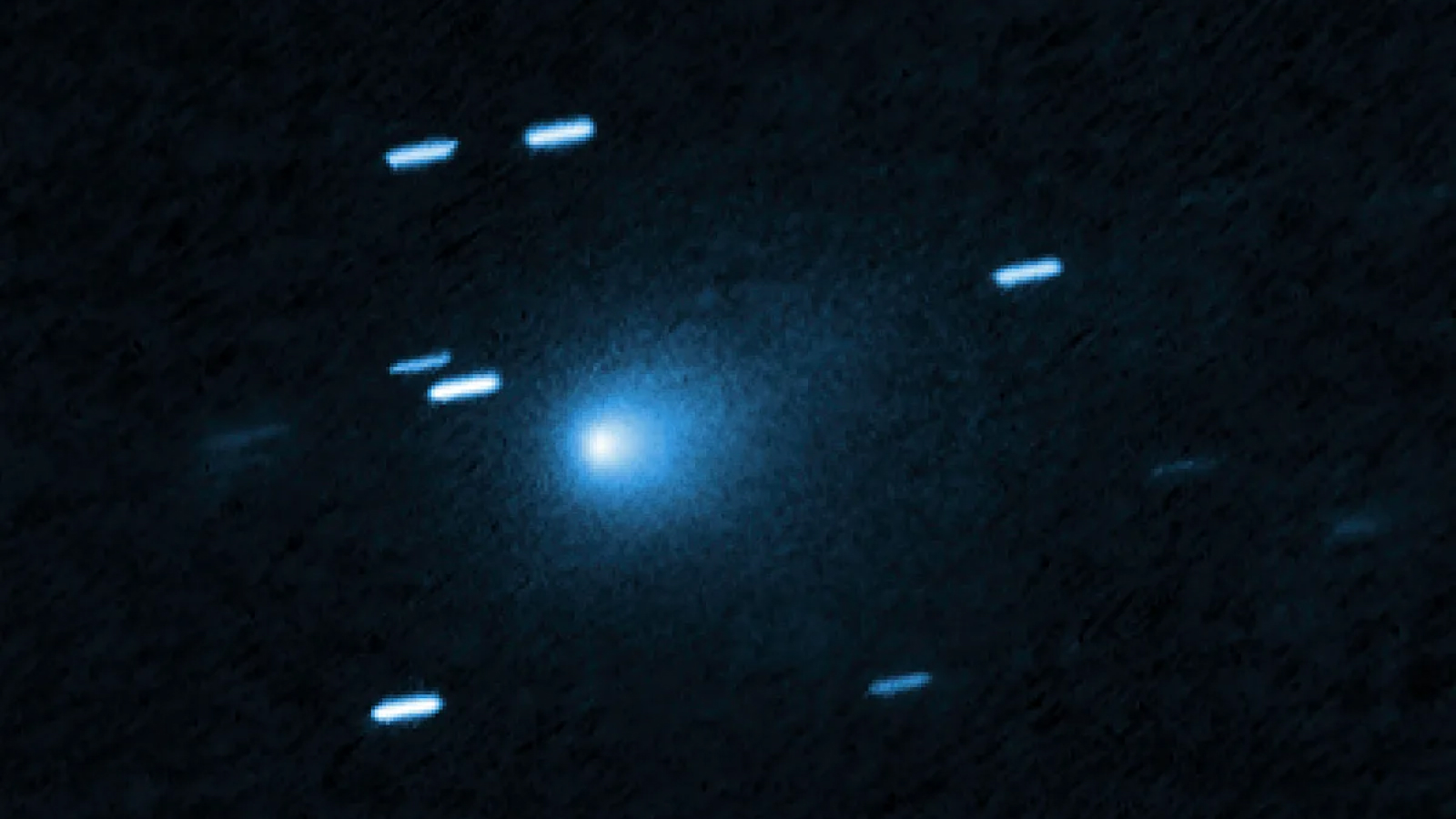
The object itself, an interstellar visitor minding its own business as it passed through our cosmic neighborhood, already sounded suspicious enough, and when Webb analyzed its light emissions—normally, scientifically, responsibly—someone somewhere typed the words “artificial light,” triggering an immediate internet-wide loss of composure. Timelines flooded with claims of alien cities, spacecraft, and softly glowing extraterrestrial IKEA showrooms, comment sections demanded to know why a rock would have lights, fake experts materialized instantly, and one self-described “Cosmic Infrastructure Analyst” confidently explained that advanced civilizations leave porch lights on to signal dominance, a claim unsupported by science but enthusiastically rewarded with likes.
Actual astronomers tried to explain reflected sunlight, thermal emissions, instrument noise, and data artifacts, briefly acknowledged before being ignored in favor of TikToks alleging leaked alien nightlife, while memes, jokes, and conspiracies multiplied faster than clarification could keep up. Loeb repeatedly emphasized that the idea was hypothetical—a thought experiment about how artificial illumination might differ from natural light—but nuance was flattened into headlines screaming confirmation, theories escalated into alien probes and forgotten megastructures drifting through space with the lights still on, and cable news flirted with the chaos because television rewards confidence, not accuracy. If the lights were artificial, everything would change, one guest declared—technically true, profoundly unlikely—and somewhere beneath the noise, the telescope remained silent, because it was never announcing aliens at all, just reflecting back humanity’s talent for turning curiosity into panic at the speed of Wi-Fi.