
All Eyes on 3I/ATLAS Right Now — Something Unprecedented Is Unfolding
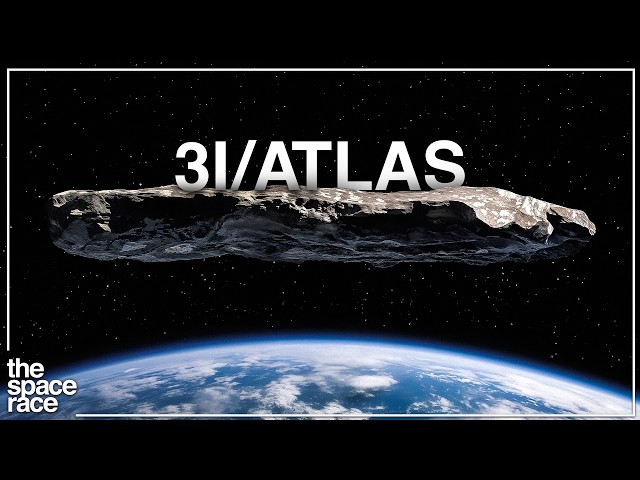
In the vast expanse of the universe—where mysteries abound and the unknown continually beckons—a remarkable event has captured the attention of astronomers and space enthusiasts alike. An interstellar object known as 3I/ATLAS is currently passing through our Solar System, and it is unlike anything scientists have encountered before.
This is only the third confirmed interstellar object ever observed entering our cosmic neighborhood, following earlier discoveries that reshaped modern astronomy. Detected on July 1, 2025, by the Asteroid Terrestrial-impact Last Alert System (ATLAS), 3I/ATLAS is traveling on a hyperbolic trajectory, meaning it is not gravitationally bound to the Sun. Instead, it is a true cosmic wanderer—an object that originated far beyond our Solar System and is merely passing through.
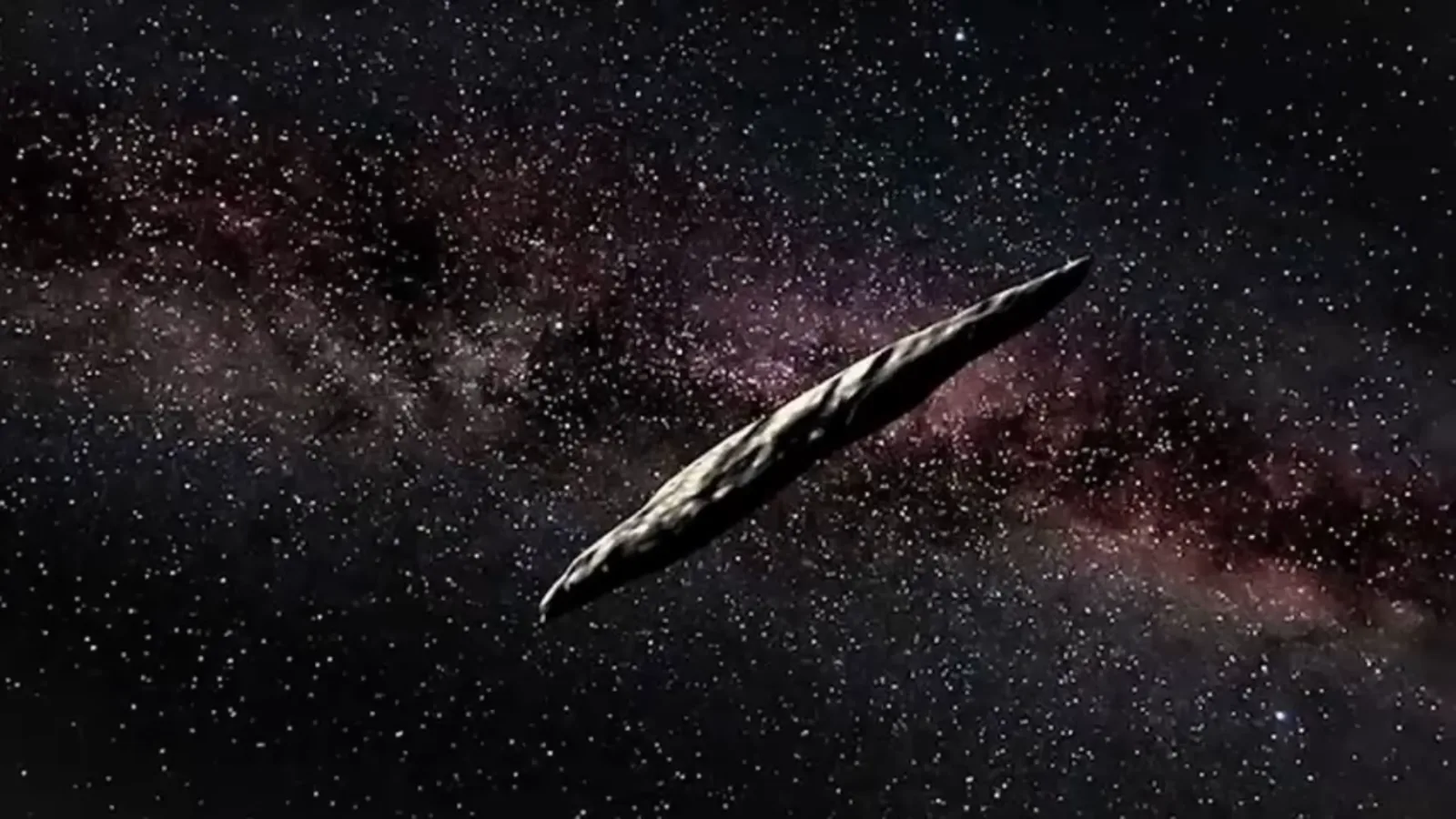
As 3I/ATLAS approaches the Sun, it has begun to exhibit intense and unexpected activity. Astronomers have observed jets of gas and dust erupting from its surface, along with a rapidly growing tail and unusual chemical signatures. These behaviors resemble those of comets, yet the object’s interstellar origin sets it apart, leaving scientists both excited and puzzled.
The Nature of 3I/ATLAS
What makes 3I/ATLAS extraordinary is not just its behavior, but its history. Its hyperbolic path suggests it may have traveled through the Milky Way for millions—or even billions—of years before entering our Solar System. Unlike most objects we observe, which formed alongside the Sun and follow elliptical orbits, 3I/ATLAS carries material from another stellar environment entirely.
Recent observations indicate that solar heating is triggering powerful jets and surface changes, offering a rare opportunity to study how interstellar material reacts when exposed to our Sun. Each burst of gas and dust may contain clues about the chemistry of distant star systems.
Potential Age and Origins
One of the most intriguing possibilities is that 3I/ATLAS could be older than our Solar System itself. If confirmed, it would provide a unique window into the early conditions of the galaxy. Scientists are particularly interested in its chemical composition, as unusual molecular signatures in its tail raise questions about the presence of complex organic compounds—materials that could deepen our understanding of how the ingredients for life are distributed throughout the cosmos.
A Rare Observational Opportunity
Astronomers are now preparing for 3I/ATLAS’s closest approach to the Sun, or perihelion, expected around October 29, 2025, at a distance of approximately 1.4 astronomical units. During this period, the object is likely to become even more active, making it an ideal target for ground-based and space-based telescopes. High-resolution imaging and spectral analysis could reveal unprecedented details about its structure, composition, and origin.
Why 3I/ATLAS Matters
The discovery of 3I/ATLAS underscores a profound reality: our Solar System is not isolated. It exists within a dynamic galaxy where objects routinely travel between stars. Each interstellar visitor provides a rare, tangible sample of material formed elsewhere, helping scientists refine theories about planetary formation, stellar evolution, and the nature of the interstellar medium.
Beyond its scientific value, 3I/ATLAS has also captured the public imagination. Discussions across social media and news platforms reflect a growing fascination with space and humanity’s place in the universe. These moments of discovery remind us that exploration is not limited to distant spacecraft—it also happens through careful observation and curiosity-driven science.
Looking Ahead
As 3I/ATLAS continues its journey through our Solar System, researchers around the world remain focused on unlocking its secrets. This fleeting visitor from the stars serves as a powerful reminder of how much remains unknown—and how much there still is to discover.
The passage of 3I/ATLAS invites us to look outward, beyond Earth and even beyond our Sun, and to consider the vast, interconnected cosmos of which we are a part.
