3I/ATLAS and the “China Discovery Confirms Our Fears” Narrative
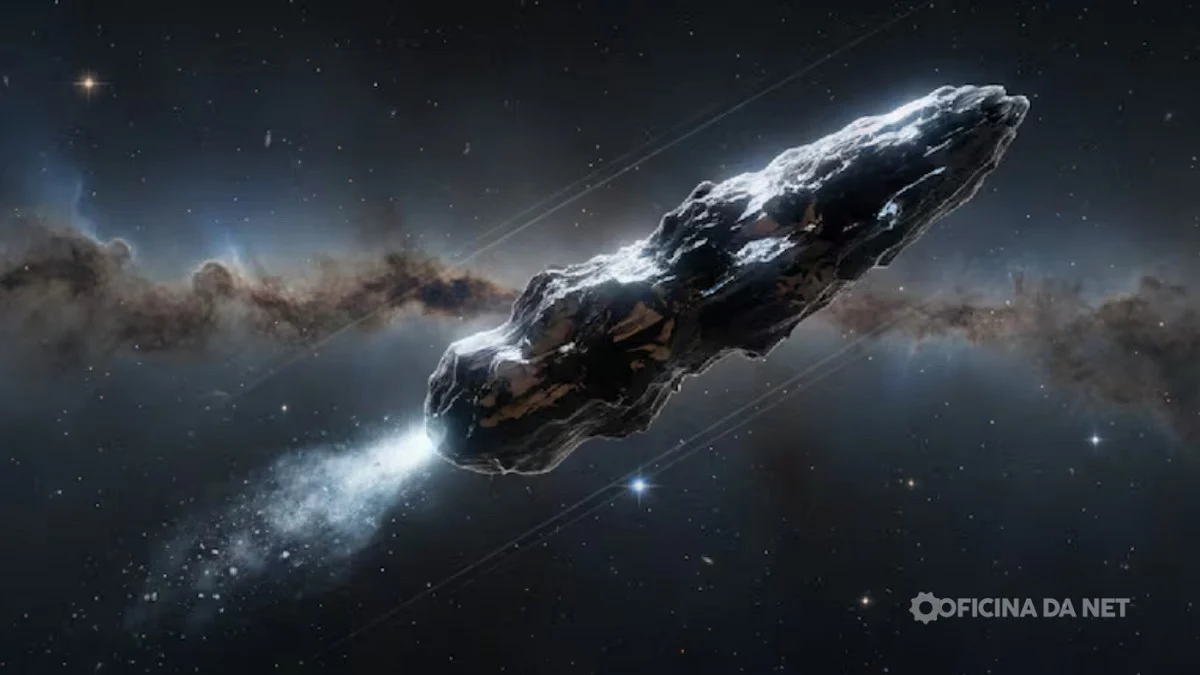
A recent wave of online content claims that new observations of 3I/ATLAS, allegedly linked to Chinese research teams, “confirm what we all feared” and suggest unusual behaviors such as rhythmic energy pulses, heating cycles, and possible artificial monitoring of Earth. These descriptions have been presented in dramatic terms across social media and speculative articles. However, there is no verified scientific report from Chinese or international space agencies supporting these claims.
3I/ATLAS is an interstellar object identified by the ATLAS survey system and is currently understood by astronomers to be a natural body—most likely comet-like in composition—passing through the Solar System on a hyperbolic trajectory. Like previous interstellar visitors such as ʻOumuamua and 2I/Borisov, it is studied using telescopes that measure its brightness, spectrum, and motion across the sky.

Claims of “rhythmic energy pulses” or “heat cycles unlike any natural object” are not supported by published observational data. In real astrophysical analysis, variations in brightness or emissions from such objects are typically explained by rotation, uneven surface activity, outgassing, and changes in viewing angle as the object approaches or recedes from the Sun. These are well-understood behaviors in cometary physics.
The suggestion that 3I/ATLAS may be “monitoring Earth” or acting as an artificial probe falls into the category of speculation rather than evidence-based science. No telescope data, spectral analysis, or trajectory measurements indicate controlled motion, directed signaling, or non-gravitational behavior inconsistent with known comet dynamics.
The involvement of advanced observatories such as the James Webb Space Telescope in studying interstellar objects has indeed expanded scientific understanding of their composition. These instruments can detect molecular signatures, dust properties, and thermal emissions with high precision. However, the detection of chemical compounds or unusual light curves does not imply intelligence or artificial origin—it reflects natural chemistry and physical processes occurring in space.

Public reaction to discoveries like 3I/ATLAS often follows a familiar pattern: rare astronomical objects generate excitement, which is then amplified into narratives involving hidden threats or extraordinary intelligence. This occurs because interstellar objects are still relatively new to observational astronomy, and their unfamiliarity leaves room for interpretation beyond the data.
In reality, all available measurements of 3I/ATLAS remain consistent with natural explanations. Its motion follows gravitational predictions, its brightness variations align with expected cometary activity, and there is no confirmed evidence of artificial structure, communication, or anomalous energy output.
While the scientific community is genuinely interested in 3I/ATLAS for what it can reveal about material formed around other star systems, the more dramatic claims circulating online are not supported by peer-reviewed research or official space agency findings.
Ultimately, 3I/ATLAS represents an important opportunity for astronomy, not a confirmed warning signal. It highlights how interstellar objects can spark imagination, but also how essential careful measurement and evidence-based interpretation remain when studying the universe.