THEY CAN’T HIDE THIS ANYMORE!
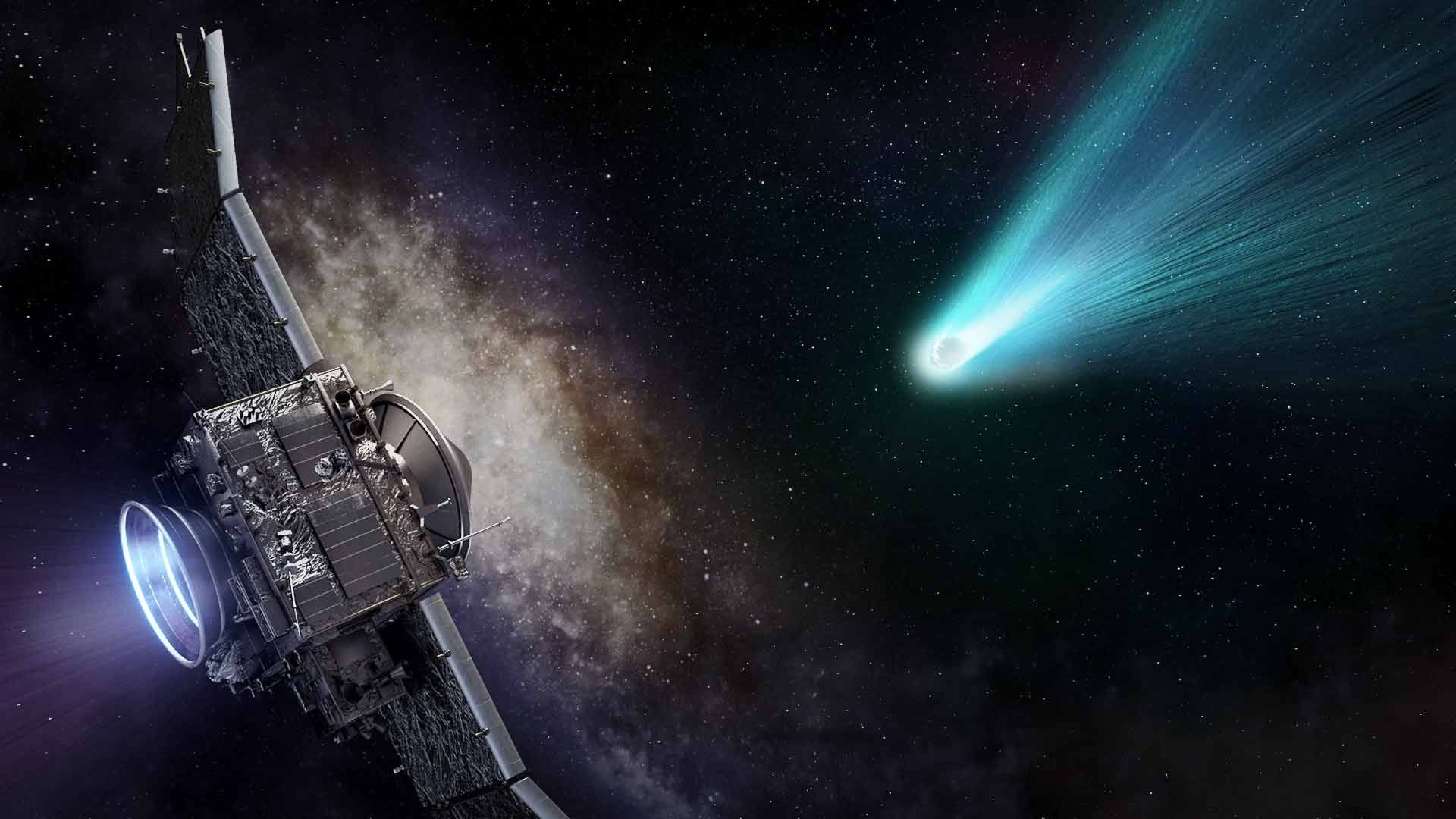
In recent days, the interstellar object known as 3I/ATLAS has become the focus of intense online speculation following claims of a so-called “U.S. insider leak” suggesting that authorities may know more about the object than has been publicly disclosed.
However, when examined against available scientific evidence, the situation appears far more grounded and routine than the dramatic narratives circulating online.
3I/ATLAS is the third confirmed interstellar object ever observed passing through our Solar System, following 1I/ʻOumuamua (2017) and 2I/Borisov (2019). The designation “3I” indicates its interstellar origin, while “ATLAS” refers to the Asteroid Terrestrial-impact Last Alert System, a global network of telescopes designed to detect near-Earth objects.
Interstellar objects are natural bodies formed in other star systems that travel through interstellar space before briefly passing through our Solar System on hyperbolic trajectories. Unlike asteroids bound to the Sun, they are not gravitationally captured and eventually leave the system again.
The discovery of 3I/ATLAS was made through routine sky surveys that continuously scan for moving objects against background stars. Because interstellar objects are typically small, faint, and fast-moving, their detection is rare and scientifically valuable.
Previous discoveries, such as ʻOumuamua, generated widespread debate due to unusual observational features, while 2I/Borisov behaved more like a typical comet, reinforcing the expectation that most interstellar visitors are natural in origin.
With 3I/ATLAS, astronomers followed standard procedures: measuring brightness, calculating orbital parameters, and analyzing spectral data to infer composition. Early results indicate a hyperbolic orbit consistent with an interstellar origin and behavior that does not require exotic explanations.
At present, no verified observational data suggests artificial propulsion, structured signaling, or any anomalous behavior beyond known cometary physics.
The controversy began when online posts claimed that U.S. authorities had implemented “special monitoring protocols” and were withholding information about the object. However, no credible documentation, official statement, or independent verification supports these claims.
Monitoring unusual celestial objects is standard practice in planetary defense and space science. Space agencies and observatories routinely track asteroids, comets, and interstellar visitors, and their data is often shared publicly through international databases such as the Minor Planet Center.

Importantly, increased scientific attention does not indicate secrecy—it reflects the rarity and scientific value of interstellar objects. These bodies provide direct samples of material formed around other stars, making them extremely important for research into planetary formation and galactic chemistry.
The spread of the “insider leak” narrative highlights how quickly speculation can escalate in the digital age. Social media platforms often amplify unverified claims, especially when they involve extraordinary or dramatic interpretations.
Small updates in observational data—such as revised size estimates or brightness changes—are often misinterpreted as evidence of hidden activity, even though they are a normal part of the scientific refinement process.
A key factor in the public reaction is the legacy of previous interstellar discoveries, particularly ʻOumuamua, which sparked debates about its unusual properties. While most scientists supported natural explanations, the discussion left a lasting impression that interstellar objects might sometimes behave in mysterious ways.
As a result, 3I/ATLAS has entered a public environment already primed for speculation.
However, the scientific consensus remains cautious and consistent: current observations of 3I/ATLAS align with natural comet-like behavior. Variations in brightness are consistent with rotation and outgassing, and its trajectory follows predictable gravitational dynamics.
No credible evidence indicates artificial origin or concealed extraordinary properties.
Ultimately, the fascination surrounding 3I/ATLAS reflects both genuine scientific curiosity and the human tendency to fill gaps in knowledge with narrative speculation. While interstellar objects are rare and scientifically valuable, they do not require extraordinary explanations to be understood.
They are, quite simply, natural visitors from another star system—passing through, offering clues about distant worlds, and continuing on their journey through the galaxy.
In the end, the real significance of 3I/ATLAS is not hidden conspiracies or insider revelations, but its role as a rare messenger from another stellar environment. It offers scientists an opportunity to study the building blocks of planetary systems beyond our own and to better understand the broader cosmos we inhabit.