
Edward Uhler Condon and the UFO Debate: Science, Skepticism, and the Search for Extraterrestrial Truth
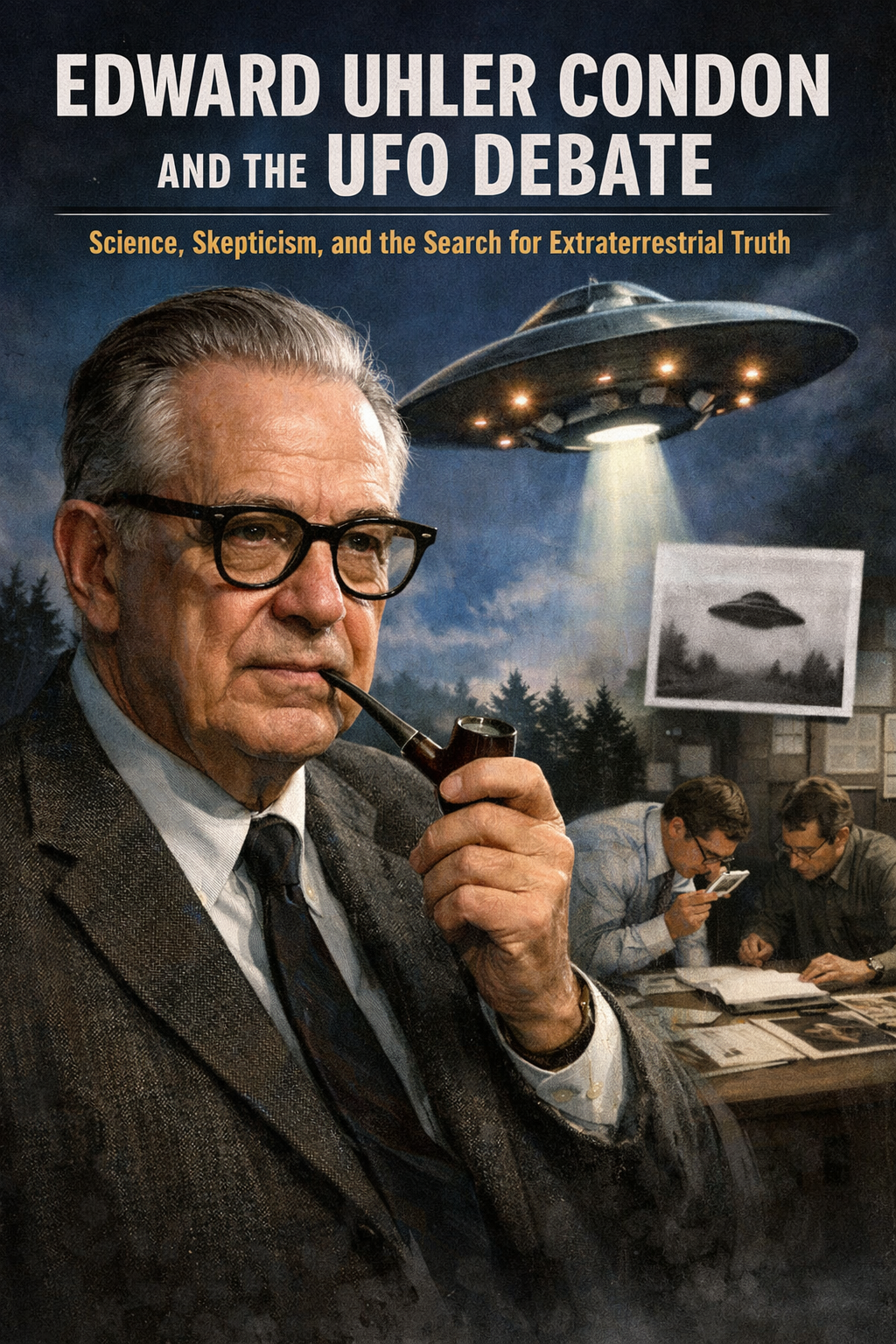
Edward Uhler Condon and the UFO Debate: Science, Skepticism, and the Search for Extraterrestrial Truth
By Historical Science Review
🌌 A Scientist Enters the UFO Controversy
In the late 1960s, as public fascination with flying saucers and alien visitors reached new heights, one of America’s most respected physicists was asked to answer a question that had divided scientists, governments, and the public for decades:
Are UFOs evidence of extraterrestrial life?
That scientist was Edward Uhler Condon — a nuclear physicist, quantum mechanics pioneer, and former director of the U.S. National Bureau of Standards. Unlike many UFO investigators before him, Condon approached the mystery not as a believer or debunker, but as a scientist tasked with delivering a definitive, evidence-based answer.
🧪 Who Was Edward Uhler Condon?
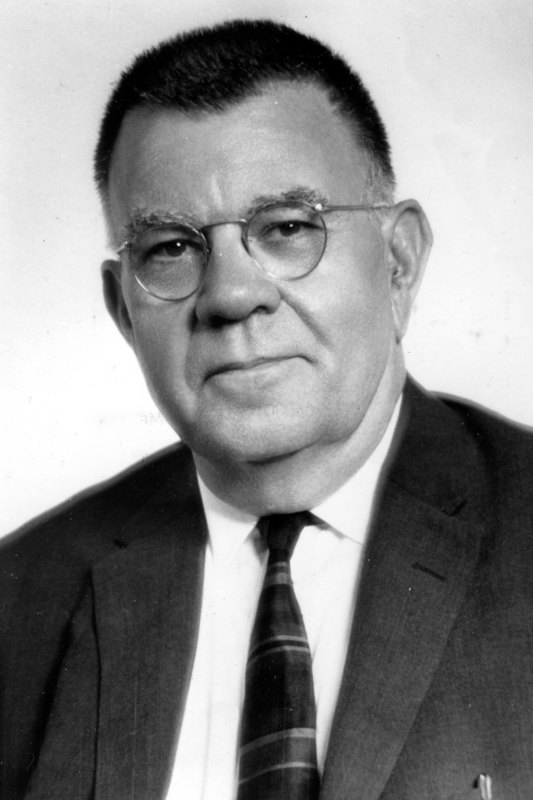

Born in 1902 in New Mexico, Condon became one of the leading American physicists of the 20th century. His career included:
-
Important contributions to quantum mechanics and spectroscopy
-
Work on radar technology during World War II
-
Brief involvement in the Manhattan Project
-
Leadership roles in major scientific institutions
By the 1960s, he was widely respected in the scientific community and had served as president of major scientific organizations. His reputation for independence made him an ideal figure to lead a scientific evaluation of UFO claims.
🛸 The Air Force UFO Study
During the Cold War, thousands of UFO sightings were reported worldwide. The U.S. Air Force had already investigated many cases through Project Blue Book, but controversy persisted.
In 1966, the Air Force funded an independent academic study at the University of Colorado, placing Condon in charge. The project became known as the Condon Committee.
Its mission was simple but historic:
Apply rigorous scientific methods to determine whether UFOs represented unknown technology, natural phenomena, or extraterrestrial visitors.
📘 The Famous “Condon Report”

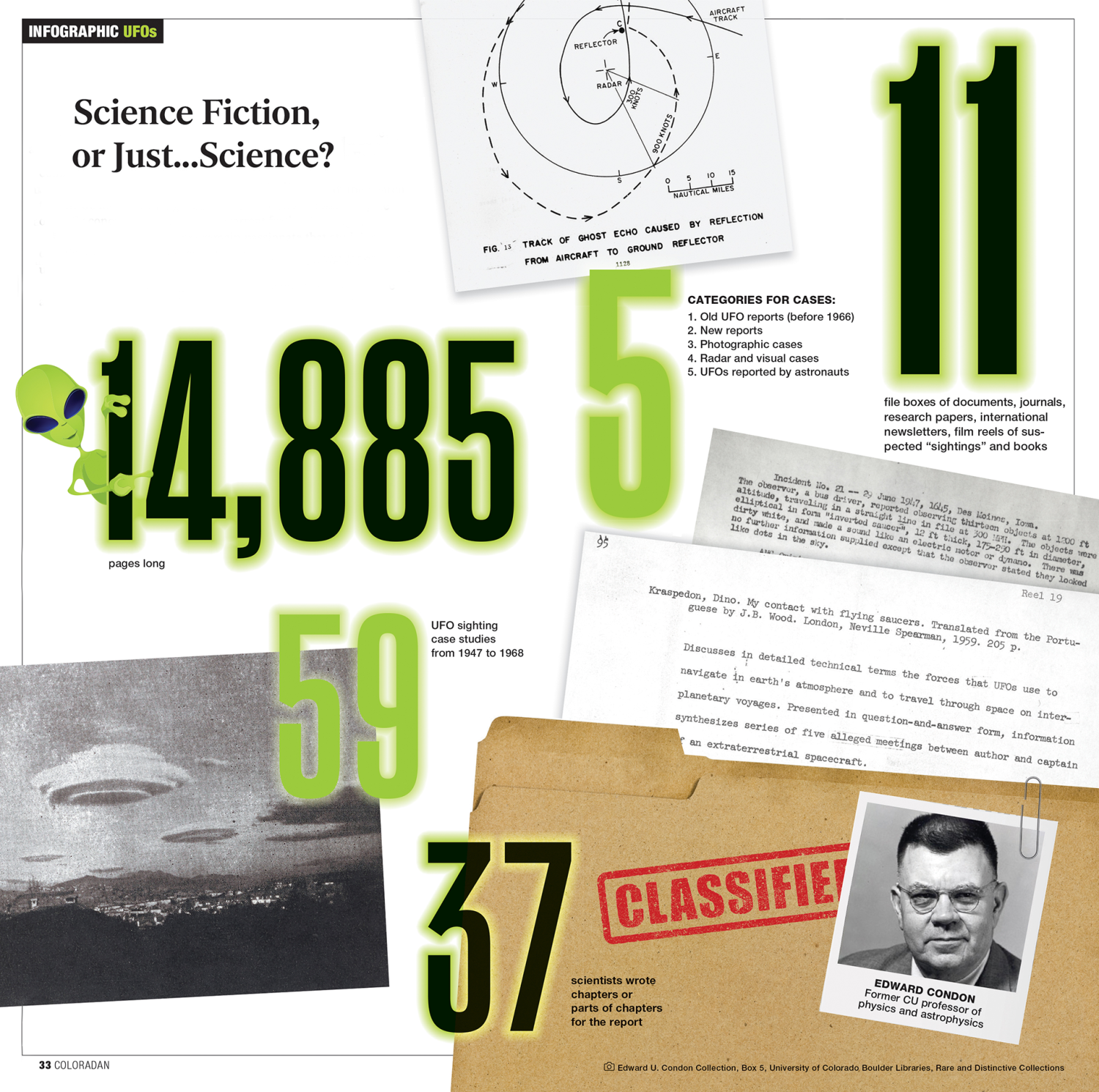

After two years of investigation, the team published Scientific Study of Unidentified Flying Objects (1969), commonly called the Condon Report.
The study analyzed dozens of cases involving:
-
Pilot sightings
-
Radar detections
-
Photographic evidence
-
Civilian encounters
-
Astronaut reports
Key Conclusion
Condon’s summary stated that:
-
No UFO case provided convincing evidence of extraterrestrial spacecraft.
-
Further large-scale scientific study of UFOs was unlikely to yield major discoveries.
This conclusion became one of the most influential scientific statements ever made about UFOs.
👽 Aliens or Misidentified Phenomena?
The committee found that many UFO sightings could be explained as:
-
Atmospheric effects
-
Astronomical objects (Venus, meteors)
-
Aircraft or experimental technology
-
Human perception errors
However, the report also acknowledged that some cases remained unexplained, though not necessarily extraterrestrial.
This distinction became central to later UFO debates:
“Unidentified” did not mean “alien.”
⚖️ Controversy and Criticism
The Condon Report did not end the UFO debate — it intensified it.
Critics argued:
-
Some scientists on the project disagreed with the final conclusions.
-
Interesting cases were allegedly downplayed.
-
The Air Force used the report to justify closing Project Blue Book in 1969.
Supporters argued:
-
It represented the most comprehensive scientific UFO investigation ever conducted.
-
Extraordinary claims required stronger evidence than eyewitness testimony.
To this day, UFO researchers remain divided over whether the study was objective skepticism or premature dismissal.
🌠 Condon’s Personal View on UFOs
Condon himself did not claim UFO witnesses were dishonest. Instead, he emphasized scientific caution:
-
Many witnesses were sincere.
-
Human perception is imperfect.
-
Science requires reproducible physical evidence.
He believed curiosity about extraterrestrial life was valid — but extraordinary conclusions must rest on extraordinary proof.
🔭 Legacy in Modern UFO Research
Today, renewed government interest in UAPs (Unidentified Anomalous Phenomena) has revived discussions about Condon’s work.
His legacy remains complex:
-
To skeptics: he brought scientific rigor to a chaotic field.
-
To believers: he closed scientific doors too early.
-
To historians: he represents the moment UFOs moved from popular mystery into formal scientific scrutiny.
More than half a century later, the central question he confronted still remains unanswered:
Are UFOs visitors from beyond Earth — or reflections of human misunderstanding?
