The ‘deadly’ hypothesis explains why Earth hasn’t encountered extraterrestrial life.
Speculation about the possibility of extraterrestrial life forms in the universe began in ancient Greece and Rome, but to this day, humanity has yet to come into contact with any civilization beyond Earth.
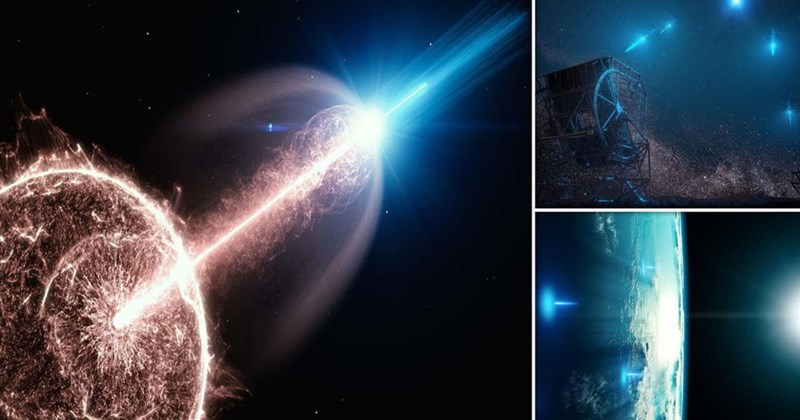
There are many different theories attempting to explain this phenomenon, but perhaps the most surprising is the idea that extraterrestrial civilizations were destroyed by gamma-ray bursts ( GRBs ) in the universe.
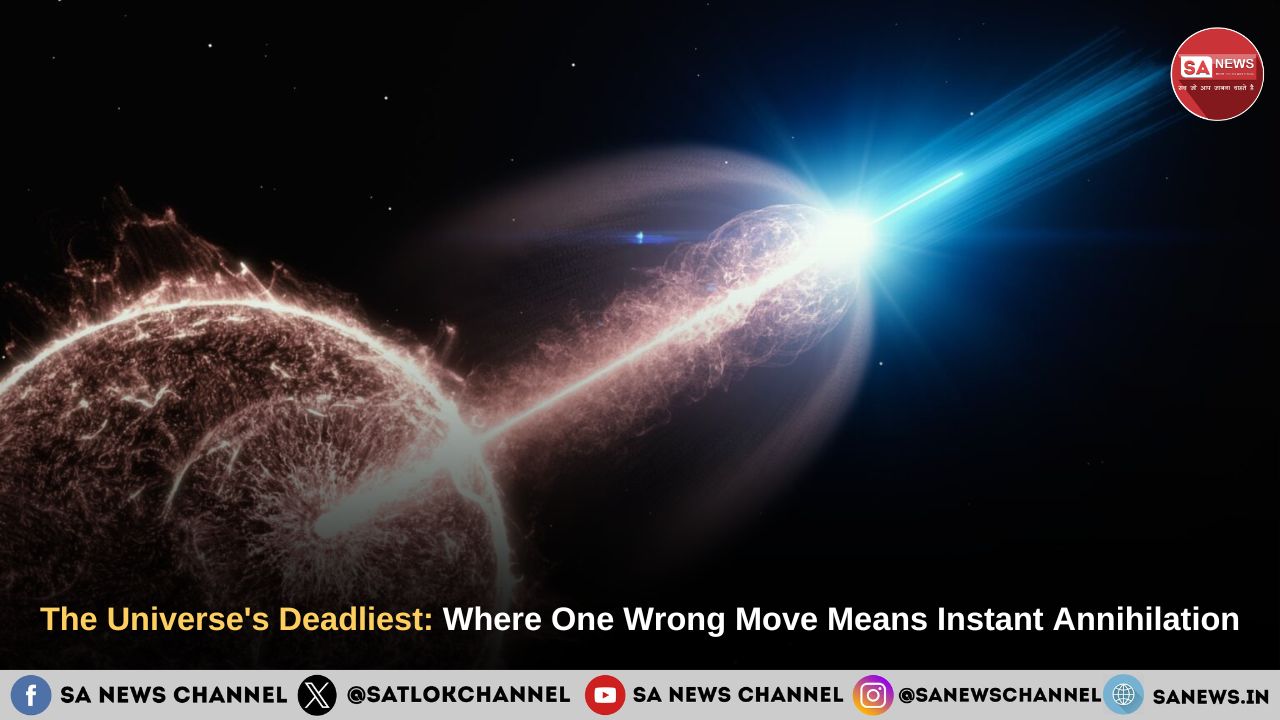
GRBs are some of the most violent energy bursts in the universe, and have been observed by astronomers to originate from distant galaxies. This phenomenon occurs when the core of a massive star runs out of fusion fuel and collapses under its own weight, releasing a destructive burst of energy.
The US National Aeronautics and Space Administration (NASA) calls GRBs the most powerful explosions in space.
Professor Frederick Walter, an astronomy professor at Stony Brook University (USA), hypothesizes that the reason humans have not yet made contact with extraterrestrial beings may be due to GRBs (Geomagnetic Reefs).
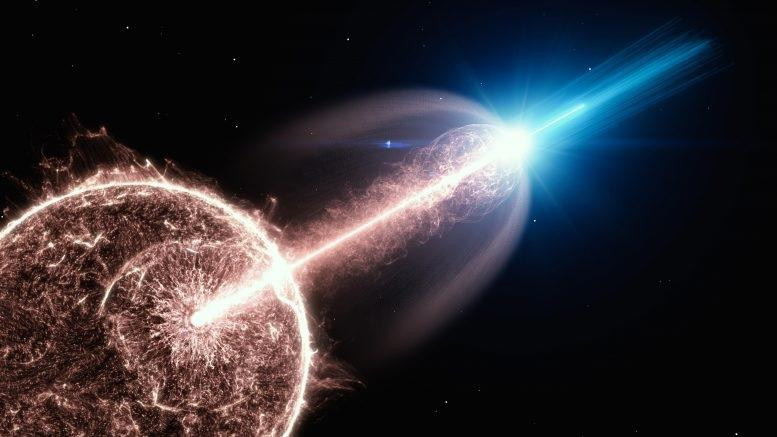
Professor Walter estimates that if a GRB were released directly onto the plane of a galaxy, it could wipe out about 10% of that galaxy’s planets.
“A GRB event occurs in any galaxy every 100 million years,” Professor Walter told the Daily Mail . Based on this calculation, on average, a significant number of civilizations are wiped out every billion years, assuming extraterrestrial life truly exists.
Astronomers at Stony Brook University have indicated that Earth is approximately 4.5 billion years old. Like the game of “Russian roulette,” the Milky Way must have experienced between 45 and 450 GRB events in its vicinity during Earth’s development. Therefore, it’s also possible that civilizations vanished due to the unfortunate direct impact of a GRB explosion.
Walter also emphasized that this is just one of many hypotheses aimed at explaining why humans have not yet made contact with extraterrestrial civilizations.