
Easter Island Moai: The Stone Giants and Their Ancient Mystery
Easter Island Moai: The Stone Giants and Their Ancient Mystery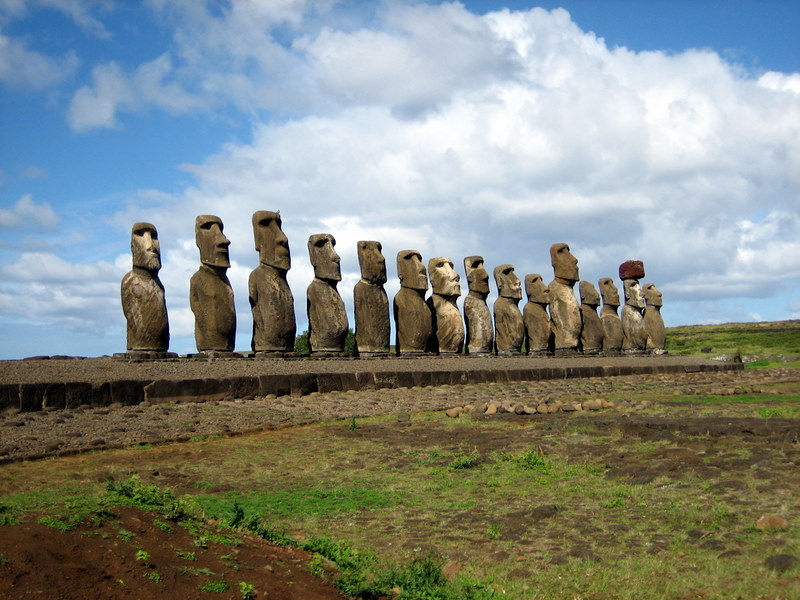
Introduction
Across one of the most remote islands on Earth stand hundreds of enormous stone statues staring silently toward the horizon. These figures, known as the Moai, are among the most fascinating archaeological creations in human history.
Located on the isolated island of Easter Island, the statues have puzzled historians, archaeologists, and explorers for centuries. Who created them? How were they transported across the island? And what purpose did they serve?
Despite decades of research, the Moai remain one of the world’s most intriguing ancient mysteries.
The Remote Island of Rapa Nui
The statues stand on Rapa Nui, a volcanic island located in the southeastern Pacific Ocean.
Today the island is part of Chile, although it lies more than 3,500 kilometers from the South American mainland.
Because of its extreme isolation, the island developed a unique culture and traditions over many centuries.
What Are the Moai?
The Moai are massive stone statues carved by the ancient Rapa Nui people.
Archaeologists estimate that more than 900 statues were created between about 1100 AD and 1600 AD.
Some key features of the statues include:
-
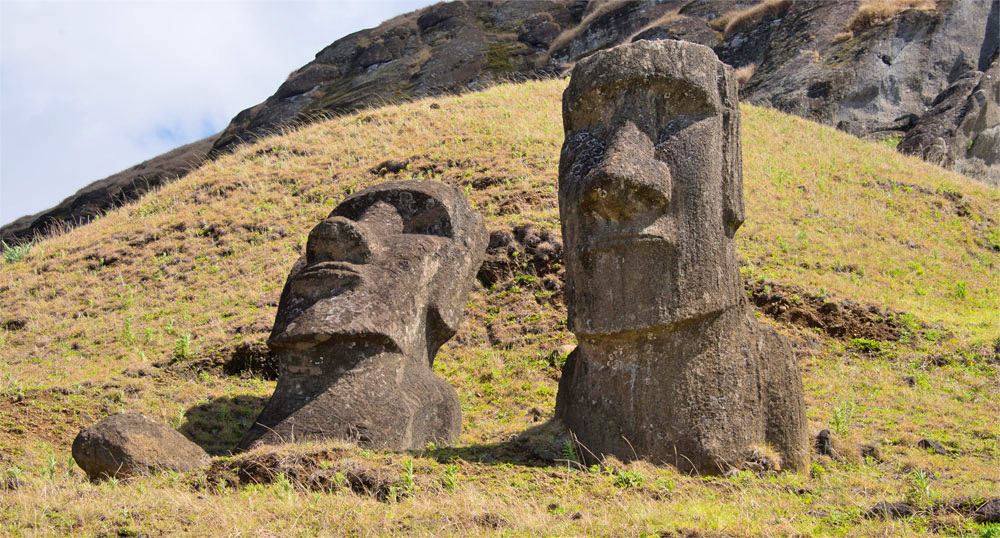
Enormous heads with long noses and deep eye sockets
-
Large torsos but often buried bodies
-
Heights ranging from 4 to 10 meters
-
Weights reaching over 80 tons
Most of the statues were carved from volcanic rock at the quarry of Rano Raraku.
The Mystery of Transportation
One of the greatest puzzles surrounding the Moai is how the island’s ancient inhabitants moved the enormous statues across rough terrain.
The statues were carved at Rano Raraku but later transported to ceremonial platforms known as ahu, located around the island’s coastline.
Several theories have been proposed:
1. Wooden Rollers
Some researchers believe the statues were moved using logs as rollers, similar to how ancient civilizations transported large stones elsewhere.
2. Sledges and Ropes
Another theory suggests the statues were pulled on wooden sledges using ropes and large teams of workers.
3. “Walking” Statues
Modern experiments have shown that the statues could be moved upright using ropes, rocking them from side to side so that they appear to “walk.”
Interestingly, ancient Rapa Nui legends also say the statues “walked to their locations using spiritual power.”
The Purpose of the Moai
Most archaeologists believe the statues represented important ancestors or tribal leaders.
Placed on ceremonial platforms facing inland, the Moai were thought to watch over villages and protect the people.
They likely symbolized:
-
Political authority
-
Spiritual protection
-
Connection between the living and their ancestors
Some statues originally had red stone hats called pukao, carved from volcanic rock at Puna Pau.
Why Were Many Statues Toppled?
By the time Europeans arrived at the island in 1722, many Moai statues had already been knocked over.
The reasons remain debated, but possible explanations include:
-
Internal conflicts between tribes
-
Environmental collapse caused by deforestation
-
Social upheaval and resource shortages
During the 20th century, many statues were restored and re-erected by archaeologists.
Easter Island Today
Today the Moai are protected as part of Rapa Nui National Park, a **UNESCO World Heritage Site.
The statues have become one of the most iconic symbols of ancient human creativity and cultural achievement.
Thousands of visitors travel to Easter Island each year to witness the silent stone guardians standing against the vast Pacific horizon.
Conclusion
The Moai statues of Easter Island remain one of the most extraordinary archaeological achievements in the world. Their massive size, mysterious transportation, and spiritual significance continue to inspire fascination and debate.
Although researchers have uncovered many clues about their origins, the Moai still hold secrets about the remarkable civilization that created them—reminding us that even today, many mysteries of the ancient world remain unsolved.
