
NOT Breaking Apart… ACTIVATING: The 3I/ATLAS Event That Just Flipped the Narrative Overnight
It began, as modern cosmic panic so often does, with a blurry image and a timestamp that screamed urgency. Within minutes, the mysterious interstellar object 3I/ATLAS went from “interesting anomaly” to “possible alien probe deploying something,” at least in the eyes of the internet. When astronomers reported changes in brightness and structure, the nuance of scientific language was quickly lost. What researchers described as material ejection or rotational effects became, in online translation, something far more cinematic: activation, unfolding, intent.
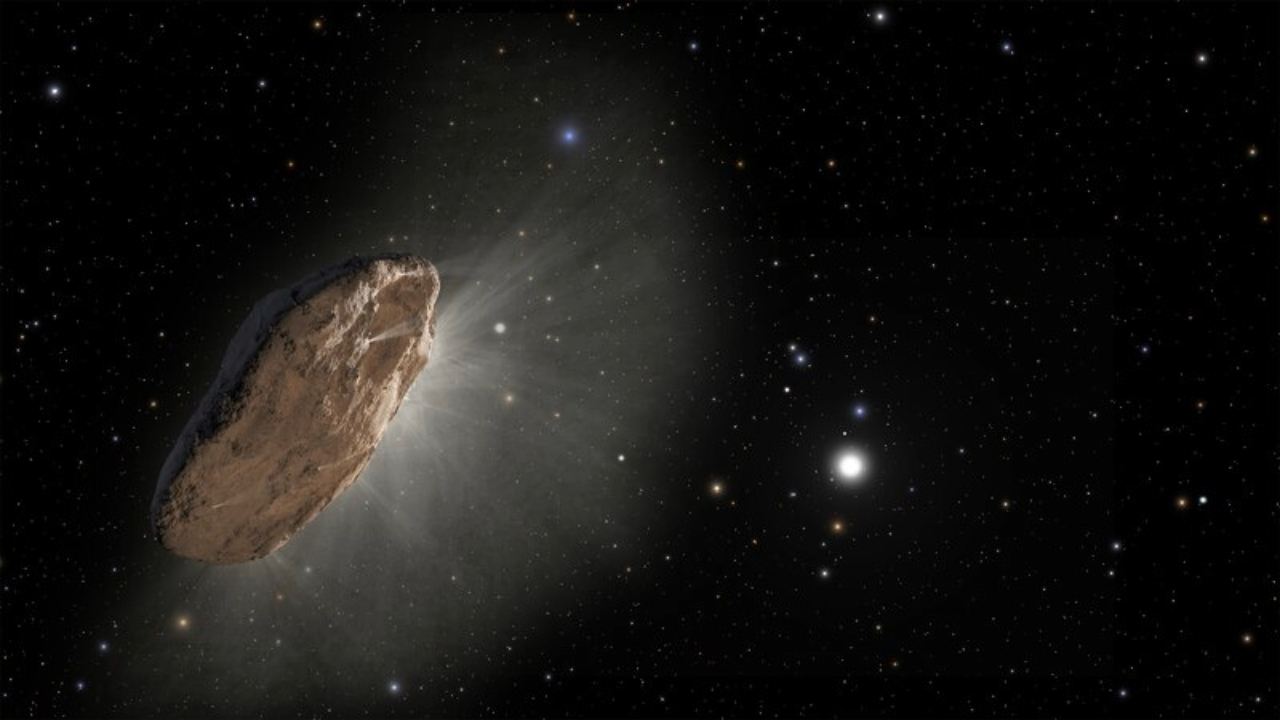
In reality, observations from institutions like NASA pointed to far more grounded explanations. Interstellar objects—like ʻOumuamua before it—often behave in ways that challenge expectations simply because they originate outside our solar system. Their composition, structure, and response to solar radiation can differ significantly from familiar comets. What looked dramatic in telescope images was most likely asymmetric outgassing, dust release, or changes in orientation as the object interacted with heat and light near the Sun.
But the word “deploying” proved irresistible. It carried just enough ambiguity to ignite imagination while sounding technical enough to feel credible. Social media amplified it instantly, turning a routine (if unusual) astrophysical update into a narrative filled with hidden intent and speculative technology. Meanwhile, actual astronomers emphasized a much less exciting truth: space is messy, and small bodies can behave in complex, sometimes counterintuitive ways without requiring artificial explanations.
The confusion highlights a recurring pattern. Scientific uncertainty—phrases like “poorly understood” or “never observed before”—is a normal part of discovery. Yet outside academic circles, those same phrases often get interpreted as evidence of secrecy or something being concealed. In the case of 3I/ATLAS, that gap between careful analysis and public interpretation became the real story.
As the object continued its journey, it neither revealed alien structures nor confirmed any extraordinary claims. Like previous visitors, it passed through quietly, leaving behind more questions than answers—but none that require abandoning known physics. If anything, the episode says less about the object itself and more about us: when faced with the unknown, humans tend to fill in the gaps with the most dramatic possibilities available.
And so 3I/ATLAS moves on, unchanged by the speculation surrounding it—while back on Earth, the cycle repeats. Science says “unusual.” The internet hears “unbelievable.”
