
James Webb Space Telescope Discovers Something Scientists Were Not Prepared to Encounter
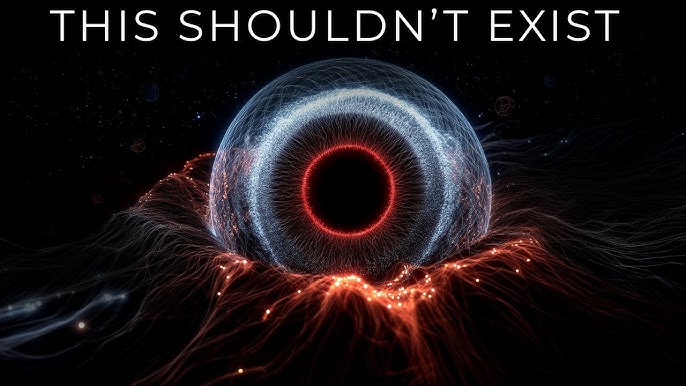
When the James Webb Space Telescope began returning its first deep-field observations, scientists expected refinement. What they got instead was acceleration. Not a collapse of understanding, but a quiet realization that the universe had been moving faster, earlier, and with more efficiency than our models had comfortably allowed.
The data showed galaxies—real, measurable structures—appearing in epochs not long after the Big Bang. And not just faint, chaotic clumps, but systems that already looked organized, massive, and luminous. In earlier frameworks, galaxies at that stage of the universe were expected to still be assembling, still unstable, still figuring themselves out. Instead, Webb revealed something closer to maturity.
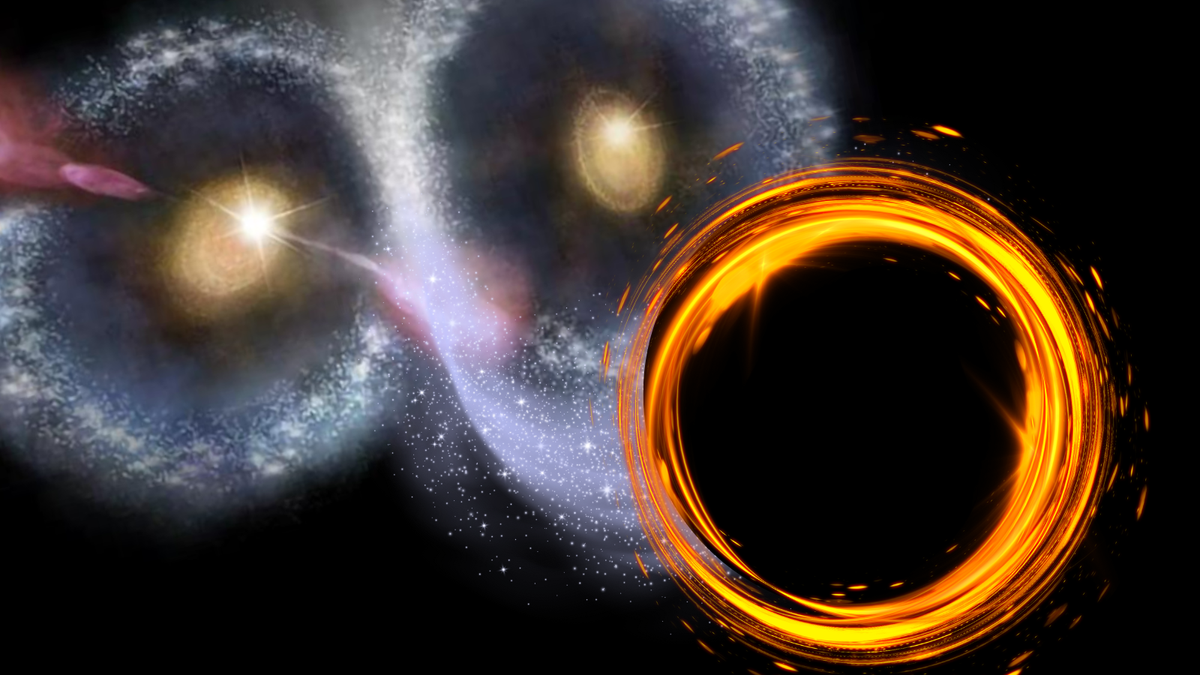
That gap between expectation and observation is where all the noise began.
Online, that gap was quickly filled with conclusions: physics is broken, reality is wrong, something is being hidden. But in science, that gap has a different meaning. It’s not failure—it’s friction. And friction is where discovery lives.
Researchers didn’t declare a crisis. They asked questions.
Could early star formation have been far more efficient than predicted?
Are we underestimating how quickly gas collapsed into stars and galaxies?
Could observational effects—like brightness amplification or distance interpretation—be skewing what we think we’re seeing?
These are not signs of collapse. They are signs of a model being updated in real time.
Even figures like Avi Loeb, often cast as provocateurs in these conversations, are not arguing that everything we know is wrong. The real argument is simpler and more uncomfortable: that the universe may not follow the clean, gradual timeline we constructed from limited data.
And that’s not unprecedented.
Every major leap in astronomy—from Galileo Galilei pointing a telescope at Jupiter to Edwin Hubble discovering cosmic expansion—has done the same thing: revealed that reality is less tidy than expected. The difference now is speed. What once unfolded over decades now spreads globally in hours, stripped of nuance and amplified into spectacle.
What Webb is actually showing us is not a broken universe, but a more active one.
If galaxies formed earlier, it suggests that matter organized itself quickly under gravity. If stars ignited sooner, then the processes that create light and structure were already efficient in the universe’s infancy. That doesn’t overturn physics—it pushes us to better understand how known physics behaves under extreme early conditions.
And beneath all the noise, one truth remains steady.
The universe is not obligated to match our expectations.
It doesn’t follow our pacing, our assumptions, or our sense of narrative comfort. It evolves on its own terms. What Webb has done is extend our vision far enough to notice the mismatch between what we predicted and what actually happened.
That mismatch feels unsettling—not because reality is breaking, but because our certainty is.
So no, the telescope didn’t uncover a hidden catastrophe or expose a cosmic secret being withheld. It did something both simpler and far more profound: it showed us that the early universe was already busy building structure while we were still assuming it was taking its time.
And if that feels like an existential shock, it’s only because we’re watching, in real time, as understanding catches up with reality.
