
The Dancing Plague of 1518: When a City Couldn’t Stop Dancing
📰 The Dancing Plague of 1518: When a City Couldn’t Stop Dancing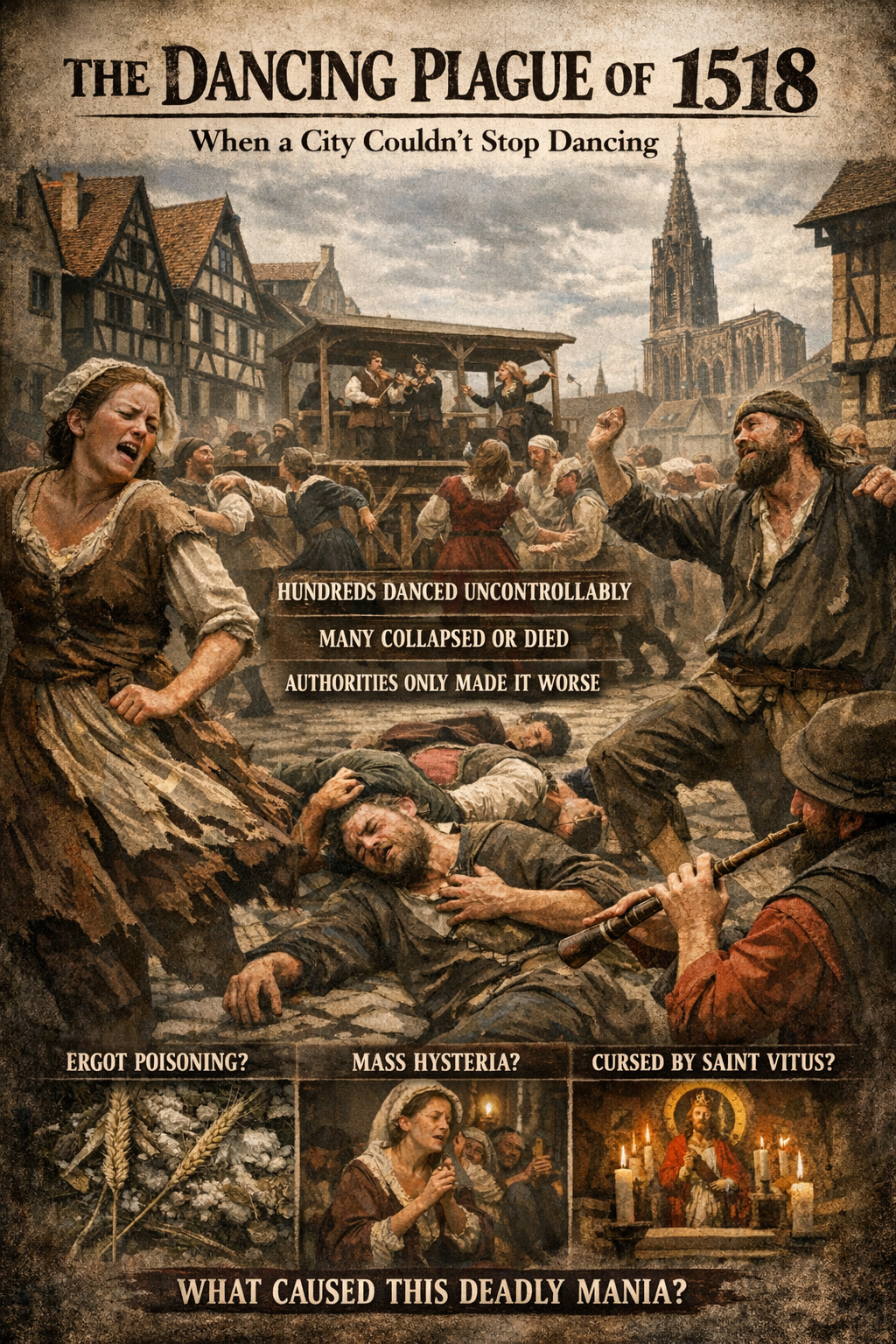
Introduction
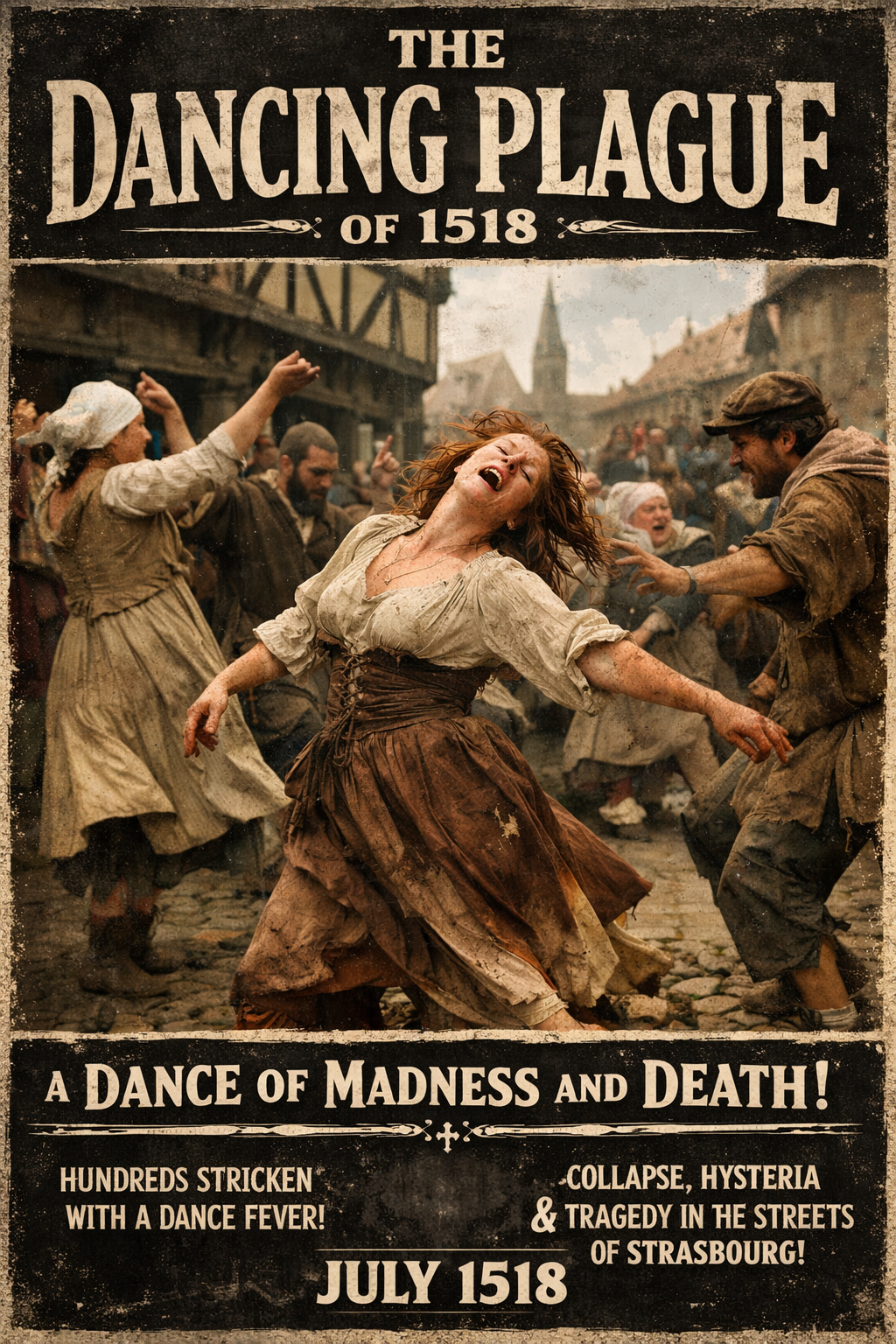
In the summer of 1518, a bizarre and terrifying event struck the city of Strasbourg (then part of the Holy Roman Empire). Dozens—eventually hundreds—of people began dancing uncontrollably in the streets, unable to stop for days or even weeks.
This strange phenomenon became known as the Dancing Plague of 1518, and it remains one of the most puzzling medical mysteries in history.
The Outbreak Begins
The event reportedly started in July 1518 when a woman named Frau Troffea suddenly began dancing in the street.
At first, it seemed like an isolated incident. But within days, dozens of others joined her—dancing without rest, often collapsing from exhaustion. Within weeks, the number grew to hundreds of people.
A Deadly Dance
What made the situation truly alarming was its deadly impact:
-
💃 People danced for days without stopping
-
😰 Many suffered from exhaustion, dehydration, and heart attacks
-
⚰️ Historical reports suggest dozens may have died
Instead of stopping the dancing, local authorities made a surprising decision—they encouraged it.
A Bizarre Response
Believing the condition to be caused by “overheated blood,” officials in Strasbourg took an unusual approach:
-
🎶 They hired musicians to keep the dancers moving
-
🕺 They built stages for people to dance on
-
🏥 Only later did they attempt to stop the phenomenon
Eventually, victims were taken to shrines for healing rituals, after which the outbreak gradually faded.
Theories Behind the Mystery
Historians and scientists have proposed several explanations:
🌿 1. Ergot Poisoning
One theory suggests that contaminated rye infected with a fungus (ergot) may have caused hallucinations and convulsions. However, this does not fully explain the sustained, coordinated dancing.
🧠 2. Mass Psychogenic Illness
The most widely accepted explanation is a form of collective psychological disorder triggered by extreme stress, famine, and hardship. In this state, people may have unconsciously expressed distress through uncontrollable movement.
✝️ 3. Religious or Cultural Factors
Some believed the dancers were cursed by Saint Vitus, a figure historically linked to involuntary dancing.
Why Is It Still Unsolved?
Despite modern analysis, the Dancing Plague of 1518 remains mysterious because:
-
No single theory explains all symptoms
-
Historical records are incomplete
-
Similar events have occurred, but none as extreme
Conclusion
The Dancing Plague of 1518 is a chilling reminder of how little we sometimes understand about the human mind and body. Whether caused by disease, psychology, or a combination of both, it stands as one of history’s strangest and most haunting events.
Even today, it raises an unsettling question:
What could make an entire population dance itself to death?
