
Dark Energy: The Mysterious Force Driving the Expansion of the Universe
📰 Dark Energy: The Mysterious Force Driving the Expansion of the Universe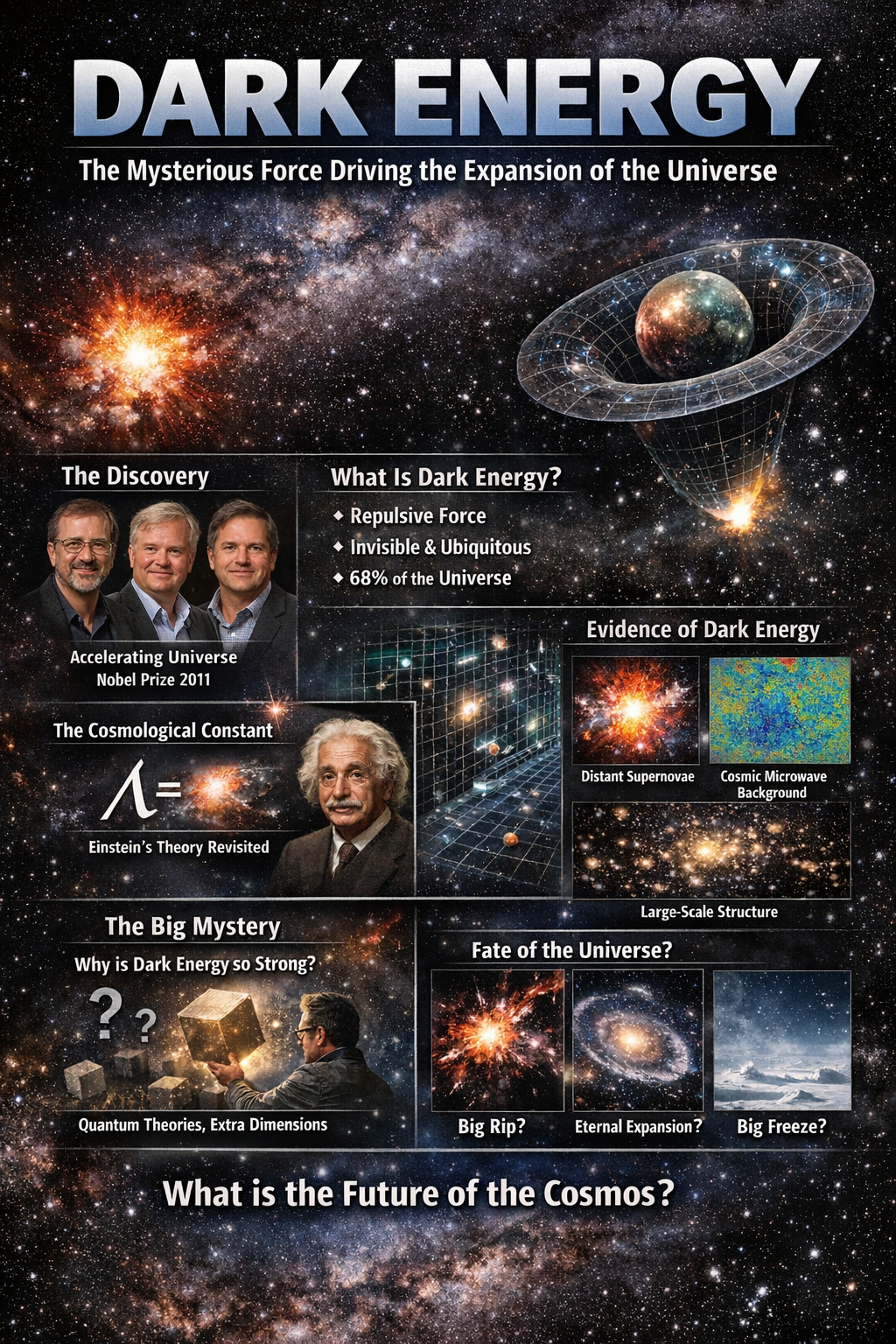
Introduction
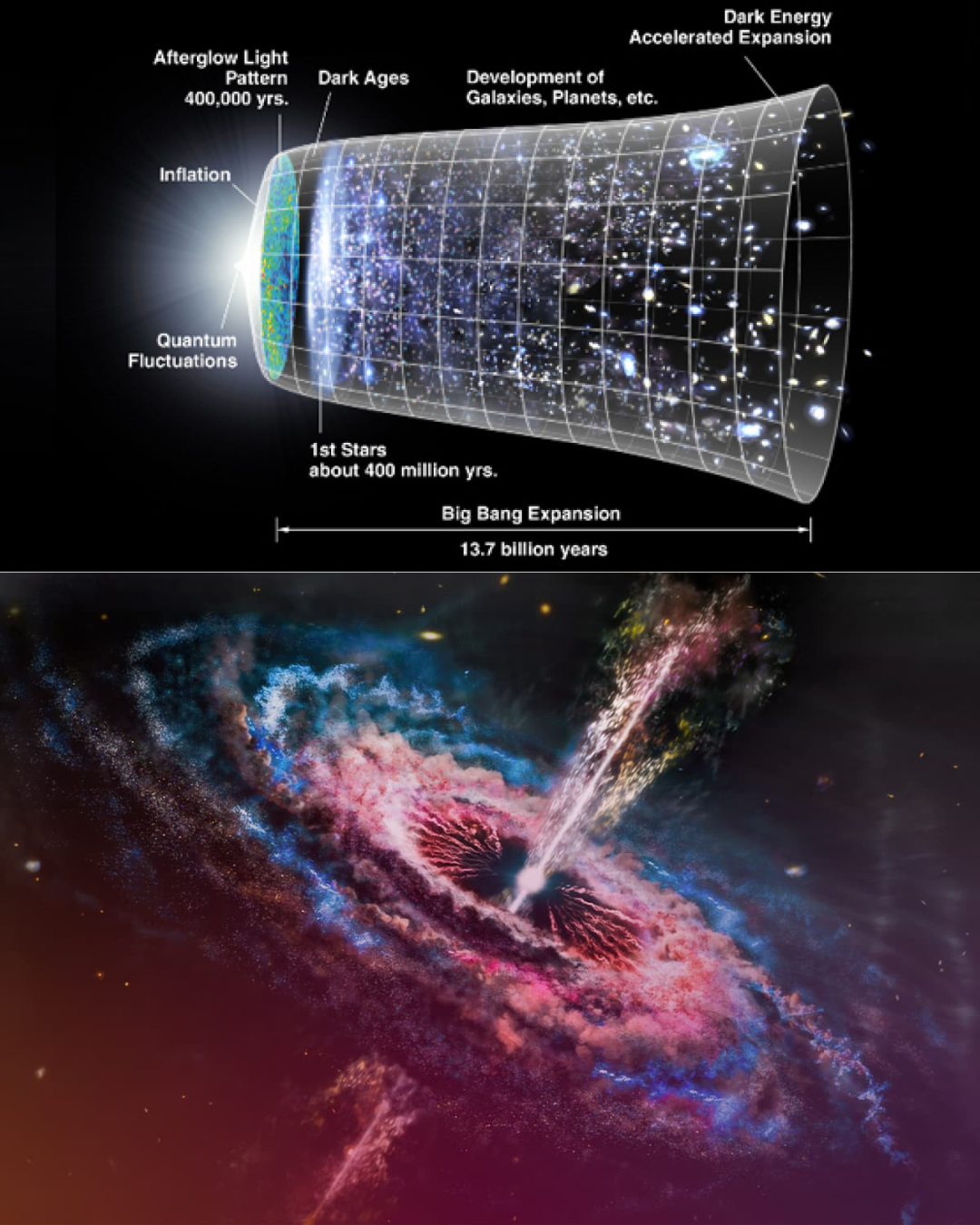
In the late 20th century, scientists made a startling discovery: the universe is not just expanding—it is expanding faster and faster. The unknown force behind this acceleration is called Dark Energy.
Despite making up about 68% of the universe, dark energy remains one of the greatest mysteries in modern physics.
The Discovery of an Accelerating Universe
For most of the 20th century, scientists believed that gravity would eventually slow the expansion of the universe. However, in 1998, two independent research teams studying distant supernovae made a shocking discovery: the universe’s expansion was actually speeding up.
This groundbreaking finding was led in part by astrophysicist Saul Perlmutter, along with teams including Brian P. Schmidt and Adam Riess.
Their work earned them the 2011 Nobel Prize in Physics and revolutionized our understanding of the cosmos.
What Is Dark Energy?
Dark energy is a hypothetical form of energy that fills space and pushes the universe to expand at an accelerating rate.
Unlike normal matter and energy:
-
It does not emit or absorb light
-
It does not clump together like galaxies or stars
-
It appears to be evenly spread throughout space
Scientists are still unsure whether dark energy is:
-
A property of space itself
-
A new, unknown form of energy
-
Or a sign that our understanding of gravity is incomplete
The Cosmological Constant
One leading explanation for dark energy is the cosmological constant, a concept first introduced by Albert Einstein.
Einstein originally added this term to his equations to describe a static universe, but later abandoned it after the discovery that the universe is expanding. Ironically, modern science has revived this idea as a possible explanation for dark energy.
Evidence of Dark Energy
Although dark energy cannot be seen directly, scientists have strong evidence for its existence:
-
Observations of distant supernovae
-
Measurements of the cosmic microwave background
-
Large-scale structure of the universe
-
Baryon acoustic oscillations
These observations consistently show that the expansion of the universe is accelerating.
The Big Mystery
One of the biggest puzzles in physics is that theoretical predictions of dark energy’s strength are vastly different from what is observed.
This discrepancy—sometimes called the “worst prediction in physics”—suggests that our current theories are incomplete.
Scientists are exploring new ideas, including:
-
Modified gravity theories
-
New quantum fields
-
Extra dimensions
Visual Representation

Why Dark Energy Matters
Dark energy is not just a scientific curiosity—it determines the ultimate fate of the universe.
Depending on its nature, the universe could:
-
Continue expanding forever
-
Tear itself apart in a “Big Rip”
-
Slow down and stabilize
Understanding dark energy is key to answering one of humanity’s biggest questions:
What will happen to the universe in the distant future?
Conclusion
Dark energy remains one of the most profound and challenging mysteries in science. Though invisible and poorly understood, its effects shape the entire universe.
As new telescopes and experiments continue to probe the cosmos, scientists hope to uncover the true nature of this mysterious force.
Until then, dark energy stands as a reminder that the universe still holds secrets waiting to be discovered.
