
Gravity: The Invisible Force That Shapes the Universe
📰 Gravity: The Invisible Force That Shapes the Universe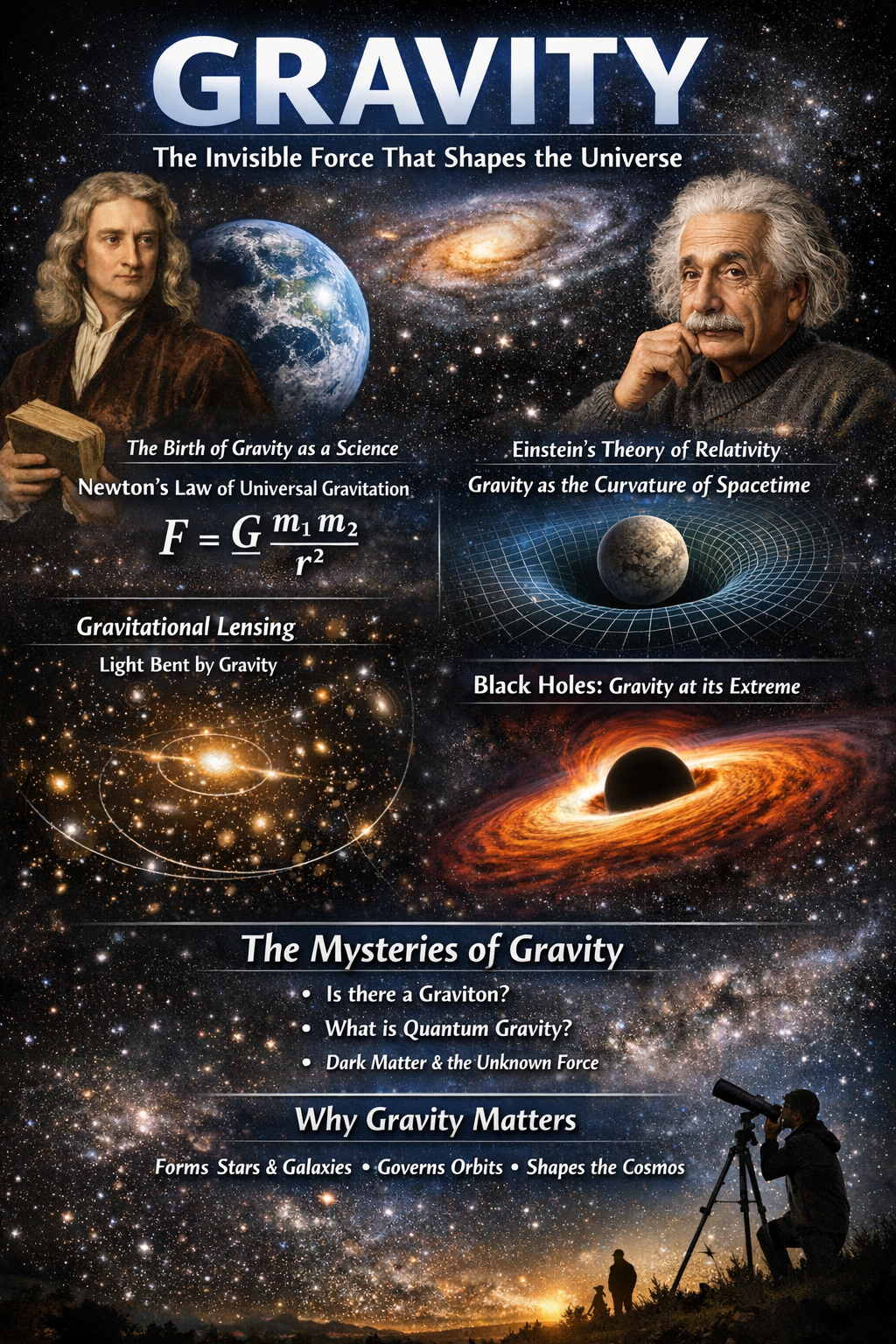
Introduction
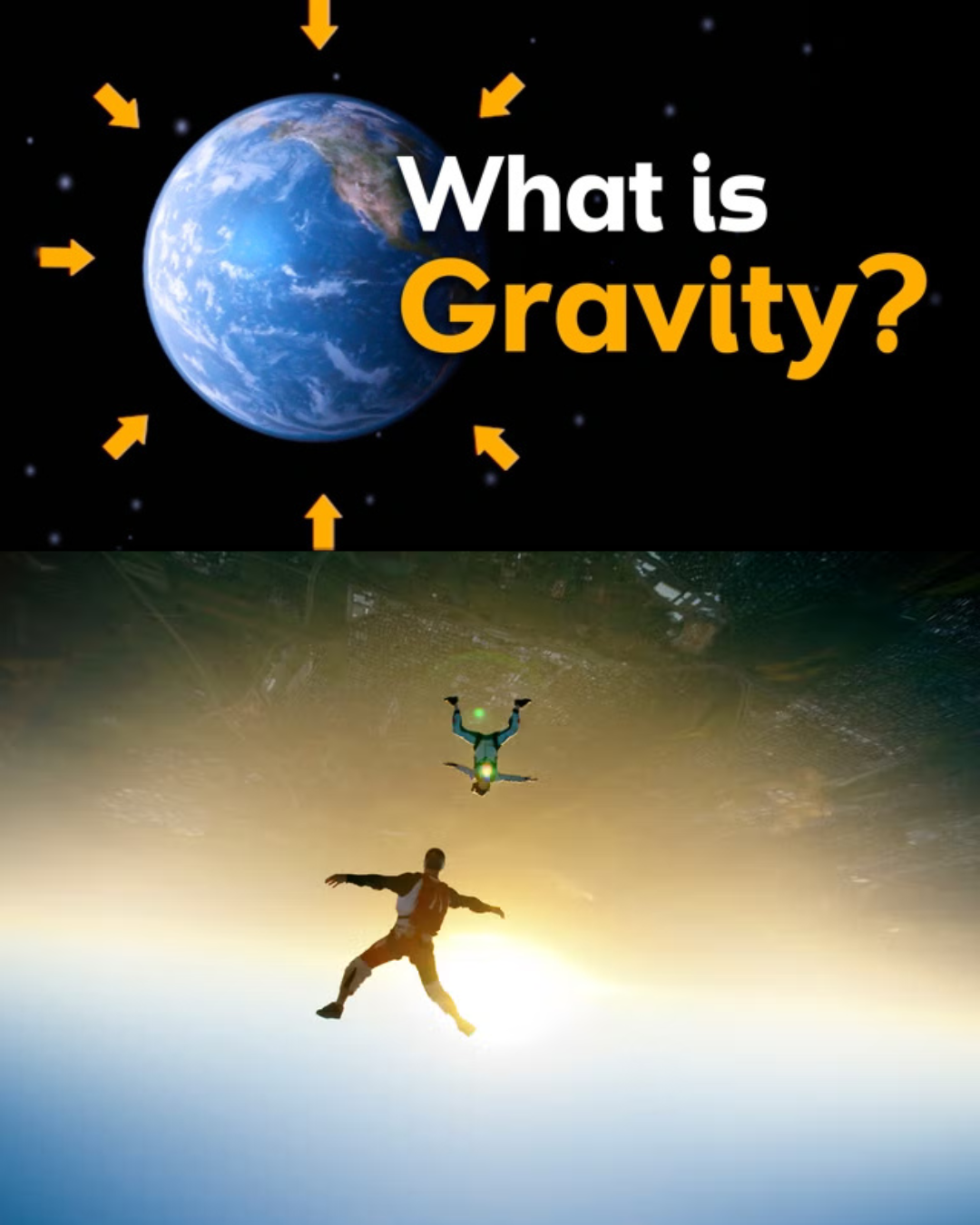
From the fall of an apple to the motion of galaxies, one force quietly governs the structure of the cosmos—Gravity.
It is the force that keeps our feet on the ground, holds planets in orbit, and binds galaxies together. Yet despite its familiarity, gravity remains one of the deepest mysteries in physics.
The Birth of Gravity as a Science
The first major breakthrough came from Isaac Newton, who described gravity as a force acting between masses. His law explained why objects fall and how planets move.
Centuries later, Albert Einstein revolutionized this view with his theory of relativity. Instead of a force, Einstein described gravity as the curvature of spacetime caused by mass and energy.
Gravity as Curved Spacetime
According to Einstein’s theory, massive objects like stars and planets bend the fabric of spacetime. Objects moving nearby follow these curves, which we perceive as gravity.
This means:
-
Earth orbits the Sun not because it is “pulled,” but because it follows a curved path in spacetime
-
Light itself can bend when passing near massive objects
This bending of light is known as Gravitational Lensing, and it provides strong evidence for Einstein’s theory.
The Equation of Gravity
Newton’s classical description of gravity can be expressed by a simple but powerful formula:
F=Gm1m2r2F = G \frac{m_1 m_2}{r^2}
This equation shows that the gravitational force depends on the masses involved and the distance between them.
Gravity and Black Holes
Gravity reaches its most extreme form in **Black Hole**s.
In these regions:
-
Spacetime is curved to an extreme degree
-
Not even light can escape
-
Time itself slows down dramatically
Black holes are among the most fascinating objects in the universe, pushing gravity to its limits.
The Mystery of Gravity
Despite its importance, gravity is still not fully understood.
Some of the biggest mysteries include:
-
Why is gravity so weak? Compared to other fundamental forces, gravity is incredibly weak.
-
What is quantum gravity? Scientists have not yet unified gravity with quantum mechanics.
-
Does gravity have a particle? The hypothetical particle called the graviton has never been observed.
-
Dark matter and gravity: Observations suggest there is more gravitational effect than visible matter can explain.
Why Gravity Matters
Gravity is essential for the structure and evolution of the universe:
-
It forms stars, planets, and galaxies
-
It governs cosmic motion
-
It influences the fate of the universe
Without gravity, the universe would be a chaotic cloud of particles with no structure.
Conclusion
Gravity may be the most familiar force, but it is also one of the most mysterious. From Newton’s equations to Einstein’s curved spacetime, our understanding has deepened—but not completed.
As scientists search for a theory of quantum gravity, they hope to unlock the final secrets of this invisible force.
In the end, gravity is not just what pulls us down—it is what holds the universe together.
