
The James Webb Space Telescope Flags “3I/ATLAS” for Possible Bio-Signatures as the Mysterious Object Drifts Closer
Sound the cosmic alarm bells. Hide your houseplants. Cancel your weekend plans—because according to the most breathless corners of the internet, the James Webb Space Telescope has just detected that the mysterious interstellar object 3I/ATLAS is “carrying life” and is “getting closer to Earth.” If that sounds like the opening scene of a sci-fi thriller where someone whispers, “It’s already too late,” you’ve just encountered modern headline engineering at full throttle.
Let’s slow the warp drive and unpack what’s actually going on.
3I/ATLAS is being discussed online as a newly identified interstellar object—an icy, rocky visitor passing through our solar system from beyond it. This is not unprecedented. We’ve seen similar visitors before, including 1I/‘Oumuamua and 2I/Borisov. Occasionally, the universe sends us a tourist. That alone is fascinating, not foreboding.
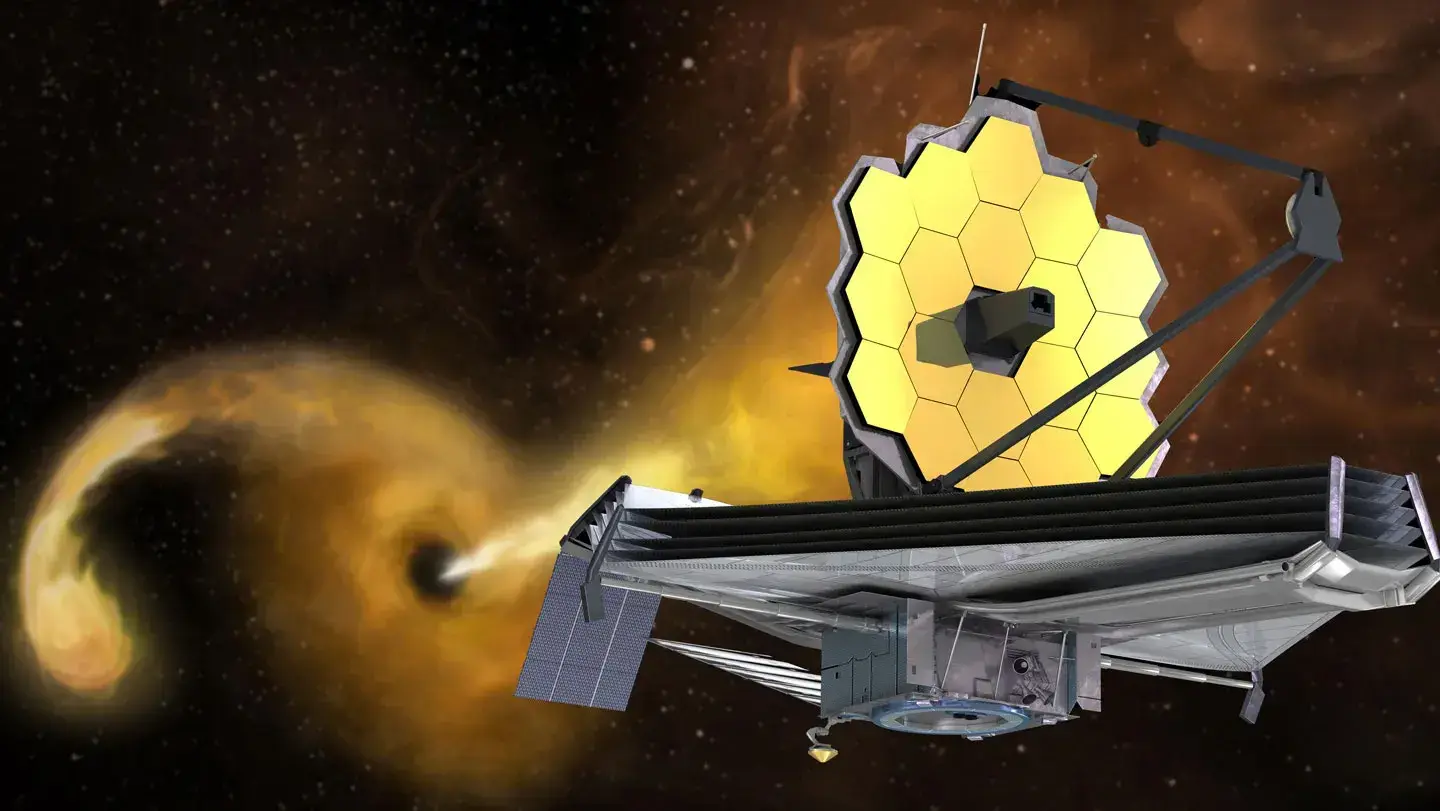
Enter the James Webb Space Telescope, humanity’s most powerful infrared observatory and, apparently, the internet’s favorite plot device. Webb excels at detecting faint infrared signatures from distant galaxies, exoplanets, and clouds of cosmic dust. When it observes unusual chemical signatures—especially complex organic molecules—headlines tend to evolve faster than the science.
Here’s the distinction that clickbait loves to erase: organic molecules are not the same thing as living organisms. Organic molecules are carbon-based compounds, and they are extremely common in space. We’ve detected them in comets, meteorites, and vast interstellar clouds. They are the building blocks of life, not life itself. “Carbon-rich chemistry detected” doesn’t trend nearly as well as “ALIEN LIFE INCOMING,” but accuracy rarely goes viral.
What scientists actually do when studying objects like 3I/ATLAS is analyze spectral signatures—chemical fingerprints that reveal what substances are present. If Webb identifies complex organic compounds, that’s exciting from an astrobiology perspective because it reinforces the idea that the ingredients for life are widespread across the galaxy. It does not mean a microorganism is hitching a ride toward Earth.
As for the second half of the dramatic claim—“it’s getting closer”—that’s technically true in the most mundane way possible. Objects on interstellar trajectories approach the Sun, swing past it, and then leave. That’s orbital mechanics, not an invasion plot. “Getting closer” does not imply collision, threat, or intent. These paths are tracked carefully, and there has been no alert from NASA or any international monitoring network suggesting danger.
If living organisms were actually detected on an incoming object, the announcement would not arrive via a thumbnail full of red arrows. It would come through peer-reviewed publications, coordinated press conferences, and probably emergency meetings involving every major space agency on Earth. Extraordinary claims require extraordinary evidence, and at present there is no verified, peer-reviewed confirmation that 3I/ATLAS contains life.
Ironically, the real story is far more impressive than the headlines. Interstellar objects are natural time capsules, formed around other stars and preserved for billions of years. Studying their chemistry allows scientists to probe planetary formation beyond our solar system. If complex organics are confirmed, that strengthens the idea that life’s raw ingredients are common throughout the galaxy—a profound insight that still stops well short of alien microbes headed for Kansas.
There’s also a human factor at play. We want to know we’re not alone, so we lean forward whenever a headline hints at extraterrestrial life. Space becomes cosmic gossip. But history offers cautionary tales, from prematurely hyped signals to the infamous “phosphine on Venus” episode, where early excitement gave way to much more nuanced conclusions. Science is iterative; headlines rarely are.
So what do we actually know? If 3I/ATLAS is under observation, astronomers are studying its composition, motion, and origin. If organic molecules are detected, that’s a major contribution to our understanding of cosmic chemistry. But there has been no official declaration of life, no confirmed biosignatures, and no credible warning of risk to Earth.
The genuinely extraordinary achievement is this: humanity has built a telescope capable of analyzing the molecular makeup of debris born around other stars. That’s revolutionary. It doesn’t need exaggeration. The universe is already astonishing without turning every carbon atom into an alien ambassador.
Until credible institutions say otherwise, you can keep your houseplants where they are. The mystery isn’t whether 3I/ATLAS is carrying life—it’s why we’re so eager to believe that every intriguing molecule means someone out there is finally waving back.
