
They’ve Just Traced 3I/ATLAS Back to Its Origin
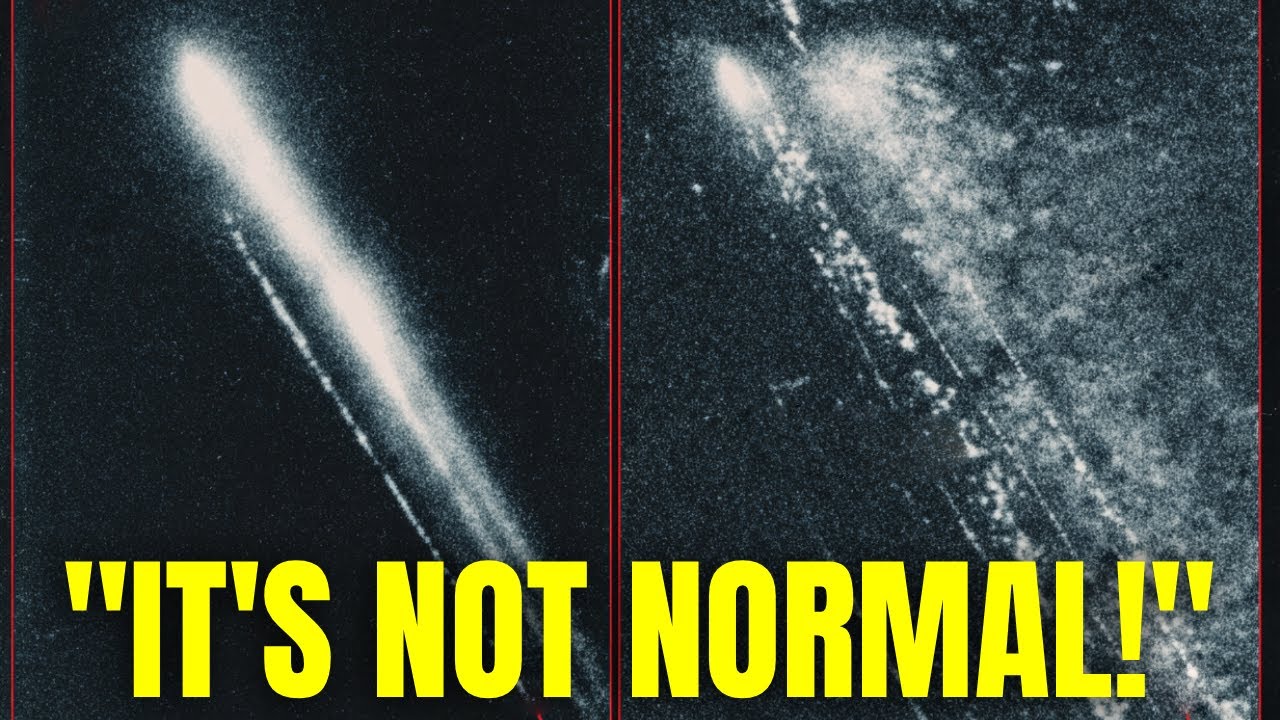
When astronomers traced the trajectory of 3I/ATLAS backward through space, they expected a simple answer: one star, one violent ejection, a clear birthplace. Instead, the trail fractured. The data did not converge on a single origin but fanned outward into multiple possibilities—none definitive, none decisive. What should have been a straight line dissolved into a pattern, and that pattern is now forcing scientists to rethink what this interstellar object truly represents.
Using the most precise astrometric measurements ever produced by Gaia, specifically the Gaia DR3, researchers rewound the orbit of 3I/ATLAS nearly 10 million years into the past. The expectation was straightforward: a close stellar encounter capable of ejecting the object into interstellar space. Instead, the results resembled a census rather than a smoking gun. Over that timespan, 93 stars passed within two parsecs of its reconstructed path. Of those, 62 encounters were considered high-confidence based on well-constrained positions and velocities. None stood out as the clear source.
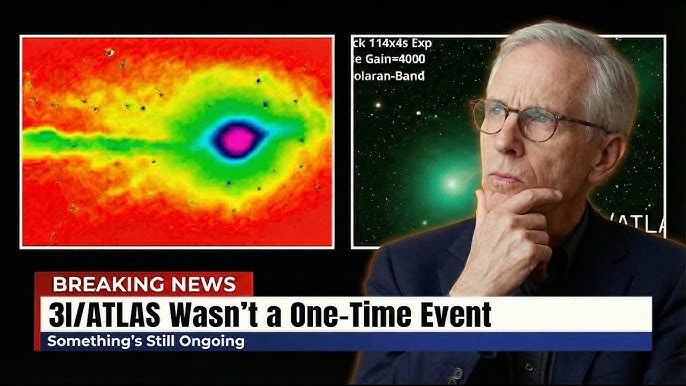
The closest candidate—a Gaia source cataloged as 6863591389529611264—passed within roughly one-third of a parsec about 72,000 years ago. But it was moving too quickly and too far away to meaningfully alter the object’s velocity. Another encounter came even closer, at 0.27 parsecs, yet involved a low-mass star whose gravitational influence was negligible. Every significant encounter involved ordinary main-sequence stars. There were no white dwarfs, no neutron stars, no massive gravitational heavyweights capable of delivering a decisive slingshot.
This absence is not necessarily cosmic coincidence. The researchers themselves point out a key limitation: Gaia’s catalog is most complete for ordinary stars. Exotic objects are harder to detect and characterize, meaning their absence in the encounter list may reflect observational limits rather than physical reality. Even so, as the timeline stretches back four million years and beyond, the same pattern persists. The trail never closes. Each candidate star arrives with widening uncertainties in distance, velocity, and timing. Over millions of years, even minuscule errors grow large enough to erase certainty entirely.
What emerges is not a pinpoint but a probability cloud.
The numbers tell a clear story: 3I/ATLAS passed near many stars, but no single interaction explains its present trajectory. This is not a failure of orbital reconstruction—it is the boundary of what evidence can provide across galactic timescales. The object’s origin is not a home address. It is a statistical profile.
That profile still carries meaning. The incoming direction of 3I/ATLAS points roughly toward the Galactic bulge, a densely populated region of old stars and complex gravitational tides. Its velocity—nearly 58 kilometers per second near the Sun—is high compared to most comets, yet still consistent with objects ejected from distant stellar systems. The encounter history suggests not one dramatic expulsion, but a sequence of quiet flybys, each subtly shaping the path over immense stretches of time.

This reframes the question entirely. Instead of asking which star launched it, astronomers are now asking what kind of environment produces objects like this. The split trail hints that some interstellar objects may not originate from a single system at all, but from dynamically active regions where repeated stellar interactions continually eject debris into the galaxy. In this view, 3I/ATLAS is not an anomaly—it is a messenger from a process we are only beginning to understand.
Rather than closing the case, the ambiguity opens a door. It challenges the assumption that interstellar objects must have clean, traceable birthplaces. It suggests that the galaxy itself may act as a long-term sculptor, shaping and releasing material through cumulative interactions rather than singular events.
The conclusion is not uncertainty for its own sake. It is a deeper realization: some cosmic stories do not resolve into answers, but into patterns. And in those patterns—blurred by time, distance, and motion—we glimpse how dynamic, chaotic, and interconnected our galaxy truly is.
3I/ATLAS may never give us a birthplace. But in refusing to do so, it may have given us something more valuable: a new way of understanding how interstellar travelers are born.
