
Could UFO Sightings Be Linked to Hidden Advanced Civilizations?

According to new research by Harvard University scholars, extraterrestrial beings may be living among us, disguised as humans to blend in, or residing in a base inside the moon.
Could extraterrestrial beings be living among us? That’s the question posed in a new study, part of Harvard University’s Human Development program. This research further examines the idea that “flying saucers,” or unidentified flying objects (UFOs), could be spacecraft visiting extraterrestrial friends living on Earth.
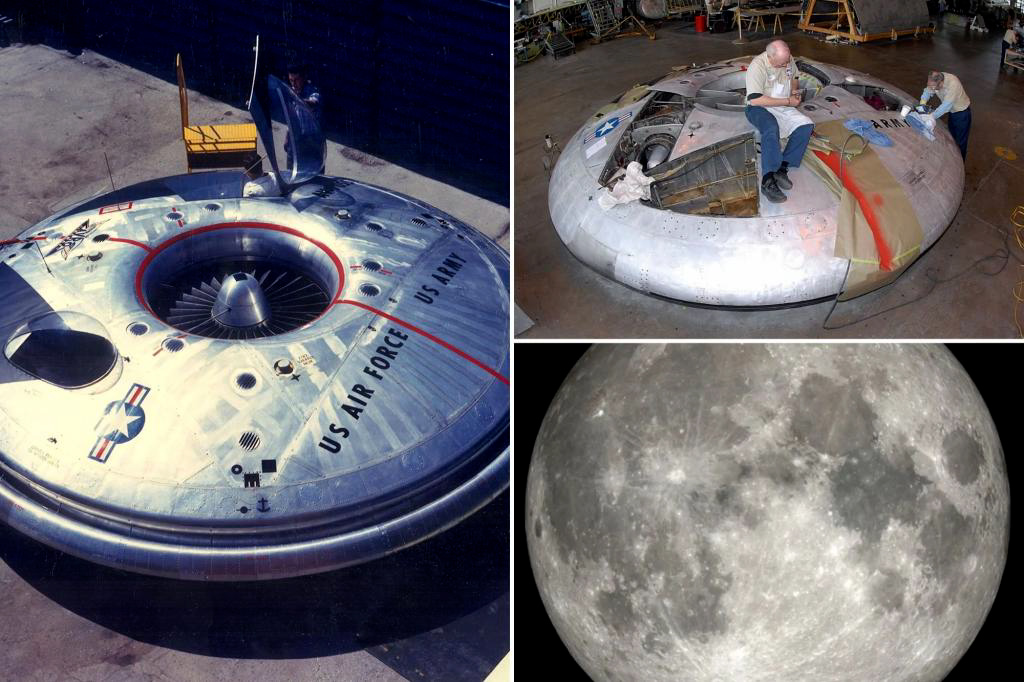
Researchers suggest that extraterrestrial beings may be disguised as humans to blend in, possibly from Earth’s future, or perhaps descendants of intelligent dinosaurs, possibly living underground or in a base inside the moon.
New research aims to offer a unique new explanation for UAP sightings and hypothesize about their significance, as well as the possibility that UAPs may be related to forms of non-human intelligence that are already present in Earth’s environment in some sense and exist “alongside us in stealth form.”
In the new study, Harvard scholars examine four hypotheses about extraterrestrial beings living near humans.

According to the first hypothesis, an ancient human civilization with advanced technology was almost completely destroyed after natural disasters, but continued to exist in remnants.
The second hypothesis suggests the existence of a non-human civilization, comprising an Earth animal species that evolved to live in hiding (such as underground). This could be a hominid or a species not closely related to humans, such as “unknown, intelligent dinosaurs.”
The third hypothesis suggests an alien form that may have arrived on Earth from elsewhere in the universe or from humanity’s future and is hiding in stealth mode.

The fourth hypothesis suggests an alien form that resembles more “imaginary angels,” communicating with the human world in seemingly more magical ways, like fairies or elves.
The researchers acknowledge that their study “may be viewed skeptically by most scientists,” but they urge the scientific community to consider it “with an open mind.”
The new research has not yet been peer-reviewed by scientists in the same field.
