
3I/ATLAS Stuns Scientists With the Discovery of a Prebiotic Molecule From Another Star System
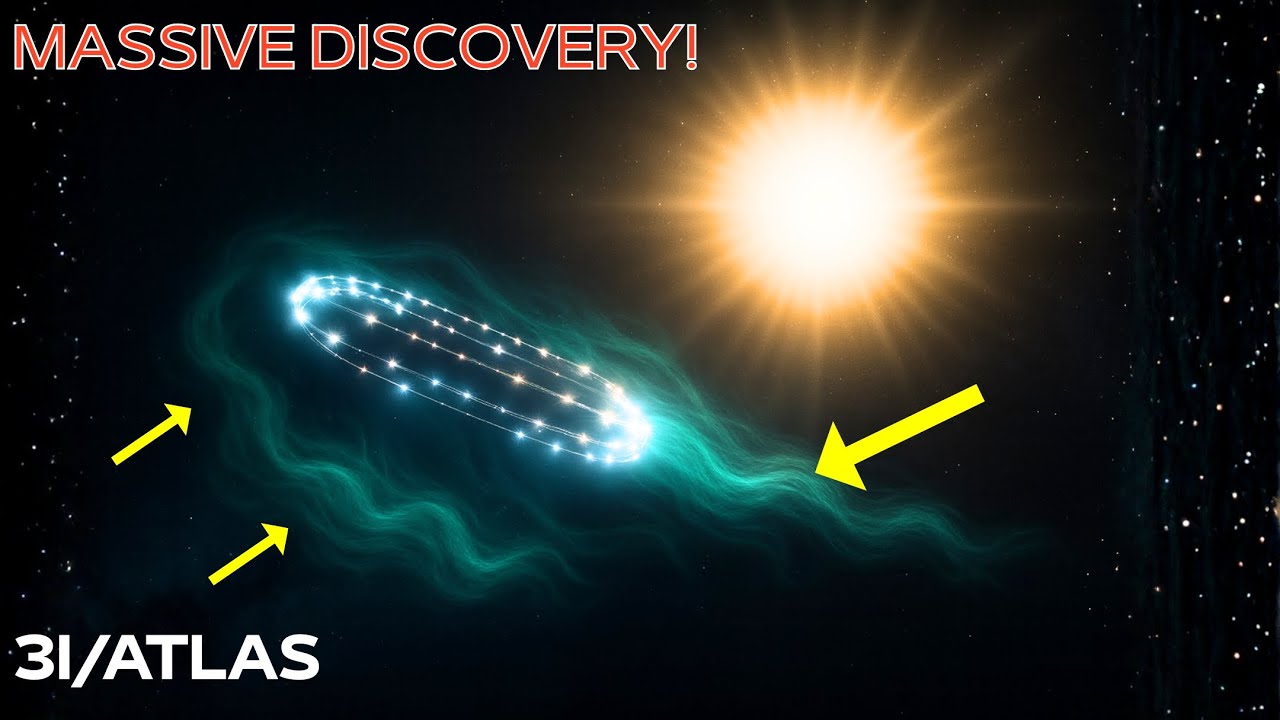
In a notable development for astrochemistry and the study of life’s origins, researchers have reported the detection of a prebiotic molecule in the interstellar comet 3I/ATLAS, an object that originated beyond our solar system. If confirmed through ongoing peer review, the finding would offer compelling evidence that the chemical ingredients necessary for life are not unique to Earth but may be widespread throughout the galaxy.
The discovery has drawn significant attention from astronomers, chemists, and astrobiologists, as it strengthens the idea that organic chemistry capable of supporting life can arise in diverse cosmic environments—and travel between star systems.
An Interstellar Visitor from Beyond the Solar System
3I/ATLAS is classified as an interstellar object, meaning it formed around another star before entering our solar system. Its designation reflects its identification by the Asteroid Terrestrial-impact Last Alert System and its status as the third confirmed interstellar object ever observed passing through our planetary neighborhood.
Previous interstellar visitors—including 1I/ʻOumuamua and 2I/Borisov—demonstrated that material from other star systems can reach our own. However, 3I/ATLAS provides a particularly valuable opportunity because of its chemical signatures.
The comet is traveling along a hyperbolic trajectory, indicating that it is only temporarily passing through the solar system before returning to interstellar space. Despite the brevity of its visit, it allows scientists to study matter formed around distant stars and to probe the chemical conditions of other planetary systems.
Detection of a Prebiotic Molecule
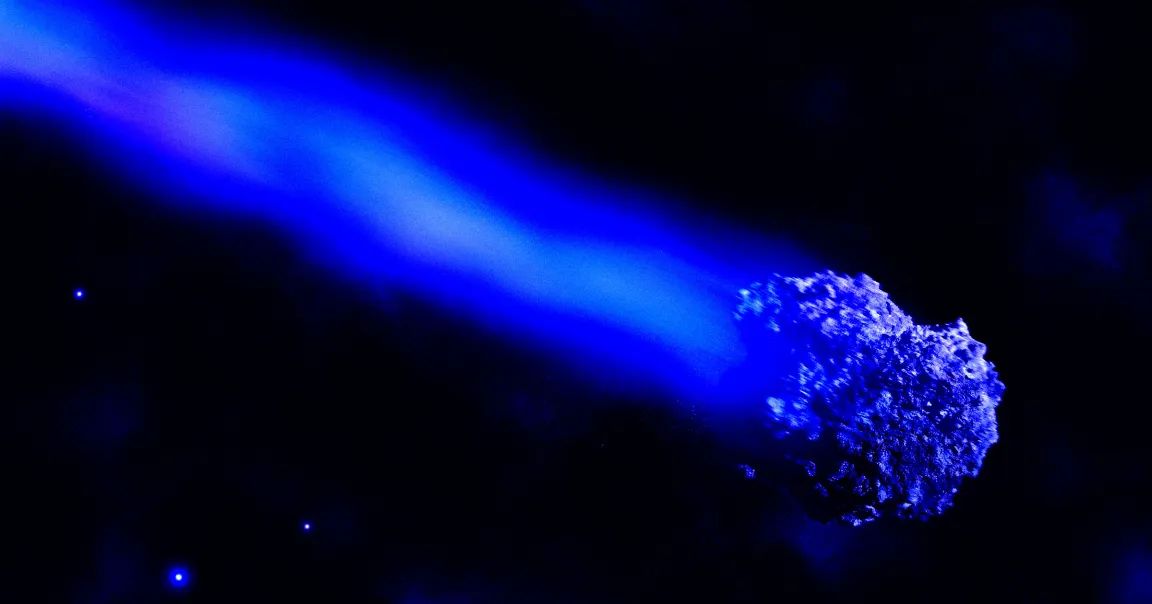
The central finding comes from spectroscopic observations of the comet’s coma—the diffuse cloud of gas and dust surrounding its nucleus. Using high-resolution spectroscopy, astronomers identified spectral features consistent with a prebiotic molecule, a class of complex organic compounds considered potential precursors to life.
Prebiotic molecules include substances such as amino acids, nucleobases, and related organic compounds that can contribute to the formation of RNA, DNA, and proteins under suitable conditions. Although the precise chemical identity of the detected molecule has not yet been publicly disclosed, its spectral characteristics align with compounds known to play a role in chemical evolution.
By analyzing how the coma absorbed and emitted light at specific wavelengths, researchers were able to match the observed spectral fingerprints with laboratory molecular databases, confirming the molecule’s presence at extremely low concentrations.
“The detection of a prebiotic molecule in 3I/ATLAS is a significant milestone,” said Dr. Penelope Starling, an astrochemist involved in the study. “It suggests that the chemical processes leading to life are not confined to our solar system and that the universe may be broadly primed to produce life’s building blocks.”
Observational Methods and Analysis
Studying interstellar comets presents significant technical challenges. Observations of 3I/ATLAS relied on coordinated efforts among multiple ground-based observatories equipped with advanced spectrometers, as well as computational models that simulate molecular interactions within the coma.
Spectroscopy works by separating light into its component wavelengths, allowing scientists to identify molecules based on their unique emission and absorption patterns. In some cases, radio telescopes were also used to detect rotational transitions of molecules, providing complementary data on molecular abundance and composition.
Together, these techniques enabled researchers to construct a detailed chemical profile of the comet and evaluate the significance of the detected molecule within the framework of prebiotic chemistry.
Implications for Astrobiology
The presence of a prebiotic molecule in an interstellar comet carries profound implications for astrobiology. It suggests that the raw chemical materials necessary for life may be common in interstellar space and capable of being transported across vast distances.
This finding lends support to the concept of panspermia, the hypothesis that the building blocks of life—or even life itself—could be distributed between star systems via comets and asteroids. While the discovery does not imply that life exists within 3I/ATLAS, it does indicate that the chemical foundations for life may be widespread.
“If prebiotic molecules are common in interstellar comets,” explained Dr. Emilio Vargas, a planetary scientist specializing in chemical evolution, “then the processes that lead to life’s emergence may also be common. That greatly expands the range of environments where life could potentially arise.”
Comparison with Earlier Interstellar Objects
Compared with earlier interstellar visitors, 3I/ATLAS stands out for its chemical complexity. While 2I/Borisov displayed organic compounds typical of comets, the identification of a molecule with direct relevance to prebiotic chemistry adds an important new dimension.
The diversity among these objects highlights the variety of materials present in interstellar space and underscores the potential role of interstellar bodies in distributing organic chemistry throughout the galaxy.
Caution and Scientific Uncertainty
Despite the excitement, researchers emphasize caution. The presence of a prebiotic molecule does not indicate the existence of life, nor does it guarantee that such molecules can survive the harsh conditions of space indefinitely.
The pathways by which prebiotic chemistry leads to living systems remain incompletely understood, and the detection represents only one piece of a much larger puzzle. Verification through independent observations and continued monitoring of 3I/ATLAS will be essential.
Future Research and Missions
The discovery has renewed interest in studying interstellar objects more systematically. Astronomers plan continued observations of 3I/ATLAS as it exits the solar system, tracking changes in its chemical composition over time.
Looking further ahead, scientists are exploring the feasibility of missions to intercept or sample interstellar comets directly. Although technically challenging, such missions could provide unparalleled insight into the chemistry of material formed around other stars.
“Studying an interstellar comet is like holding a fragment of another solar system,” said Dr. Li Cheng, an astrochemist involved in future mission planning. “Each one tells us something new about how chemistry—and potentially life—emerges elsewhere in the galaxy.”
Conclusion
The detection of a prebiotic molecule in 3I/ATLAS represents a meaningful advance in our understanding of chemical evolution and the cosmic distribution of life’s building blocks. While it does not confirm extraterrestrial life, it strongly suggests that the ingredients necessary for life are not confined to a single planet or star system.
As observational techniques improve and more interstellar objects are discovered, findings like this will help clarify how organic chemistry develops across the universe. For now, 3I/ATLAS serves as a powerful reminder that the universe is an active chemical laboratory—and that the foundations of life may be far more universal than once believed.
