
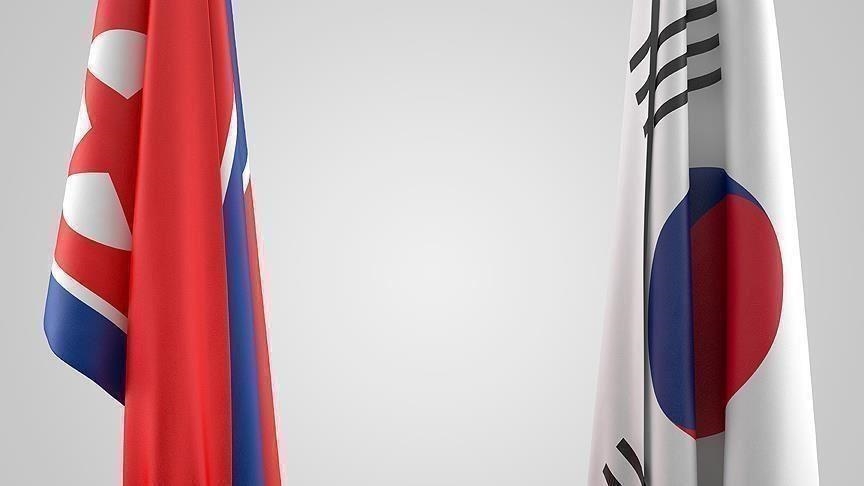

Earlier this month, South Korea’s government stated it would try to formally end the Korean War. A July 1953 armistice ended the fighting, but the combatants — the United Nations Command, China and the two Koreas — have not signed a formal treaty. South Korea did not even sign the armistice.
“The government will seek the ‘peace declaration’ that reflects the political will to end the Korean War and kick off discussions for the establishment of a peace regime, including the signing of a peace treaty,” the Unification Ministry wrote to the foreign affairs and unification committee of the National Assembly, the country’s unicameral legislature.
What’s wrong with peace? A peace declaration could lead straight to war.
A declaration would probably result in the termination of America’s mutual defense treaty with South Korea. An end to that pact would substantially increase the possibility that North Korea would move against the South, perhaps with a war.
South Korea’s government, headed by President Lee Jae-myung, this month unveiled its “Korean Peninsula Peace Package.”
North Korea, however, is not a willing partner in peace. Last month, at the Ninth Congress of the Workers’ Party of Korea, the North’s ruling organization rejected all dialogue and engagement with the South. Kim Jong Un, the regime’s leader, had earlier signaled this stance: In 2024, he called the South the “primary foe and invariable principal enemy.”
At the end of the Second World War, the Soviet Union and the U.S. divided Korea along the 38th parallel into two temporary occupation zones. Korea, which had been unified for 1,300 years, was severed into two.
The U.N. was supposed to conduct elections to unify Korea, but they were never held. Eventually, each side established its own client state. Each Korea claimed to be the sole representative of the Korean people, and Kim Il Sung, the leader of the northern half, attempted to unify the country by invading the South in June 1950. The fighting during the “Great Fatherland Liberation War,” as Pyongyang calls it, lasted until the armistice.
Despite the armistice, North Korea keeps fighting the war every day. The Kim family regime, now in its third generation, feels it must do so because it needs an enemy to justify its existence. The regime needs to justify its existence because, by most measures, North Korea is a failing state.
The North now has nuclear weapons and could, even without them, conquer the South, but for the presence of the American military. Washington and Seoul solidified “the alliance forged in blood” by signing their military pact just a few months after the armistice.
“The most important deterrent against North Korean aggression is the U.S. military,” Bruce Bechtol of Angelo State University and author of several books on North Korea told me this month. “Kim Jong Un is not afraid of South Korea any more than his father or grandfather were, but taking on the most powerful military in the world? Not in the cards.”
An end-of-war declaration, such as the one that the Lee government has proposed, could result in “a disastrous perfect storm,” Bechtol said.
If there is such a declaration by all sides, many will argue that there would be no need for American troops or the treaty with Washington. “There will certainly be those in both the Lee and Trump administrations banging that drum,” says Bechtol. “And soon thereafter would be the perfect time for North Korea to resume combat against the South, America’s sixth-largest trading partner.”
Younger Koreans are fully supportive of the alliance with the U.S. and view South Korea as their nation. Those in power, however, come from a generation that believes its country is the whole Korea — not South Korea. Leftists like Lee want unification and wrongly perceive the U.S. as an impediment to that goal.
Lee’s past words suggest he abhors the U.S. While campaigning for the presidential nomination of his Democratic Party of Korea in July 2021, for instance, he called American troops in his country an “occupying force.” And in remarks that appear to have been intended to inflame anti-American sentiment, he blamed the U.S. for maintaining Japan’s hated colonization of Korea.
Some say Lee is an opportunist and was merely saying what he thought was popular at the time. Only he knows what he was really doing, but Lee’s party has a history of both opposing close ties with Washington and actively building relations with Beijing and Pyongyang.
Whatever his intentions are today, Lee is advocating steps that could lead to another war on the Korean peninsula.
