
The Belgian UFO Wave (1989–1990)
The Belgian UFO Wave (1989–1990)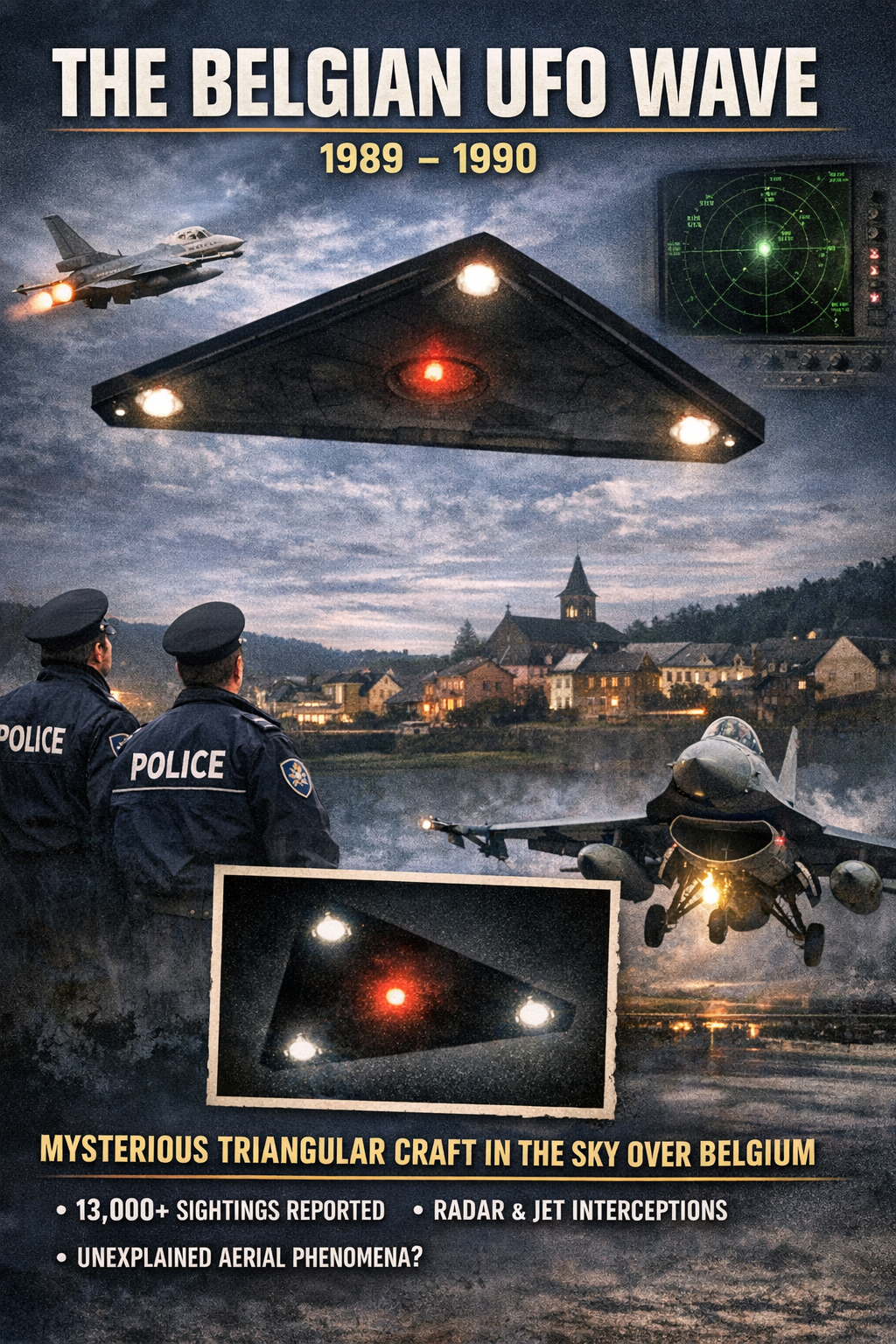
When Hundreds of Witnesses Reported Mysterious Triangular Craft Over Belgium
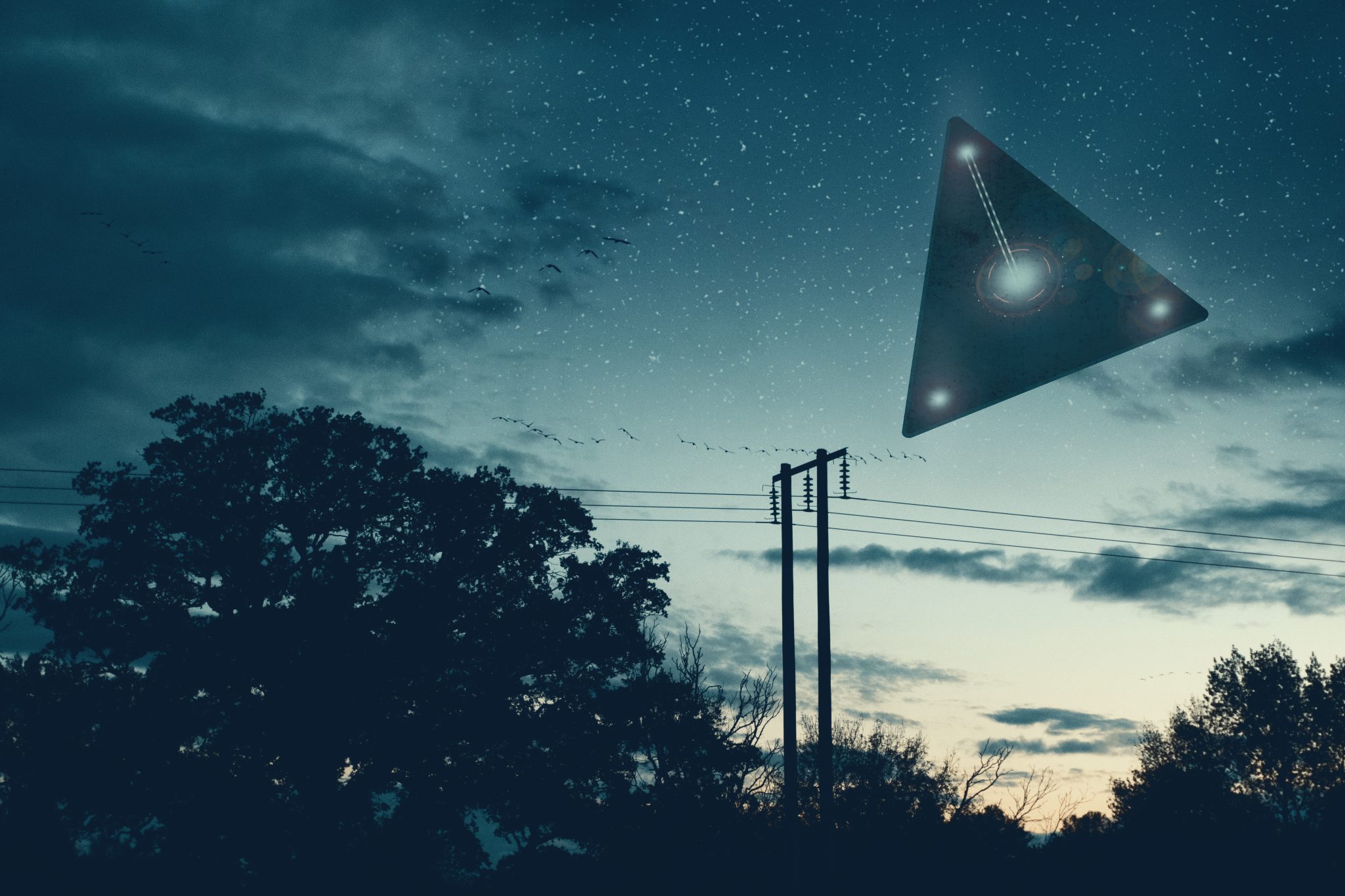
Belgium — 1989 to 1990. Over the course of more than a year, thousands of people across Belgium reported seeing unusual flying objects silently crossing the night sky. Many witnesses—including police officers and military personnel—described enormous black triangular craft with bright lights at each corner.
The phenomenon became known as the Belgian UFO wave, one of the most extensively documented UFO sighting waves in European history.
The First Sightings
The wave began on the night of November 29, 1989, when two police officers in the town of Eupen reported seeing a large triangular object hovering silently in the sky.
The officers described the craft as:
-
Triangular in shape
-
Extremely large and dark
-
Equipped with three bright white lights at the corners
-
A red light in the center
Witnesses said the object moved slowly and silently before accelerating away at remarkable speed.
Soon afterward, dozens of additional reports were received from nearby towns.
Hundreds of Witnesses Across the Country
Over the following months, sightings spread throughout Belgium, particularly in the regions of Wallonia and Brussels.
By the end of the wave:
-
More than 13,000 sightings had been reported
-
Approximately 2,600 reports were formally investigated
Many witnesses described seeing large triangular craft hovering at low altitude, sometimes just above houses or fields.
Some objects reportedly remained motionless before suddenly accelerating or climbing rapidly into the sky.
Military Radar and Fighter Jets
The Belgian Air Force took the sightings seriously. On the night of March 30–31, 1990, radar operators detected unusual aerial activity over the country.
Two General Dynamics F-16 Fighting Falcon aircraft from the Belgian Air Component were scrambled to intercept the unidentified targets.
According to military reports:
-
Radar systems briefly locked onto fast-moving aerial targets
-
The objects reportedly performed sudden altitude changes
-
At times they appeared to accelerate at speeds far beyond conventional aircraft
However, the fighter pilots never obtained a clear visual identification of the objects.
The Famous UFO Photograph
In April 1990, a resident of Petit-Rechain captured a photograph showing a triangular object with three lights, which quickly became one of the most widely circulated UFO images in Europe.
For many years the photograph was considered strong visual evidence of the Belgian UFO wave.
However, in 2011 the photographer later claimed the image had been a hoax created using a small model, although some researchers still debate this confession.
Official Investigations
The sightings were investigated with the assistance of the Belgian Society for the Study of Space Phenomena, a civilian research organization that collected witness reports and analyzed evidence.
Belgian military officials later stated that:
-
The sightings were taken seriously
-
No conventional aircraft could fully explain many of the reports
-
Some radar data remained unexplained
Despite the investigations, authorities were unable to determine the true nature of the mysterious objects.
A UFO Wave That Still Raises Questions
The Belgian UFO wave remains one of the most significant UFO events ever recorded because of several unusual factors:
-
Large number of witnesses
-
Reports from trained observers such as police officers
-
Radar detection by military systems
-
Fighter jet interceptions
While skeptics suggest misidentified aircraft, atmospheric phenomena, or hoaxes may explain many sightings, others argue that the consistency of the reports makes the wave difficult to dismiss entirely.
More than three decades later, the strange triangular objects seen over Belgium continue to be discussed by investigators studying unidentified aerial phenomena.
For many witnesses, the events of 1989–1990 remain one of the most mysterious chapters in modern UFO history. 🛸
