
“Can’t You Just Cut Him Out?”: A Mother’s Story of Giving Birth to Her Stillborn Son
“Can’t You Just Cut Him Out?”: A Mother’s Story of Giving Birth to Her Stillborn Son
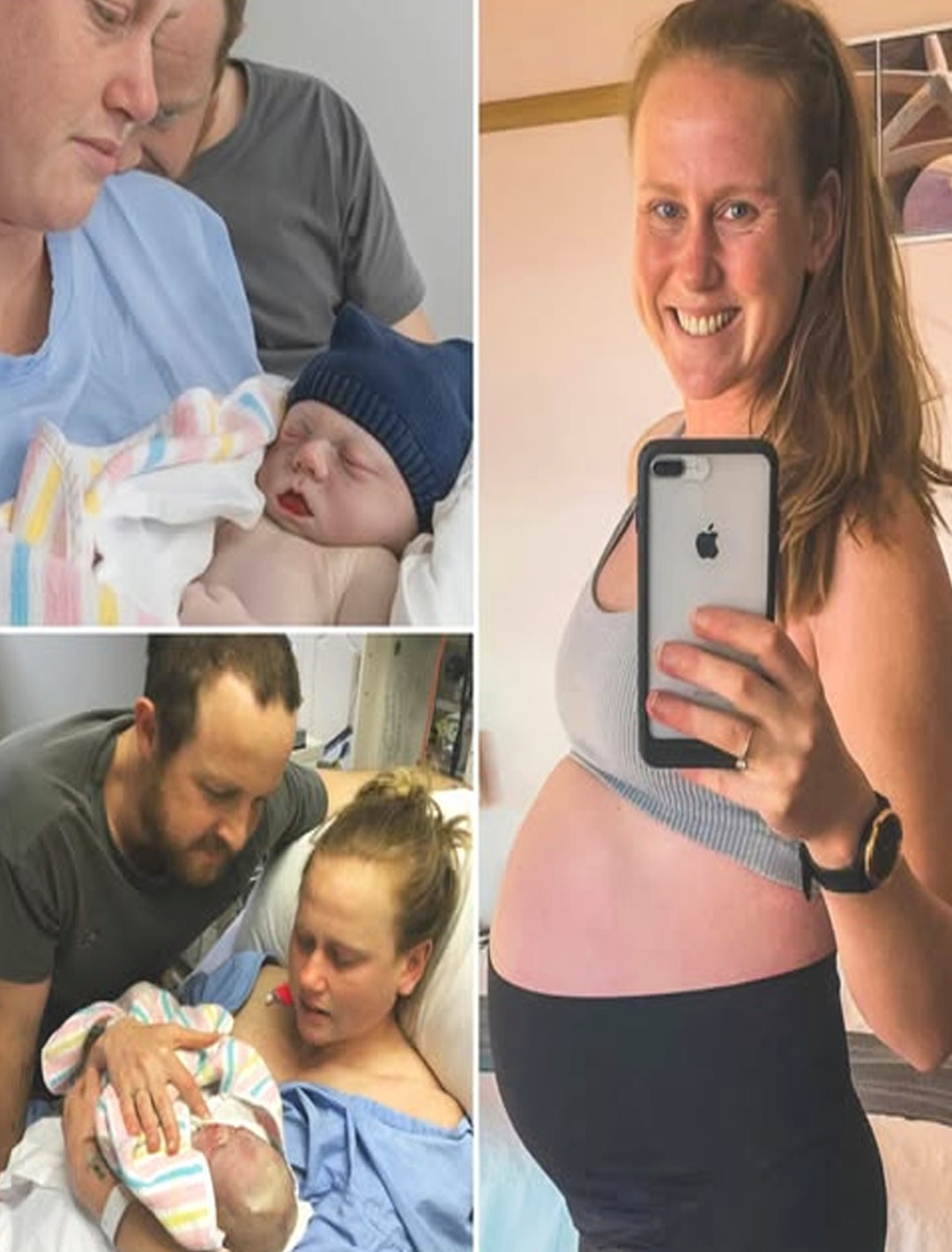
When we discovered I was pregnant with Ari on December 29, 2018, it felt like life was falling perfectly into place. Just four days earlier, Lokie — now my fiancé — had proposed. The only sign that something might be different was how sore my breasts were. I kept mentioning it until he teased, “Maybe you’re pregnant.”
I laughed at first — and then paused. What if I was?
Five positive tests later, we were overwhelmed, anxious, and completely in love with the idea of becoming parents.
The pregnancy felt magical from the beginning. At our first scan in early January, when I was five weeks and six days along, we heard his heartbeat. That tiny flicker changed everything.
Lokie was convinced from day one that we were having a boy. I insisted it was a girl. At 12 weeks, we opted for the Harmony test for reassurance. The results were clear: our baby — a boy, just as Lokie had predicted — was healthy and developing beautifully.
I stayed active throughout my pregnancy, walking regularly and later switching to swimming and aqua aerobics when my back began to ache. At the 20-week scan, doctors noticed that his head and legs were measuring slightly large while his abdomen was smaller. My obstetrician wasn’t overly worried but monitored us closely. By 25 weeks, his tummy had grown. By 35 weeks, everything had evened out perfectly. He was thriving.
I cherished feeling him move — especially early in the morning and late at night when I was still. Lokie and I would lie together watching my belly ripple and shift. It felt surreal and wonderful. We prepared his nursery with so much excitement, setting up his cot, folding his tiny clothes, imagining the life ahead.
At 38 weeks and one day, my final scheduled appointment showed a strong heartbeat and healthy growth. As I was leaving, my obstetrician said, “If anything feels different, don’t wait. Come in.” She told me about another mother whose persistence had saved her baby. I walked away believing that a mother’s instinct must always be right.
Three days later, on Sunday morning at 38 weeks and six days, something felt wrong. The night before, he’d been moving normally. But that morning, I realized I hadn’t felt him at all.
“I’m going to lie down,” I told Lokie.
Ten minutes passed. Nothing.
“I think we should call the hospital,” I said. I truly believed we were just being cautious — that everything would be fine.
At the hospital, the midwife placed the doppler on my stomach. She moved it slowly. Silence. She stepped out to get my obstetrician. I looked at Lokie, and in that moment, we both knew.
When my doctor arrived with the ultrasound machine, she searched quietly. After about 30 seconds, she turned off the screen.
“I’m so sorry,” she said softly. “There’s no heartbeat.”
In that instant, everything fell apart.
I remember sobbing in Lokie’s arms, asking, “What do we do now?” as if someone could fix it.
No one could.
A second scan confirmed it. Our families came to the hospital, and we were told I would need to be flown to Adelaide because our regional hospital wasn’t equipped for what was required.
That was when the reality became unbearable: I would have to give birth to my son, knowing he had already died.
“Can’t you just cut him out?” I asked desperately.
The answer was no. For my health and for any future pregnancies, a natural delivery was safest.
That night, we were airlifted to Adelaide. The midwives there were extraordinary — calm, compassionate, steady in the face of our unimaginable grief.
I was induced at 9 a.m. on Monday, August 19. Early the next morning, my waters broke. During those long hours, something shifted in our hearts. Instead of saying, “We have to give birth,” we began saying, “We get to give birth.”
That subtle change carried us through.
On Tuesday, August 20, 2019, at 5:18 p.m., I delivered our son, Ari Lachlan Jennings.
He was perfect.
Long and beautifully chubby, with big hands and feet, full cheeks, a tiny dimple in his chin, and bright red lips. The most beautiful baby boy I had ever seen.
Our families came to meet him. We held him, kissed him, studied every detail of his face. Because the hospital provided cooling cots, Ari stayed with us for three days. Those days were both the most heartbreaking and the most precious of our lives.
Leaving him behind when we were discharged was unbearable. I cradled him and whispered, “You are absolutely perfect. We are so lucky to be your mummy and daddy. We love you so much.”
Instead of carrying our newborn out in our arms, we left with photographs, keepsakes, and memories.
The autopsy revealed a perfectly healthy, fully developed baby boy. No explanation. We became part of the devastating number of families whose babies die before birth without any clear reason.
In the early days, I couldn’t understand how the world continued turning. How people carried on with their routines while ours had stopped. Some days, it still feels that way.
I should be rocking my baby at home. Instead, I sit beside a teddy bear that holds his ashes.
People often look at me with overwhelming sadness. And yes, there is devastation, anger, and confusion. But there is also immense pride. There is gratitude. There is a fierce, unbreakable love.
If there is one thing I want people to understand, it’s this: say his name. Talk about him. Don’t avoid it because it feels uncomfortable.
The silence is far more painful than the conversation.
Ari is my son. He is beautiful. He was here. And I will always be proud to be his mother.
