
“THE TRUTH CAN’T BE CONCEALED ANY LONGER!” — EXPLOSIVE LEAK ABOUT 3I/ATLAS SPARKS OUTRAGE AS GROWING QUESTIONS EMERGE OVER WHAT WAS KEPT FROM THE PUBLIC!
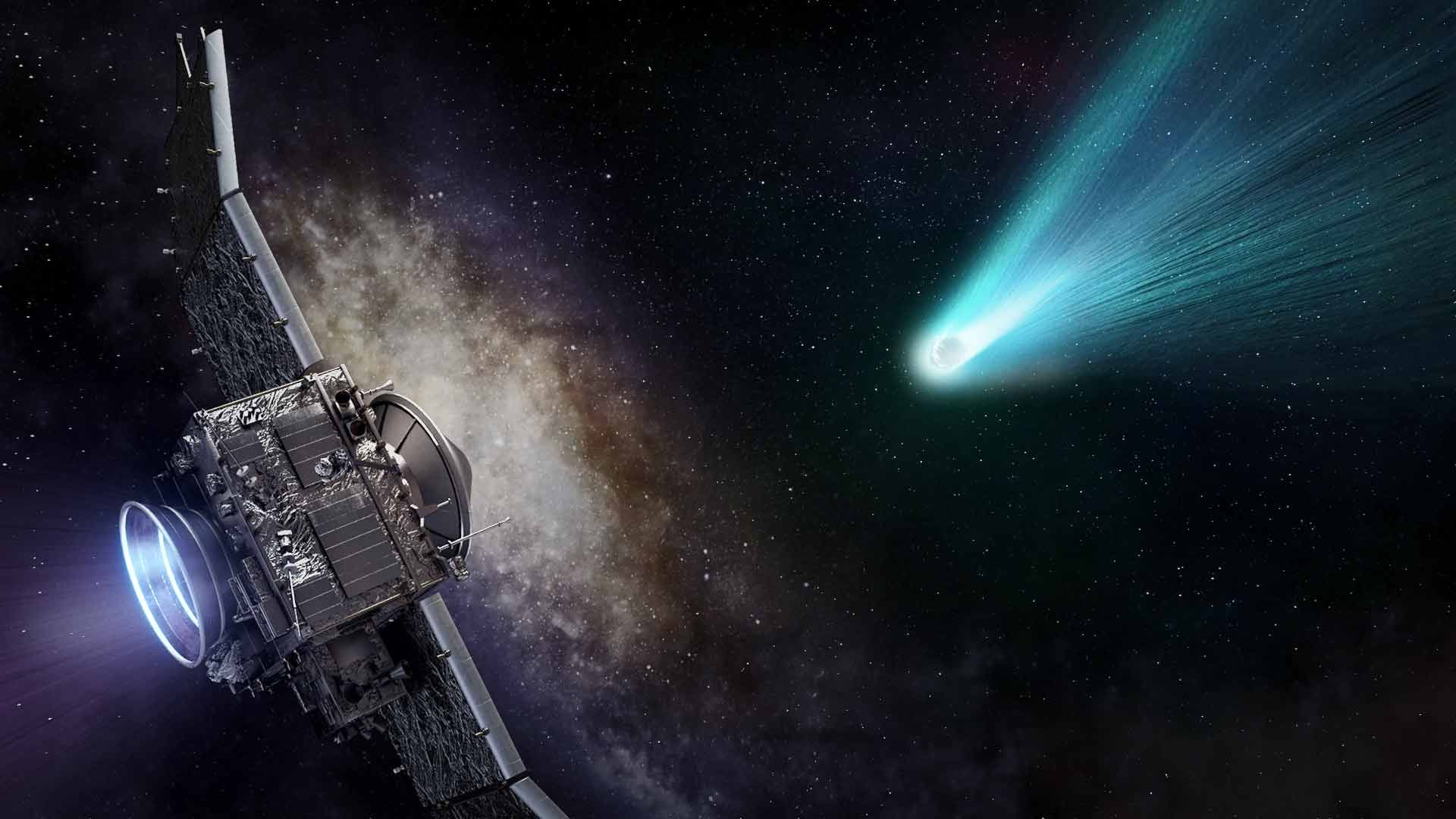
Just days after the mysterious object 3I/ATLAS entered the spotlight, the internet erupted with bold claims, whispers of “insider leaks,” and theories suggesting that something far bigger was being hidden from the public. Headlines grew louder, speculation wilder — as if humanity had just stumbled onto a discovery that could rewrite everything we know about space.
But behind the noise and viral intrigue lies a far more grounded reality.
3I/ATLAS isn’t just any object — it’s only the third confirmed interstellar visitor ever detected passing through our solar system. The label “3I” marks its place after 1I/ʻOumuamua (2017) and 2I/Borisov (2019), while “ATLAS” refers to the global telescope system designed to scan the skies for potentially hazardous objects. Its discovery wasn’t dramatic or secretive — it came from routine sky surveys, the same method astronomers use every day to track countless moving points of light.

These interstellar travelers are rare not because they’re extraordinary in nature, but because they’re incredibly hard to spot — small, faint, and moving fast against a vast cosmic backdrop. They drift in from deep space, briefly pass through our solar system, then vanish back into the galaxy.
Past encounters already taught scientists valuable lessons. ʻOumuamua sparked worldwide curiosity with its unusual shape and motion, leading to both scientific debate and imaginative theories. Borisov, on the other hand, behaved exactly like a typical comet, reinforcing the idea that these objects are simply remnants of planetary systems far beyond our own.
So far, 3I/ATLAS fits that same pattern.
Astronomers have been carefully analyzing its brightness, path, size, and composition — and everything points toward a natural origin. Its trajectory follows a predictable hyperbolic path, exactly what you’d expect from an object arriving from interstellar space. There’s no evidence of artificial movement, no strange signals, no physics-defying behavior.
Still, the idea of a hidden truth refuses to fade.
Part of that comes from how science works — and how people perceive it. Increased observation by telescopes around the world isn’t a sign of secrecy; it’s a sign of interest. When something rare appears, scientists pay attention. And in today’s connected world, that attention can easily be misinterpreted as something more mysterious.
In reality, no single authority controls astronomical data. Observatories across the globe — along with skilled amateur astronomers — independently track and share information. If something truly unusual were happening, it would be nearly impossible to keep it hidden.
The so-called “leak” that fueled the controversy appears to trace back to anonymous online posts, later amplified by speculation rather than evidence. No verified documents, official confirmations, or credible investigations support the claim.
What we’re seeing instead is something very human.
When a rare visitor arrives from the depths of space, imagination rushes in to fill the unknown. And with only three such objects ever confirmed, it’s easy to understand why 3I/ATLAS has captured so much attention.
But for now, the science remains clear:
This is not a cosmic threat, a hidden secret, or an alien mystery.
It’s something just as fascinating — a natural messenger from another star system, offering us a rare glimpse into the wider universe beyond our own.
