
The 1976 CIA Document: “UFO Research / ORD Request for Additional Information”
The 1976 CIA Document: “UFO Research / ORD Request for Additional Information”
A Redacted System and a Mysterious Research Proposal
A Single Page That Raised Big Questions
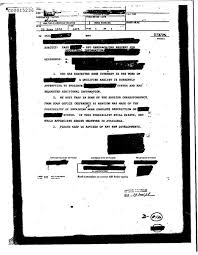
Among thousands of declassified intelligence records released decades later, one brief document dated June 25, 1976 has drawn particular attention from UFO researchers and historians.
Titled “UFO Research / ORD Request for Additional Information,” the one-page memorandum references the work of an unidentified individual and discusses a technical system believed to assist in UFO research. Crucially, the description of this system remains heavily redacted, leaving its true nature unknown.
Despite its short length, the memo offers a rare glimpse into how U.S. intelligence agencies continued studying unidentified aerial phenomena well into the late Cold War period.
The Office Behind the Request: ORD
The memo originated within the CIA’s Office of Research and Development (ORD) — a division responsible for advanced scientific and technological innovation.
During the 1960s and 1970s, ORD explored cutting-edge ideas including:
-
sensor technologies,
-
signal analysis,
-
aerospace detection systems,
-
and experimental data-processing methods.
The presence of ORD in a UFO-related document suggests the subject was treated less as science fiction and more as a technical intelligence problem.
An Unknown Researcher
The document refers to an unnamed individual whose research apparently attracted agency interest. The identity is withheld, and nearly all personal details are removed.
What survives in the text indicates:
-
the individual proposed or developed a method relevant to UFO analysis,
-
the agency sought additional information before proceeding,
-
the work may have involved analytical or detection capabilities rather than eyewitness investigation.
This reflects a broader shift occurring in the 1970s: UFO studies were increasingly framed in terms of data analysis and instrumentation, not simply sightings.
The Redacted “System”
The most intriguing portion of the memo concerns a technological “system” that could potentially assist UFO research.
Nearly every technical detail is blacked out.
Researchers examining the file have speculated that the system might have involved:
-
advanced radar interpretation,
-
pattern recognition,
-
signal filtering,
-
or early computer-assisted analysis.
Because the redactions remain intact even after declassification, historians believe the technology may have overlapped with classified intelligence capabilities still considered sensitive at the time of release.
The secrecy surrounding the system has become the document’s central mystery.
UFO Research in the Mid-1970s
By 1976, official public UFO investigations in the United States had largely ended. The U.S. Air Force’s Project Blue Book had closed in 1969, concluding that UFOs posed no direct national security threat.
However, the CIA memo suggests interest never fully disappeared.
Instead, attention may have shifted toward quieter, internal evaluations focused on:
-
anomalous aerial detection,
-
foreign aerospace technology,
-
and unexplained sensor data.
In the Cold War environment, unidentified objects were often treated as potential surveillance threats rather than extraterrestrial visitors.
Why So Much Redaction?
Government documents are commonly redacted for several reasons:
-
Protection of intelligence methods
-
Classified technological capabilities
-
Privacy of civilian contributors
-
Overlap with active defense programs
The persistence of redactions decades later indicates that the technology referenced may have intersected with broader intelligence systems unrelated solely to UFOs.
Rediscovery Through Declassification
The memo became publicly known after large collections of CIA UFO records were digitized and released through FOIA efforts and the CIA Reading Room archive.
Unlike dramatic UFO encounter reports, this document stands out because it reveals bureaucratic curiosity rather than sensational claims — scientists and analysts requesting more data before taking action.
Its tone is analytical, cautious, and technical.
A Window Into Quiet Investigation
The June 25, 1976 memorandum does not confirm extraterrestrial technology or secret crash retrieval programs. Instead, it highlights something subtler but historically significant:
Even after official UFO projects ended, intelligence agencies continued exploring unexplained aerial phenomena using scientific and technological approaches.
The mystery lies not in aliens, but in the unknown system — a piece of research considered important enough to evaluate, yet sensitive enough to remain partially hidden nearly half a century later.
Legacy of the Document
Today, “UFO Research / ORD Request for Additional Information” remains one of the more intriguing minor files in the CIA’s UFO archive.
Its importance comes from what it implies:
-
UFO research persisted beyond public programs.
-
Advanced technology was quietly considered part of the investigation.
-
Intelligence agencies viewed unexplained aerial phenomena through the lens of science and national security.
Sometimes, the most revealing historical clues are not long reports — but a single page filled with black ink and unanswered questions.
