
Mysterious “Rain of Light” Over Karelia: The 1977 Petrozavodsk Phenomenon
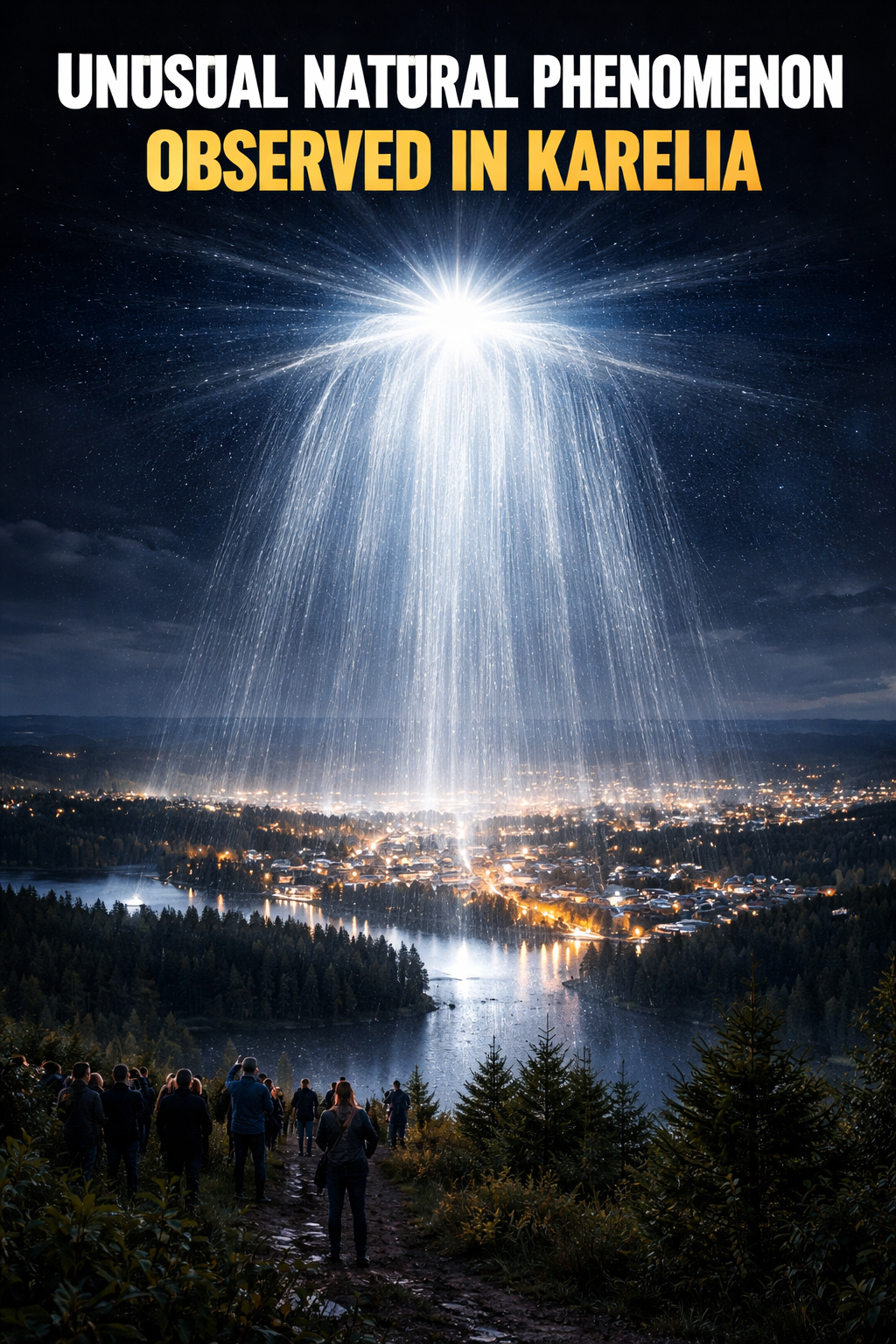
Mysterious “Rain of Light” Over Karelia: The 1977 Petrozavodsk Phenomenon
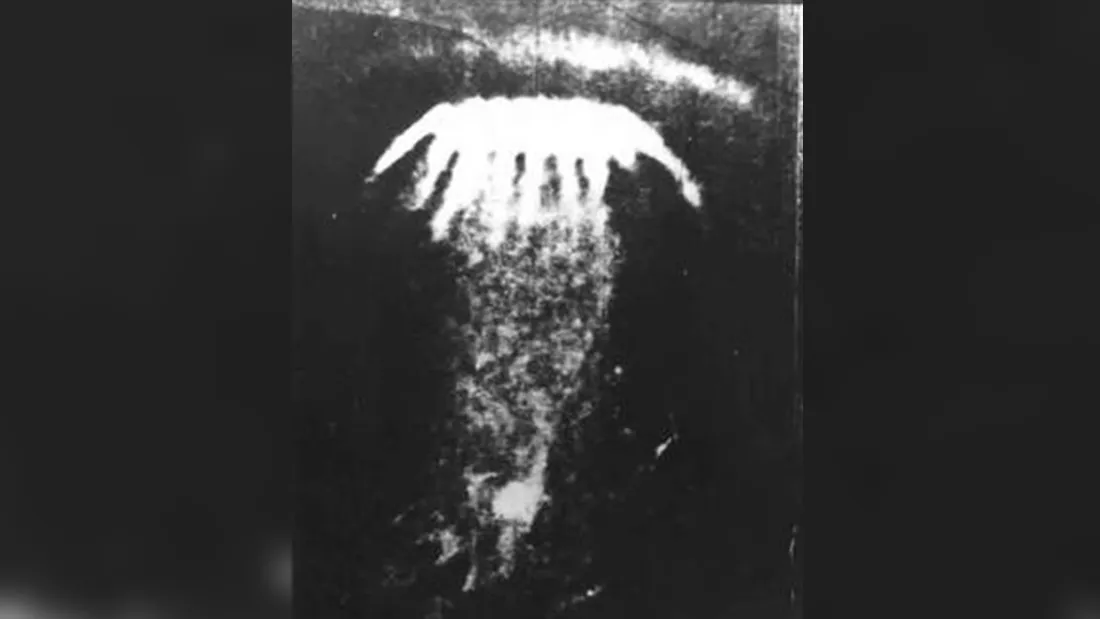
Karelia, Soviet Union — September 23, 1977
In the early hours of September 1977, residents of the city of Petrozavodsk in the Karelia region witnessed one of the most unusual aerial phenomena ever reported in the Soviet Union. The event, later widely known as the Petrozavodsk Phenomenon, lasted roughly 10–12 minutes and was seen by thousands of people across northern Europe.
A “Star” That Turned Into a Jellyfish of Light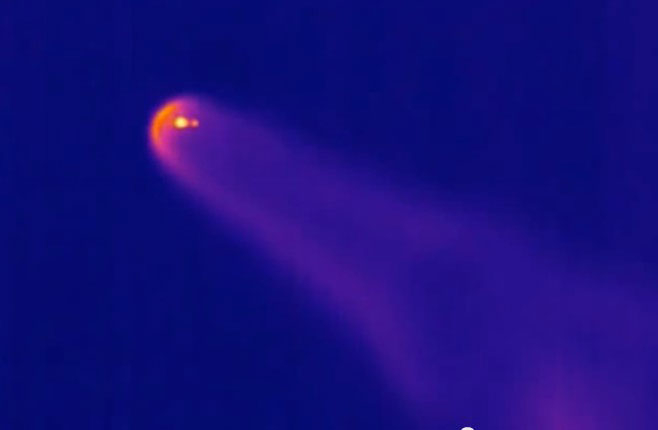
At around 4:00 a.m., witnesses noticed what appeared to be a bright star-like object suddenly illuminating the dark sky. According to reports later published by Soviet news agencies and newspapers, the object gradually expanded and transformed into a shape resembling a giant glowing jellyfish hovering above the city.
Eyewitnesses described how the object emitted countless thin rays of light directed downward toward the ground. These rays created a visual effect similar to heavy rainfall made of light, covering parts of the city in an eerie glow.
Local observers—including port workers, police officers, sailors, and airport staff—reported that the phenomenon illuminated the surrounding landscape almost as brightly as a full moon.
The Object Moves Across the Sky
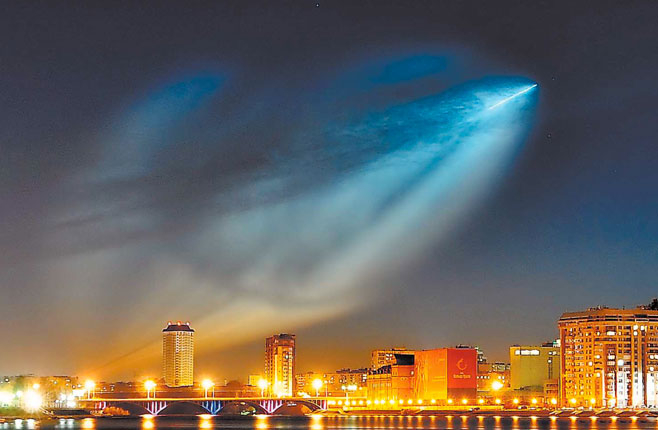
After hovering over the city for several minutes, the luminous structure began to change shape again. Witnesses reported that the jellyfish-like glow slowly contracted and transformed into a bright semicircle, which then moved toward Lake Onega before disappearing into clouds on the horizon.
As it vanished, observers noticed strange red and white glowing formations in the clouds, adding to the mystery of the event.
Reports Across Northern Europe
Although Petrozavodsk became the most famous location associated with the sighting, reports of unusual lights were also recorded across a large area of northern Europe, including Helsinki and Copenhagen. This wide geographic distribution suggested the phenomenon occurred at high altitude and was visible across hundreds of kilometers.
Possible Explanations
Scientists and investigators proposed several explanations for the mysterious event:
-
Rocket or satellite launch: Many researchers later linked the phenomenon to the launch of the Soviet satellite Kosmos‑955 from the Plesetsk Cosmodrome, which may have created unusual light effects in the upper atmosphere.
-
Atmospheric or optical phenomenon: Some scientists suggested rare atmospheric interactions with rocket exhaust could produce glowing cloud structures and radial beams of light.
-
Unidentified aerial phenomenon (UAP): UFO researchers continue to consider the case unexplained due to the object’s unusual shape and behavior.
A Cold War Mystery That Endures
The Petrozavodsk incident quickly became one of the most famous aerial mysteries of the Cold War era. Because Soviet newspapers openly reported the sighting, it attracted international attention and sparked debate among scientists, military analysts, and UFO researchers.
Decades later, the “rain of light” over Karelia remains one of the most intriguing mass sightings in UFO history—an event where thousands of witnesses looked up at the same sky and saw something they could not easily explain.
