
The UFO Research and Claims of George Adamski
The UFO Research and Claims of George Adamski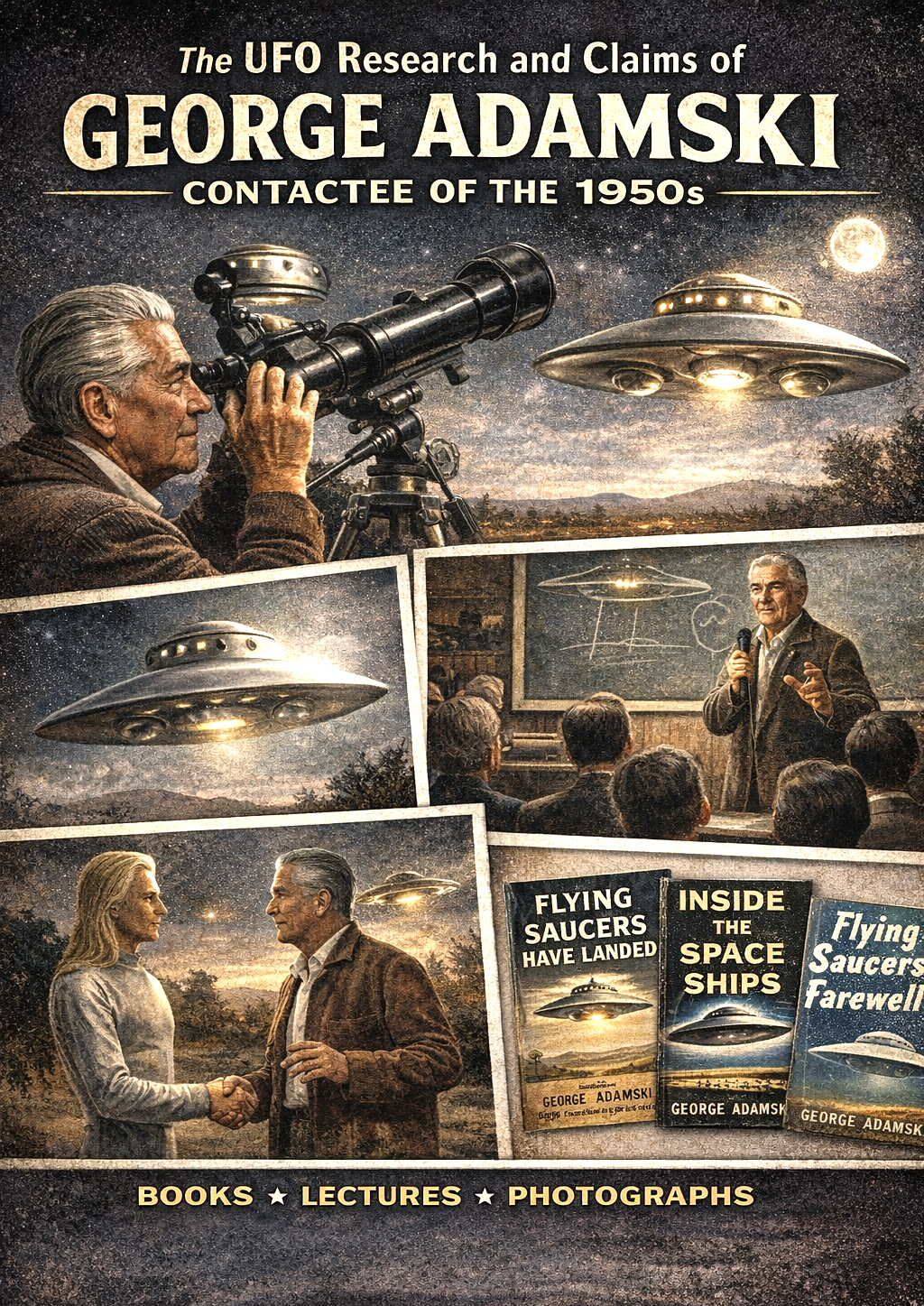
United States — 1950s
During the early years of the modern UFO era, few figures became as famous—or as controversial—as George Adamski. In the 1950s, Adamski claimed to have photographed flying saucers and even communicated with visitors from other planets. His books and lectures attracted worldwide attention and helped shape early public perceptions of UFOs and extraterrestrial contact.
Early Life and Interest in the Cosmos
George Adamski was born in 1891 in Poland and later immigrated to the United States. By the late 1940s and early 1950s, when reports of “flying saucers” began appearing frequently in newspapers, Adamski became deeply interested in the possibility of extraterrestrial visitors.
Living near the desert areas of California, he spent many nights observing the sky with telescopes and cameras. These observations would soon lead to the claims that made him one of the most talked-about UFO figures of his time.
The Famous 1952 Flying Saucer Photographs
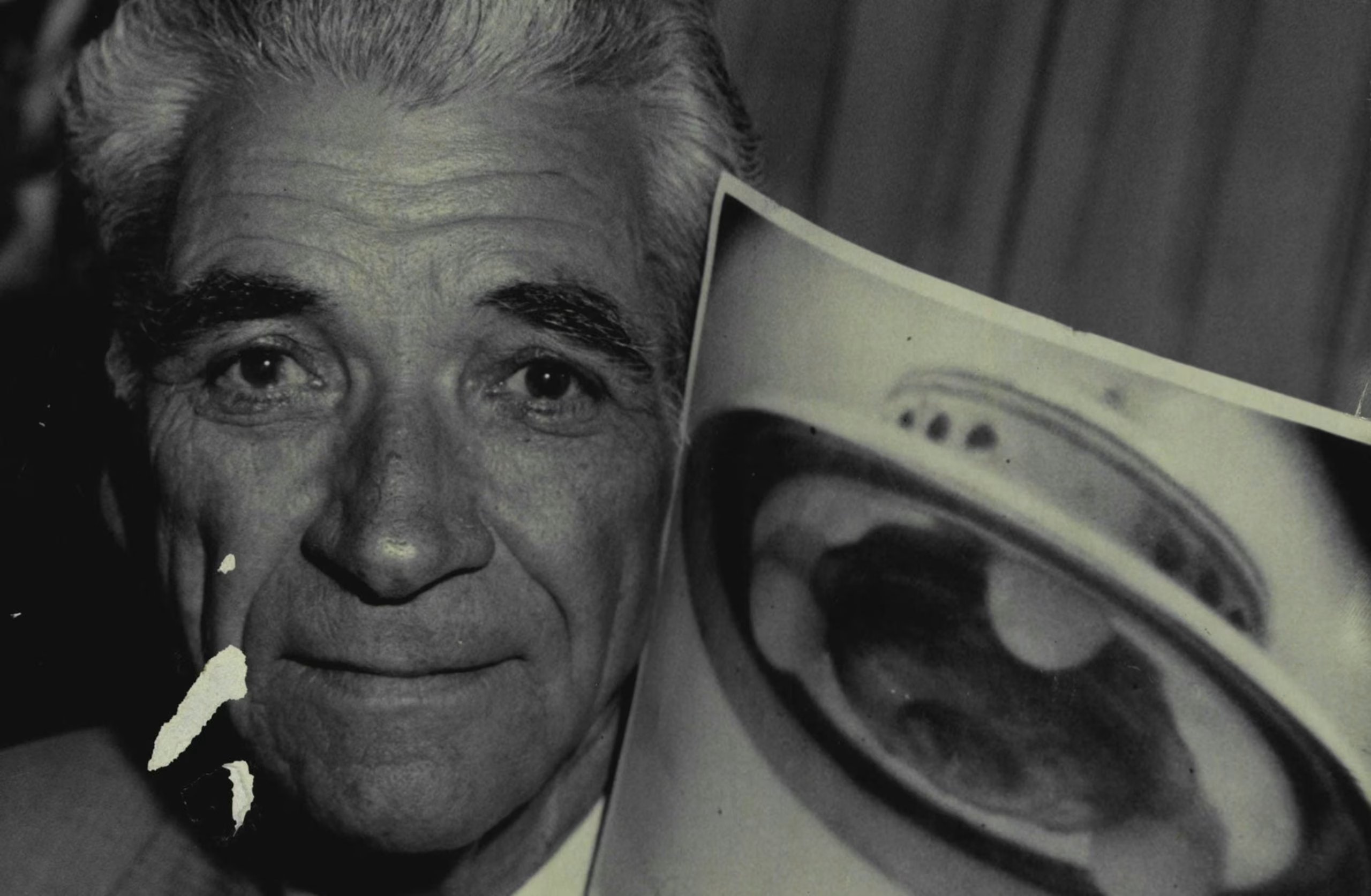
In 1952, Adamski announced that he had photographed a strange metallic craft flying over the California desert. The images appeared to show a disc-shaped object with a dome on top and circular structures beneath it.
These photographs quickly circulated in magazines and UFO publications. For many enthusiasts, the pictures were considered some of the earliest clear images of a flying saucer. Skeptics, however, argued that the objects resembled small models or modified household items, sparking a long debate that continues among researchers.
Alleged Contact with a “Venusian”
Later in 1952, Adamski made an even more extraordinary claim. He said that while in the California desert he encountered a human-like extraterrestrial being who had traveled to Earth from the planet Venus.
According to Adamski, the visitor communicated with him through gestures and telepathy. The being reportedly warned about the dangers of nuclear weapons and encouraged humanity to pursue peace and spiritual development.
This story became widely known after Adamski described the encounter in his book:
-
Flying Saucers Have Landed (1953)
The book became extremely popular and helped establish Adamski as one of the first people to claim direct contact with extraterrestrial beings.
Worldwide Lectures and Books
Throughout the 1950s and 1960s, Adamski traveled extensively, giving lectures across the United States and Europe. He published additional books describing alleged trips aboard spacecraft and meetings with extraterrestrial visitors.
Some of his other well-known works include:
-
Inside the Space Ships
-
Flying Saucers Farewell
These books described what Adamski claimed were advanced civilizations on other planets, often portraying them as peaceful beings observing Earth.
Scientific Criticism and Debate
Scientists and many UFO investigators were skeptical of Adamski’s claims. Critics pointed out inconsistencies in his stories and questioned the authenticity of his photographs.
Some researchers suggested the famous UFO images might have been small objects photographed at close range, while astronomers noted that planets like Venus would not support the kind of life Adamski described.
Despite this criticism, Adamski maintained a large following among UFO enthusiasts and spiritual groups who believed his accounts were genuine.
Legacy in UFO History
Although most scientists today consider Adamski’s claims unproven, his influence on UFO culture is undeniable. He helped popularize the idea of friendly extraterrestrial visitors, often called “space brothers,” who were watching over humanity.
Today, historians view George Adamski as one of the most significant early figures in the development of UFO mythology and contactee culture during the Cold War era.
His photographs, books, and lectures played a major role in shaping how people around the world imagined flying saucers and alien visitors during the 20th century. 🛸
